

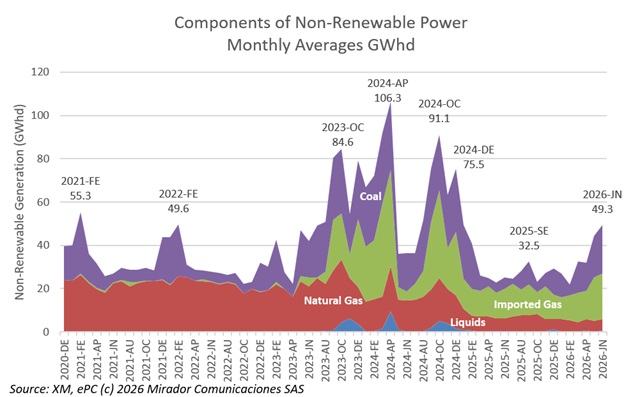
Colombia’s electricity demand is projected to grow roughly 10% between 2026 and 2030, according to UPME estimates cited at Andeg’s 13th Energy Forum, straining both generation supply and the transmission network.
Colombia’s liquefied petroleum gas (LPG) user base grew from 59,000 to more than 372,000 between 2015 and 2025 — an increase of over 300,000 — with roughly 95% of those users belonging to strata 1 and 2.
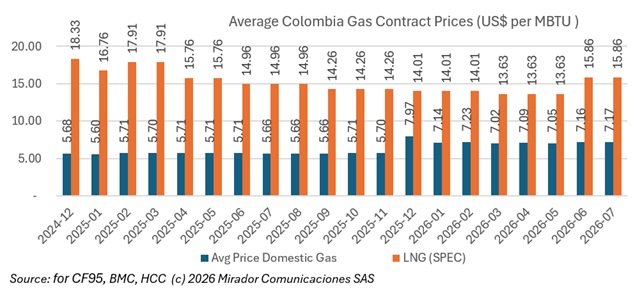
Aquiles Mercado opens his El Heraldo column with the etymology of a “leonine contract” – from Aesop’s fable of the lion who partners with others to hunt, then keeps the whole spoils – to argue that Colombia’s high LNG import prices aren’t unfair or predatory, but simply the market pricing a scarce good controlled by whoever sells it.
Ecopetrol’s own board has assumed for months that Sirius, the Caribbean gas megaproject, will likely slip a year past its publicly stated 2030 start date to 2031. When did they plan to tell us?
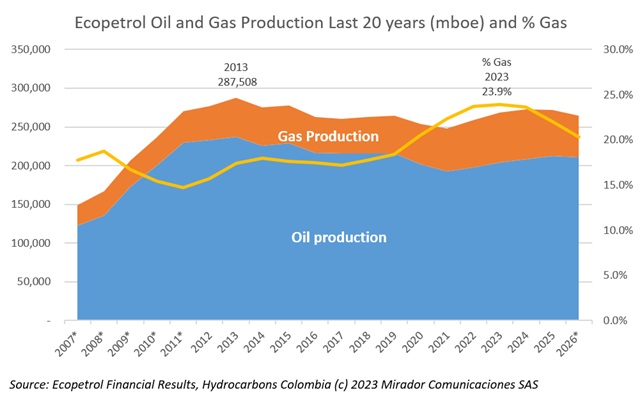
Ecopetrol’s gas sales volume fell 22.1% in the second quarter of 2026, with gas now representing just 6.9% of the group’s total sales — down sharply from 10.6% in 2Q22, when Gustavo Petro took office.
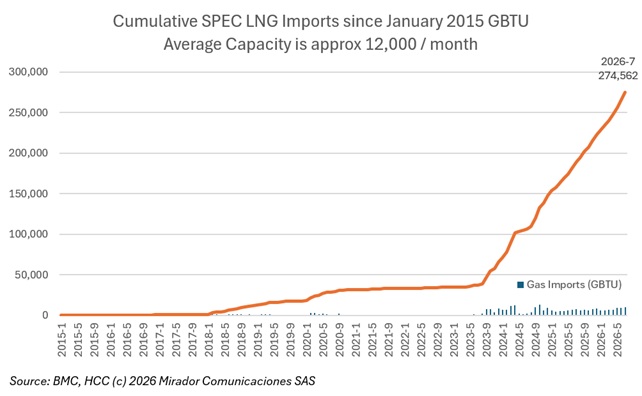
Calamarí LNG and SPEC LNG announced they’ve received their 200th liquefied natural gas cargo from Trinidad and Tobago, bringing cumulative imports to 12.8 million cubic meters – equivalent to 265 TBTU injected into the National Transport System – at a moment when El Niño’s impacts are threatening electricity supply reliability.
The national government approved a modification to SPEC LNG’s environmental license in Cartagena, adding 58 mmcfd of natural gas capacity to strengthen the country’s supply.
Nearly two weeks after Colombia’s August 10 earthquake, natural gas reconnection remains incomplete across the hardest-hit regions, with roughly 10,100 users still without service as of August 14, according to Naturgas president Luz Stella Murgas, speaking from the ANDI Congress in Cartagena.
NG Energy International reported 2Q26 natural gas and NGL sales of US$10.8 million, up 14% from Q1 and up 24% year-over-year on a YTD basis, with net production of 14,222 mcfd, up 15% quarter-over-quarter.
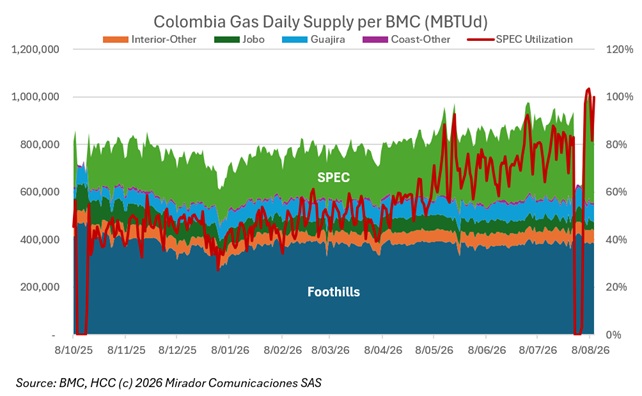
Colombia’s natural gas production fell 12.9% year-on-year in May 2026, to 1,129 million cubic feet per day (mmcfd) from 1,296 mmcfd in May 2025, with the decline attributed to Casanare, Sucre, Boyacá, and Córdoba.

2026, Hydrocarbons Colombia, All Rights Reserved.
