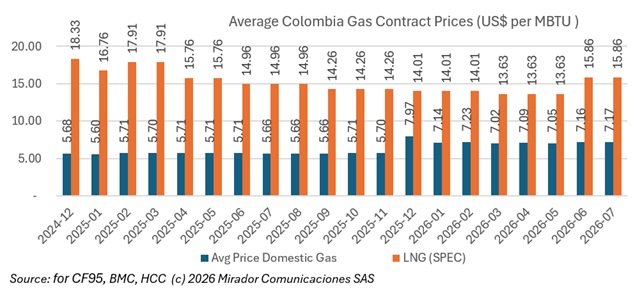

Colombia’s gas situation has become the short-term crisis point within the broader energy-security debate, alongside electricity supply concerns raised at Acolgen’s Annual Energy Congress in Bogotá.
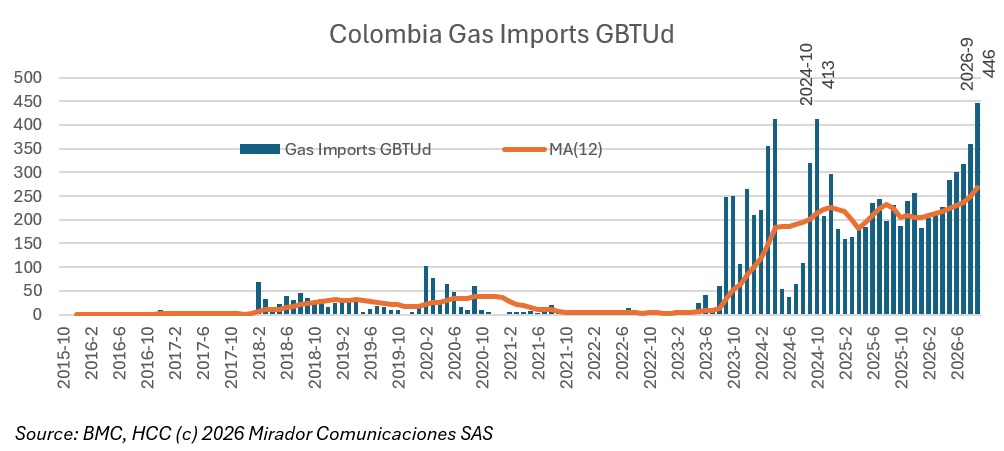
Colombia’s gas imports have surpassed the volumes seen during the 2023-2024 El Niño, with Acipet projecting imports could represent roughly 40% of national gas supply by year-end 2026.
Colombia is preparing a new import point for gas and other energy products in Ciénaga and Santa Marta, Magdalena.
Vice President José Manuel Restrepo said Colombia’s bilateral agenda with the United States includes discussion of energy interconnection with Venezuela, specifically referencing the Antonio Ricaurte pipeline in northern Colombia as a potential route for importing gas from the country holding the world’s largest reserves.
The Superintendencia de Sociedades identified 15 natural gas supply contracts – down from the 19 originally covered by a Canadian court’s insolvency ruling – as potentially subject to termination in Canacol Energy’s Colombian contracting review.
Environment Minister Fabio Arjona detailed his ministry’s measures to shore up energy supply against El Niño during a September 9 congressional debate on the energy sector, the same session where MinEnergia Arboleda warned electricity tariffs must rise. Arjona said the ministry is working across several fronts, including expanding gas and water storage capacity for hydro dams.
Amazónica LNG formalized its contract with China’s Jereh Group, through subsidiary Jereh Oil & Gas Colombia, to advance construction of its regasification project in Palermo, Sitionuevo, Magdalena, an estimated US$180 million private investment.
Aquiles Mercado opens this El Heraldo column with the Greek etymology of “periplo” (circumnavigation) to frame Colombia’s growing dependence on imported LNG as a genuine journey with real costs.
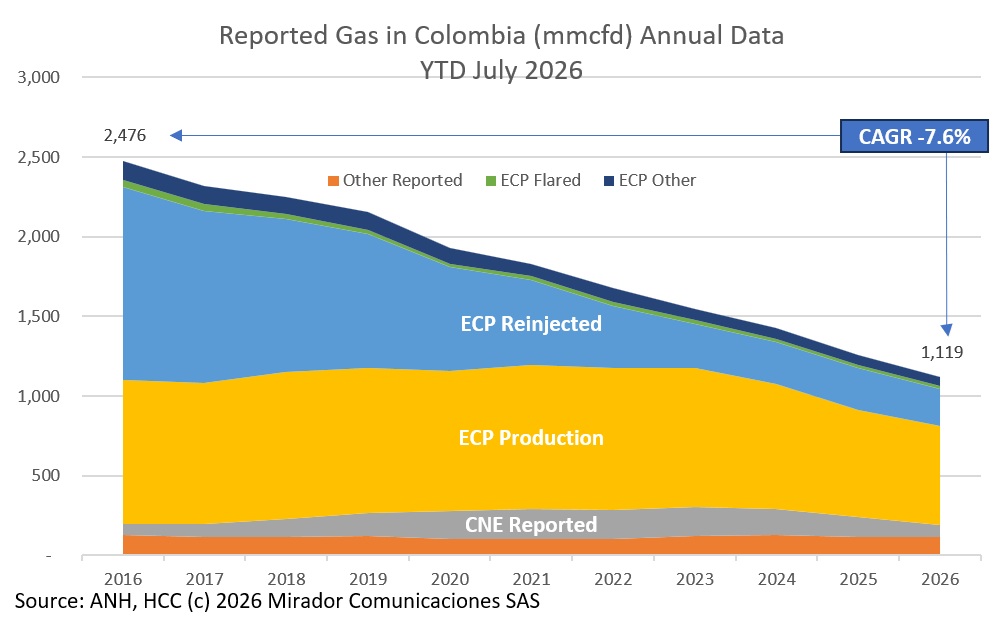
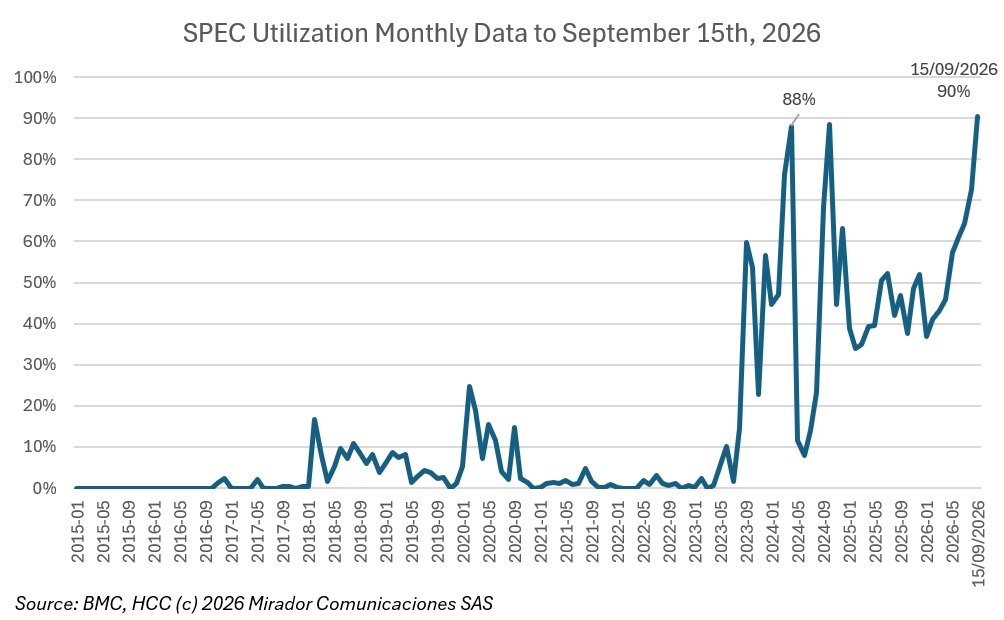
Some might hope that gas production improves since SPEC is reaching its capacity and no other LNG import facilities have come online. That’s not the case.

2026, Hydrocarbons Colombia, All Rights Reserved.