

Ocensa has satisfied an environmental obligation of more than CoP$7.3B tied to its water use on the Cusiana-Coveñas oil pipeline by funding conservation of 205.55 hectares in Meta, a first of its kind in Colombia and Latin America.
Colombia’s Environment Minister Fabio Arjona announced the government is revoking Decree 973 of 2026 and will build a new regulatory framework for the country’s carbon markets, a reversal he framed as necessary to salvage the market’s credibility.
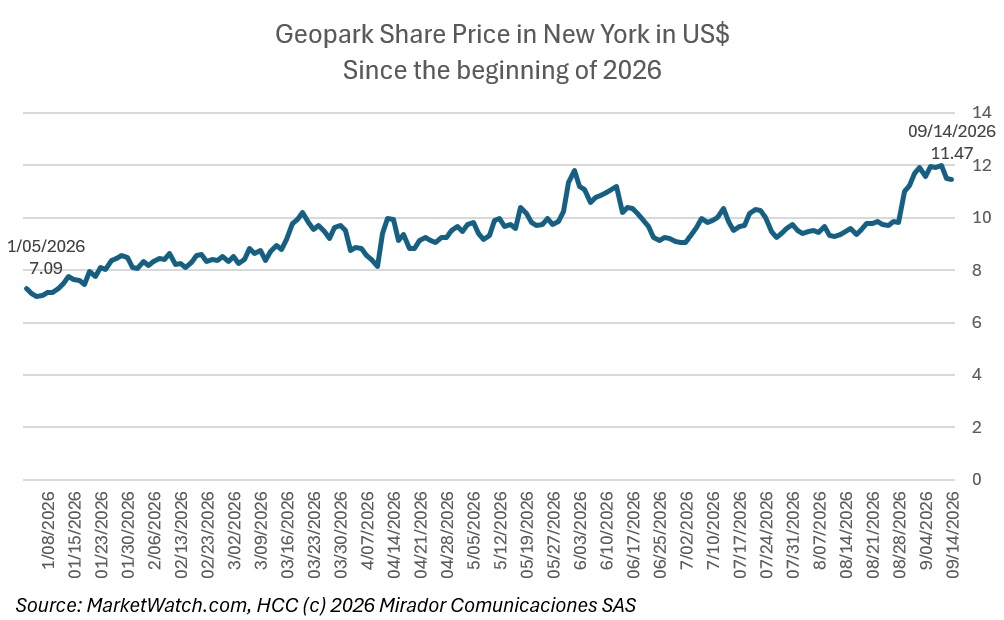
Valora Analitik obtained a draft decree the De la Espriella government is preparing to regulate offshore oil and gas production, covering operations Ecopetrol develops directly, agreements with Ecopetrol and partners, or agreements with the Agencia Nacional de Hidrocarburos (ANH).
Sergio Arturo Piñeros Botero was sworn in August 13 as director of the Agencia Nacional de Licencias Ambientales (ANLA), the agency responsible for licensing hydrocarbons, electricity, and other infrastructure projects nationwide, succeeding Irene Vélez Torres.
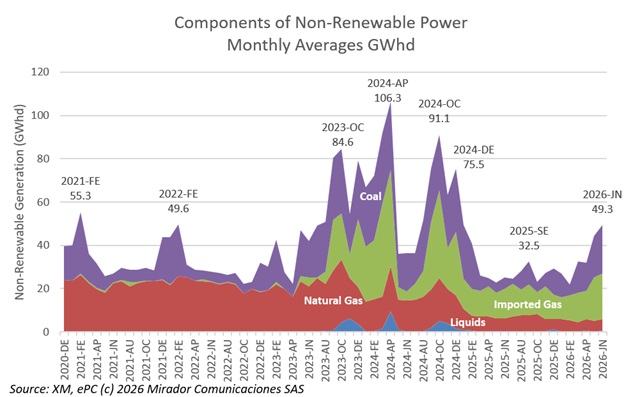
Colombia’s electricity demand is projected to grow roughly 10% between 2026 and 2030, according to UPME estimates cited at Andeg’s 13th Energy Forum, straining both generation supply and the transmission network.
Following a meeting with the Colombian Natural Gas Association (Naturgas), Minister of Environment Fabio Arjona endorsed natural gas as a fundamental fuel for Colombia’s energy transition, framing it as compatible with energy security, emissions reduction, and territorial protection.
Electricity market controller XM’s interim general manager Juan Carlos Morales was direct about what backing up Colombia’s hydro-dependent grid through El Niño will require: ‘we’re going to need coal and gas, as well as liquid fuels… the entire generation chain of the system will be called upon.’
The Agencia Nacional de Hidrocarburos issued a categorical clarification addressing what it called imprecise claims circulating about hydrocarbons activity in Boyacá and Cundinamarca, confirming that the E&P Muisca contract has conducted no exploration or production activity since 2014…
Deutsche Bank’s assessment of a fast-developing El Niño episode – potentially among the six most intense since 1870 – named Colombia as Latin America’s most exposed economy, projecting the country’s price index could rise roughly 1.4 percentage points before year-end, the largest inflationary impact in the region alongside Peru’s 1.1 points.
With fewer than two weeks left in his administration, President Gustavo Petro declared a national disaster for El Niño on July 23 and routed CoP$8T through the National Disaster Risk Management Unit (UNGRD).

2026, Hydrocarbons Colombia, All Rights Reserved.
