

Joaquín Gutiérrez Caballero, who takes over as Ecopetrol president on September 28, opened with a warning that Colombia has reserves of just 7.4 years of oil and 5.9 years of gas, figures he called “paltry”.
Armando Cuello, Colombia’s Vice Minister of Energy, is expected to leave the ministry for a post tied to Ecopetrol’s gas business, according to an exclusive report.
Ocensa has satisfied an environmental obligation of more than CoP$7.3B tied to its water use on the Cusiana-Coveñas oil pipeline by funding conservation of 205.55 hectares in Meta, a first of its kind in Colombia and Latin America.
Ecopetrol has received CoP$684B in overdue payments from the government’s Fuel Price Stabilization Fund (FEPC) and has named three new vice presidents.
With ConocoPhillips and ExxonMobil both having exited Colombia’s fracking sector, Ecopetrol and Drummond Energy are now the clearest contenders to drill the country’s first unconventional well, while GeoPark has signaled interest without yet committing to specific blocks.
Ecopetrol president Joaquín Gutiérrez Caballero traveled to Caracas on September 30 to attend the International Petroleum and Gas Congress, framing the trip as an exploratory mission rather than the start of any deal.
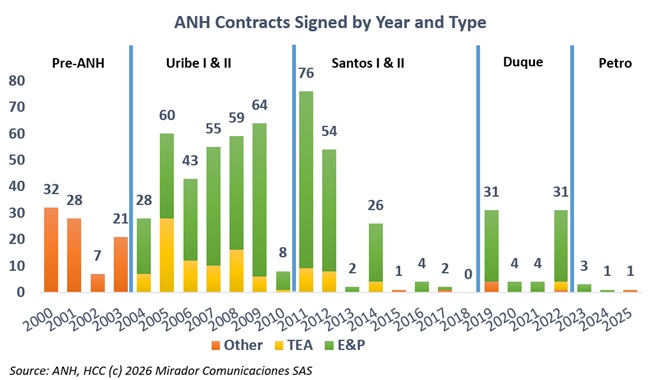
President Abelardo de la Espriella used Joaquín Gutiérrez’s swearing-in as Ecopetrol’s new president to lay out his own energy policy framing, going further than Gutiérrez’s own fracking pledge from the same ceremony.
Investors are taking a cautious, wait-and-see stance on Joaquín Gutiérrez’s appointment as Ecopetrol’s new CEO, a notably cooler reception than the government’s own confidence in the pick.
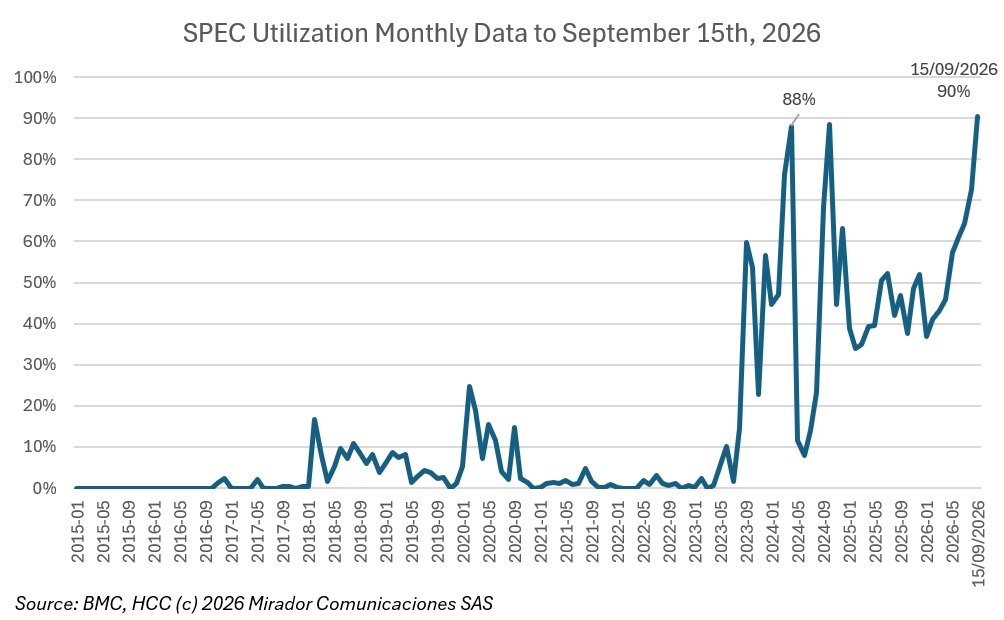
A malfunction in one of the floating regasification unit’s trains at the SPEC terminal in Cartagena forced Colombia into temporary industrial gas rationing starting September 24th, cutting the terminal’s capacity from 475 to 400 mmcfd and restricting roughly 15 GBTU/day of demand normally covered by imported gas.
New Ecopetrol president Joaquín Gutiérrez Caballero used his swearing-in at La Quinta de San Pedro Alejandrino in Santa Marta to announce that the company will resume both fracking and offshore exploration.

2026, Hydrocarbons Colombia, All Rights Reserved.
