

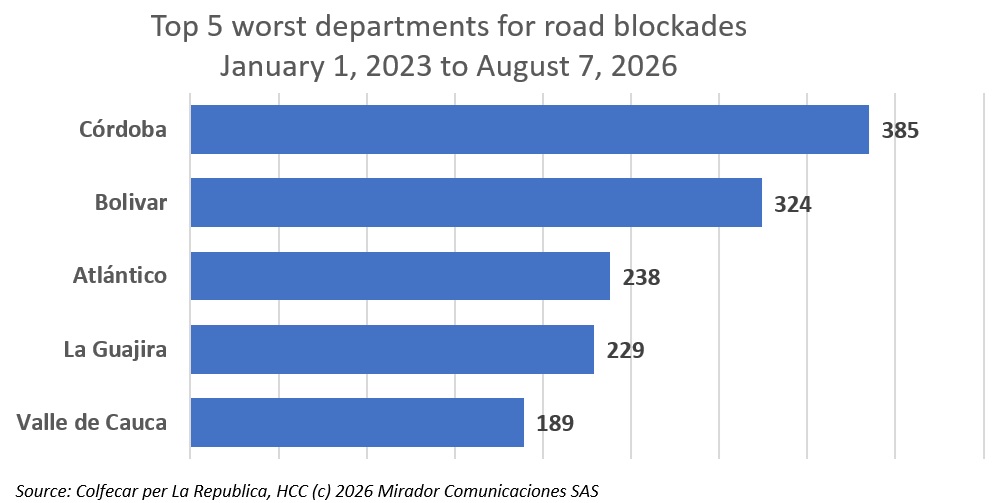
Road blockades have cost Colombia’s cargo transport sector CoP$12.9T since 2023, according to the federation’s own count of 2,841 between January 1, 2023 and August 7, 2026.
Joaquín Gutiérrez Caballero, who takes over as Ecopetrol president on September 28, opened with a warning that Colombia has reserves of just 7.4 years of oil and 5.9 years of gas, figures he called “paltry”.
Colombia faces a growing natural gas deficit if the projected decline in domestic output continues, and a regasification terminal in La Guajira is central to closing it.
Colombia’s government projects royalties income of CoP$27.54T for 2027-2028, 11% below the CoP$30.96T of the current biennium.
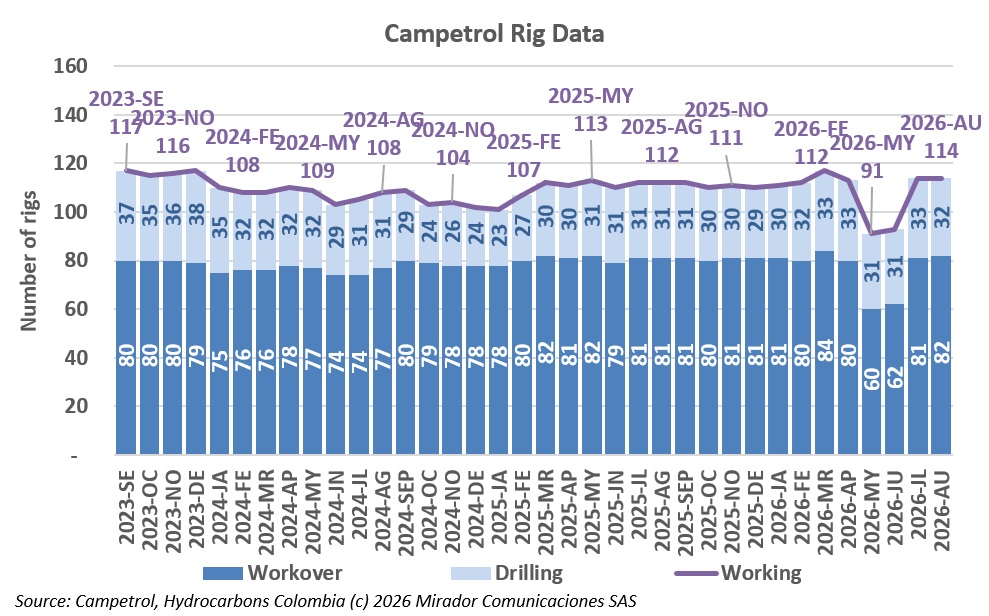
Colombia had 114 active rigs in August, up 1.8% (two rigs) and level with July.
Colombia’s hydrocarbons agency has made nearly 20 million hectares available for new oil and gas contracts across 12 basins.
Interior Minister Rodrigo Lara has presented a plan to speed up Colombia’s prior consultation process, the community consultations required before many energy, mining, and infrastructure projects can proceed.
Armando Cuello, Colombia’s Vice Minister of Energy, is expected to leave the ministry for a post tied to Ecopetrol’s gas business, according to an exclusive report.
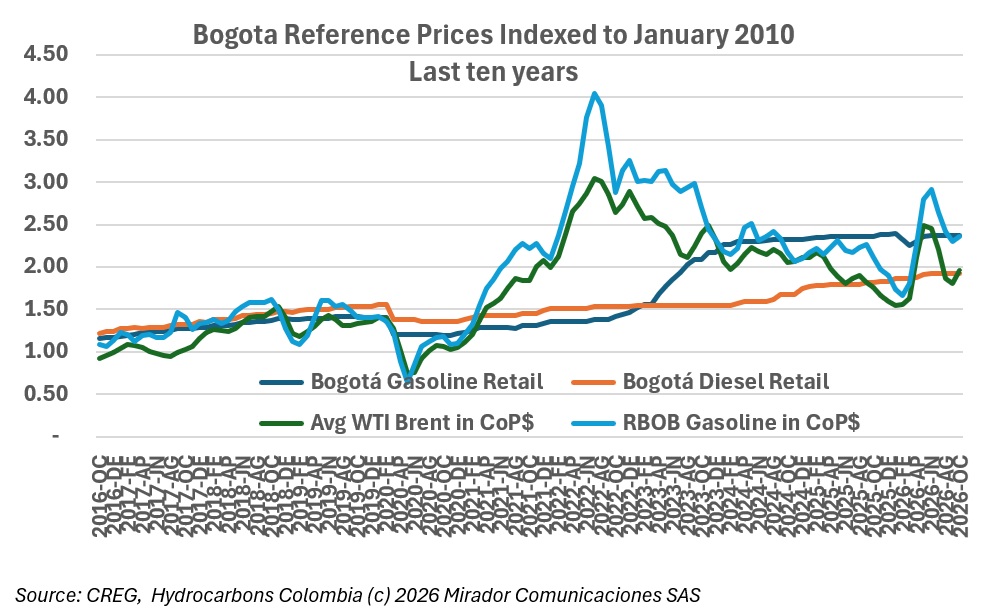
Colombia’s government announced a CoP$46 per gallon increase in the average gasoline price for October, then reversed it the next day.
Ocensa has satisfied an environmental obligation of more than CoP$7.3B tied to its water use on the Cusiana-Coveñas oil pipeline by funding conservation of 205.55 hectares in Meta, a first of its kind in Colombia and Latin America.

2026, Hydrocarbons Colombia, All Rights Reserved.

