
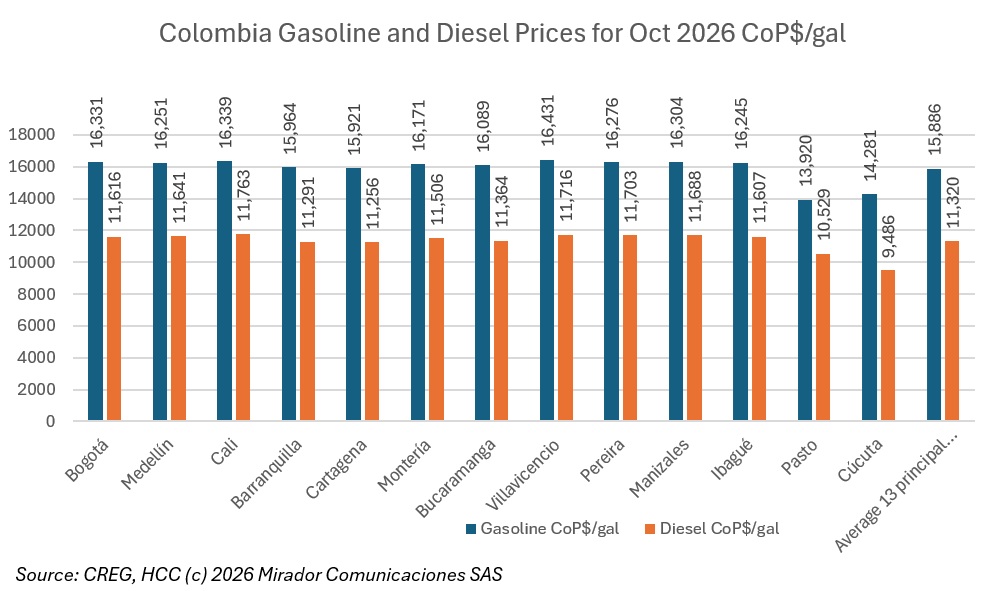
Gasoline reference prices range from CoP$13,920 per gallon in Pasto to CoP$16,431 in Villavicencio under the October fuel schedule, while diesel runs from CoP$9,486 in Cúcuta to CoP$11,763 in Cali.
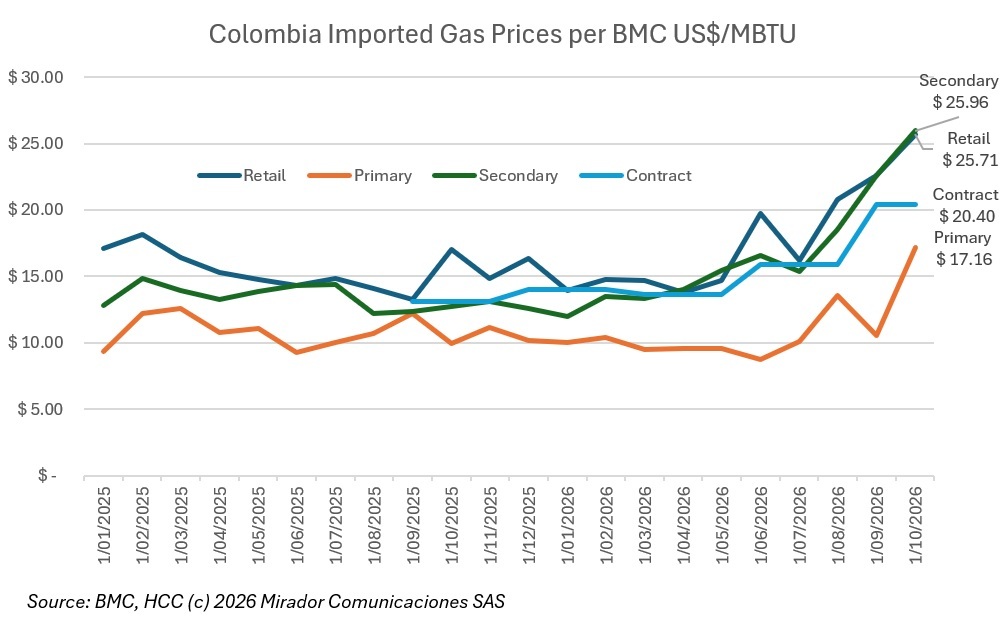
SPEC, the terminal that handles all of Colombia’s LNG imports, is running at its limit, and one energy analyst warns that without new regasification capacity the country could face a gas deficit of 124 mmcfd in March 2027.
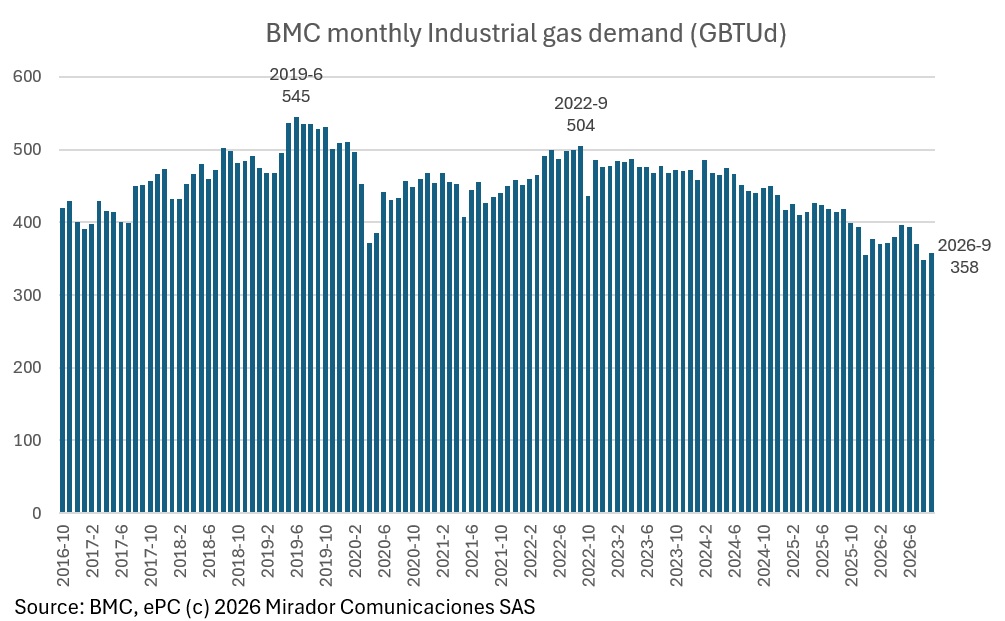
Imported gas supplied 39% of Colombia’s natural gas in September, and with a very strong El Niño looming, industrial users are looking for alternatives to secure their energy.
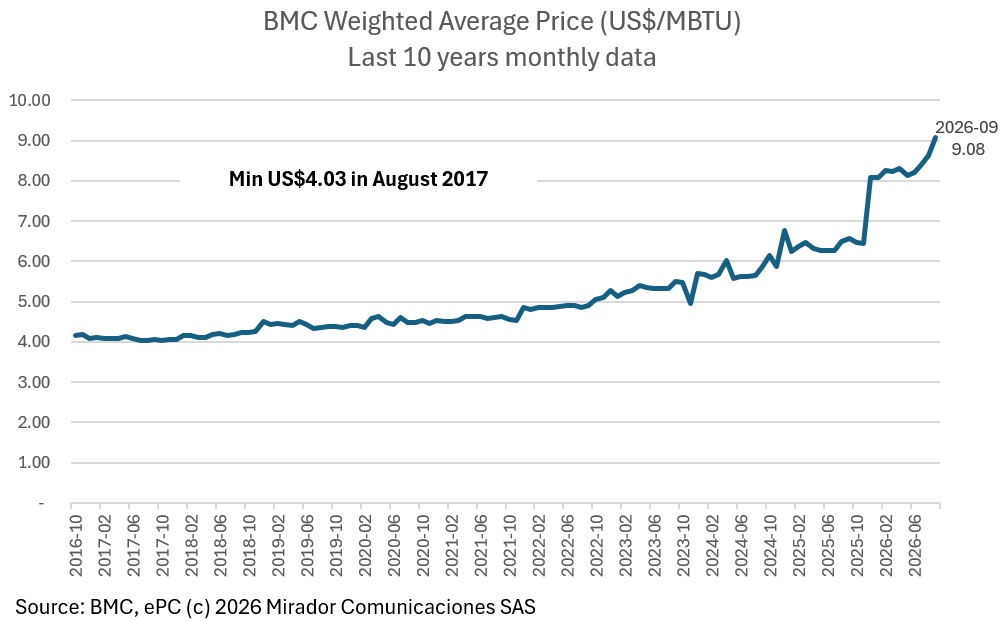
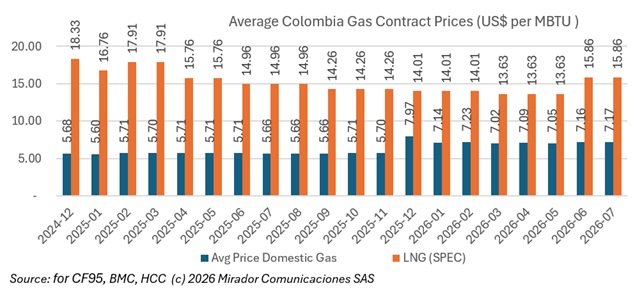
This should come as a surprise to no one: as domestic production falls, the supply mix shifts to imported gas at more than twice the price of domestic. The average inevitably has to go up.
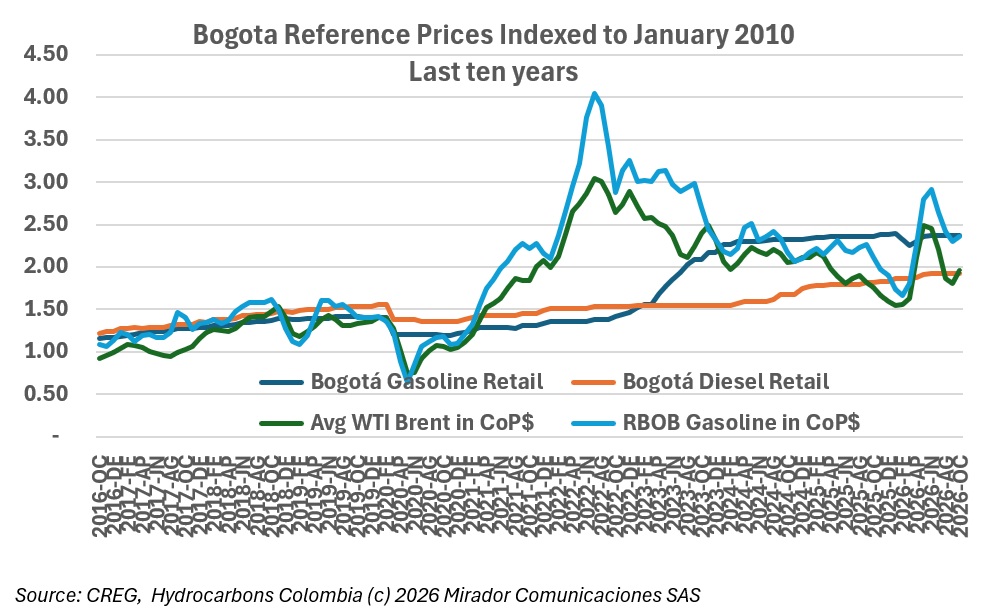
Colombia’s government announced a CoP$46 per gallon increase in the average gasoline price for October, then reversed it the next day.
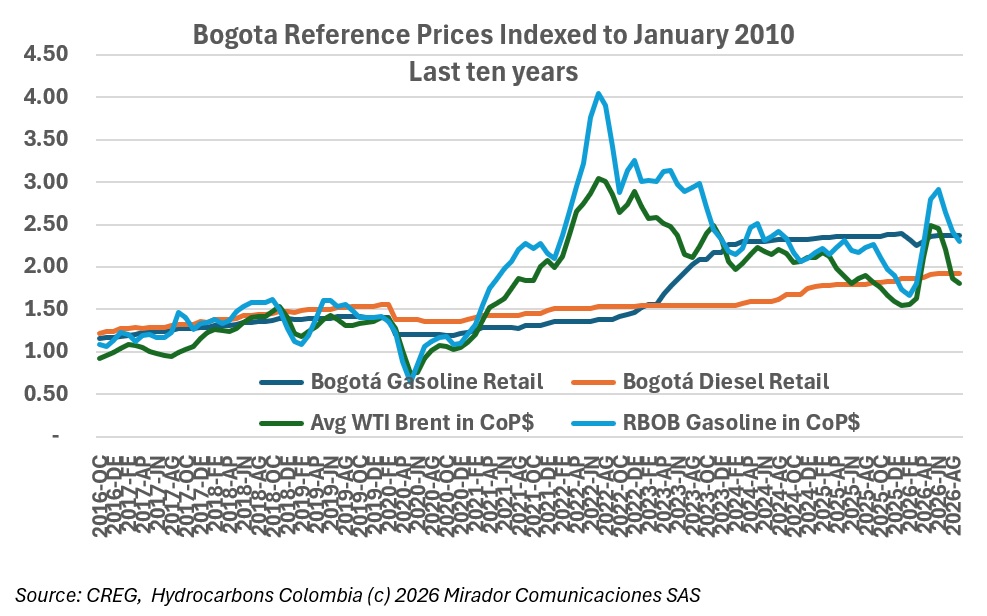
Vice Minister of Energy Armando Cuello said the government has not ruled out eventually raising diesel prices, arguing the current subsidy is unsustainable.
Colombia declared programmed natural gas rationing this week for industrial customers, requiring an explanation of both the mechanical trigger and the broader supply fragility it exposes.
Colombia’s biofuels sector mobilized roughly CoP$25T over the past five years: equivalent to about 3% of manufacturing-industry GDP annually.
Three companies are behind new investments to expand biofuels production capacity in Colombia: BioD, Bioenergy, and Oleoflores, together committing roughly US$110 million to meet growing biofuels demand in coming years.

2026, Hydrocarbons Colombia, All Rights Reserved.