
Ecopetrol’s newly renewed board unanimously confirmed Joaquín Gutiérrez Caballero as president without using an external headhunter, opting instead to run the search itself following the board’s complete September 15th renewal.
New Ecopetrol president Joaquín Gutiérrez Caballero used his swearing-in at La Quinta de San Pedro Alejandrino in Santa Marta to announce that the company will resume both fracking and offshore exploration.
Facing a fiscal deficit CARF projects could reach 10% of GDP by the close of 2027 and net debt around 67.3% of GDP, former Finance Minister Mauricio Cárdenas told Blu Radio that selling Ecopetrol’s majority stake in ISA to Colombia’s pension funds would be a smart move.
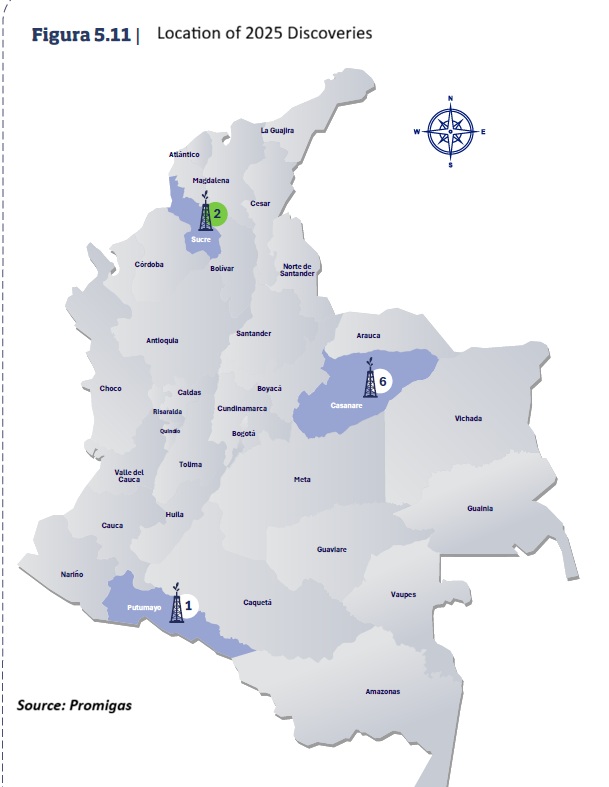
Promigas’s 27th annual natural gas sector report frames 2026 around a single organizing idea: energy security. Colombia has moved from being self-sufficient in gas to permanently import-dependent, and the document argues the country’s real vulnerability is no longer whether molecules exist somewhere in global markets, but whether Colombia has the local capacity to contract, finance, transport, and operate them reliably under stress.
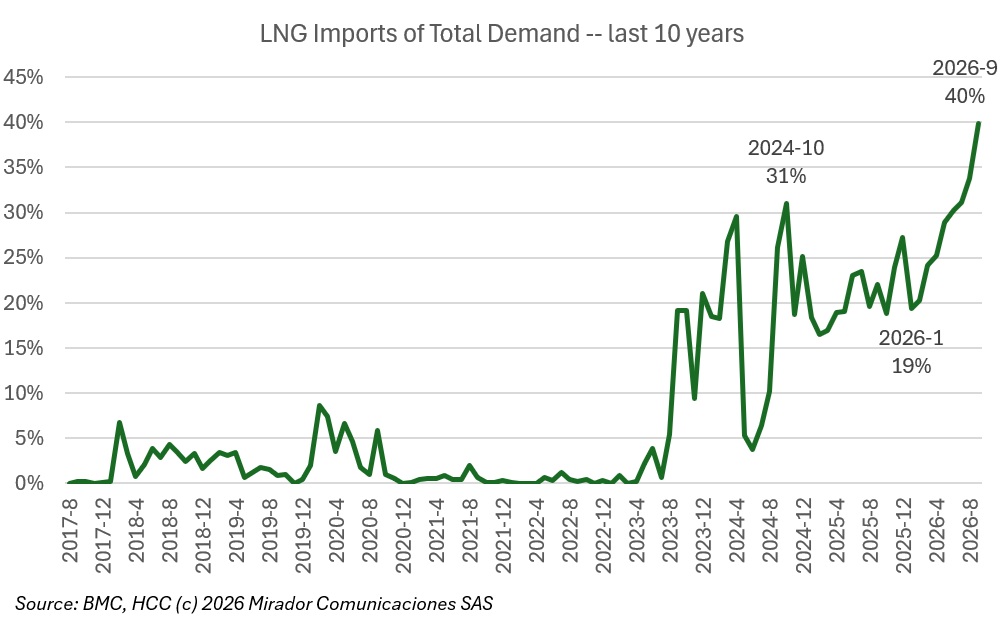
Óscar Rincón, president of the Asociación Colombiana de Ingenieros de Petróleos (Acipet), projected gas imports could reach 35-40% of national consumption by the end of 2026 as El Niño pushes thermal plants toward near-full dispatch capacity.
Ecopetrol’s full board unanimously designated Joaquín Gutiérrez Caballero as the company’s new president on September 24th, following what the company called a structured, agile selection process aimed at finding an “coordinating leader” capable of turning challenges into concrete results.
GeoPark scored highest provisionally for the Corralera Noreste block in Neuquén, Argentina’s Ronda 1/2026 exploratory round, run by Gas y Petróleo del Neuquén (GyP).
Colombia’s biofuels sector mobilized roughly CoP$25T over the past five years: equivalent to about 3% of manufacturing-industry GDP annually.
GeoPark CEO Felipe Bayón told Acipet’s XXIII Colombian Oil, Gas, and Energy Congress in Bucaramanga that Colombia’s unconventional resources (YNC) represent a major opportunity, framing the case in terms of national self-sufficiency: “energy sovereignty is about taking control of our destiny,” he said.

2026, Hydrocarbons Colombia, All Rights Reserved.