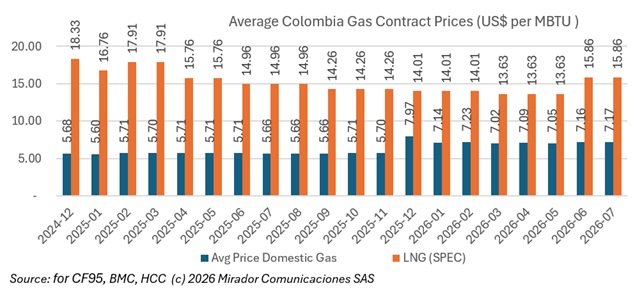

Ecopetrol president Joaquín Gutiérrez Caballero traveled to Caracas on September 30 to attend the International Petroleum and Gas Congress, framing the trip as an exploratory mission rather than the start of any deal.
Colombia declared programmed natural gas rationing this week for industrial customers, requiring an explanation of both the mechanical trigger and the broader supply fragility it exposes.
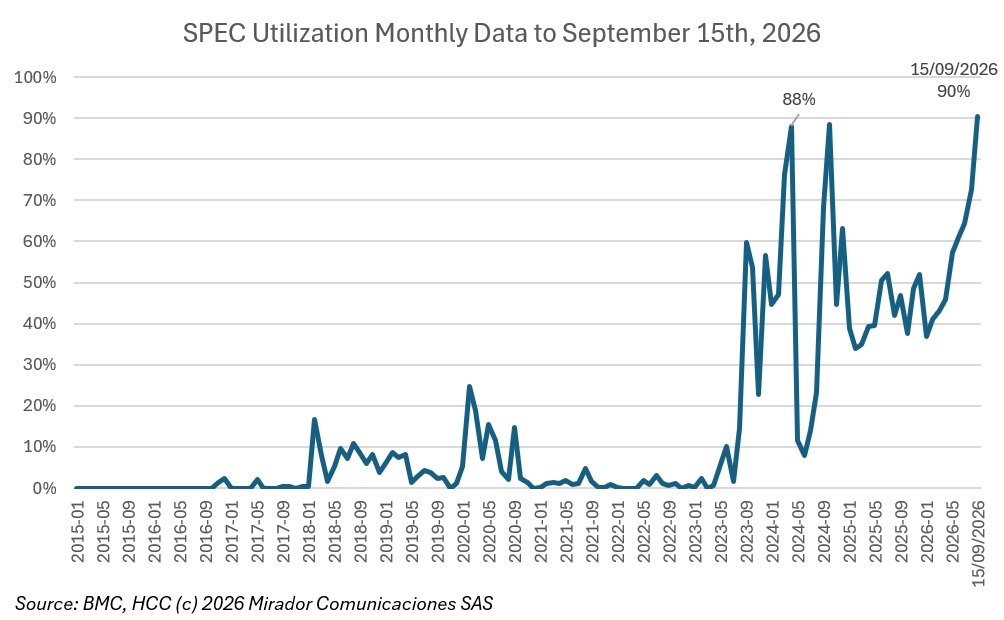
A malfunction in one of the floating regasification unit’s trains at the SPEC terminal in Cartagena forced Colombia into temporary industrial gas rationing starting September 24th, cutting the terminal’s capacity from 475 to 400 mmcfd and restricting roughly 15 GBTU/day of demand normally covered by imported gas.
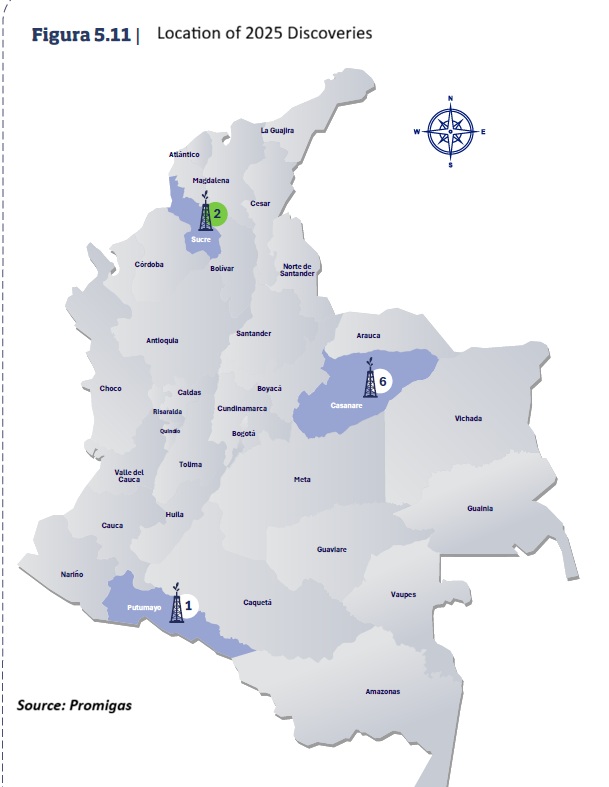
Promigas’s 27th annual natural gas sector report frames 2026 around a single organizing idea: energy security. Colombia has moved from being self-sufficient in gas to permanently import-dependent, and the document argues the country’s real vulnerability is no longer whether molecules exist somewhere in global markets, but whether Colombia has the local capacity to contract, finance, transport, and operate them reliably under stress.
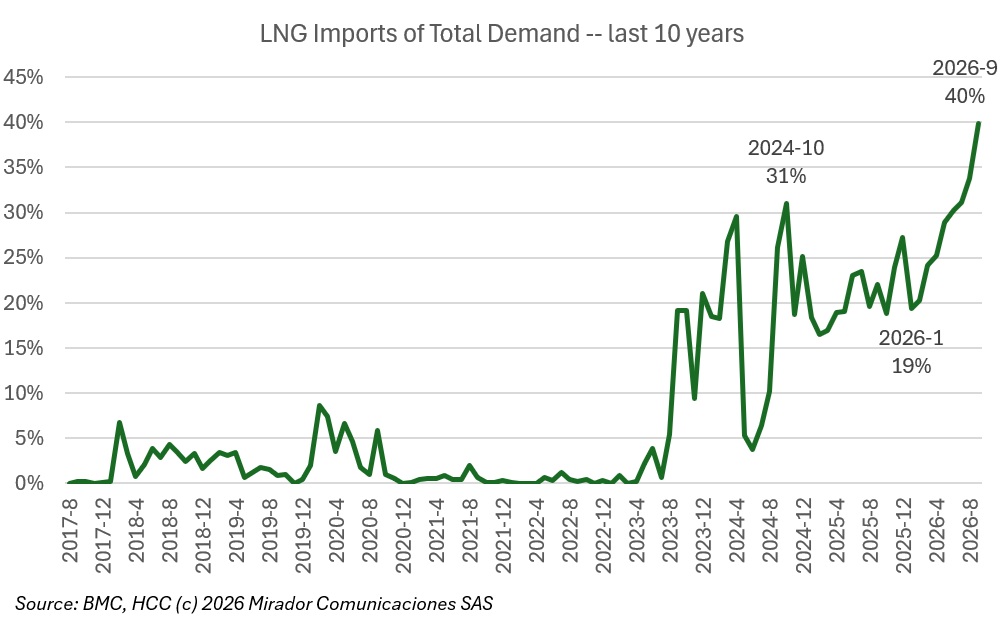
Óscar Rincón, president of the Asociación Colombiana de Ingenieros de Petróleos (Acipet), projected gas imports could reach 35-40% of national consumption by the end of 2026 as El Niño pushes thermal plants toward near-full dispatch capacity.
Colombia’s gas situation has become the short-term crisis point within the broader energy-security debate, alongside electricity supply concerns raised at Acolgen’s Annual Energy Congress in Bogotá.
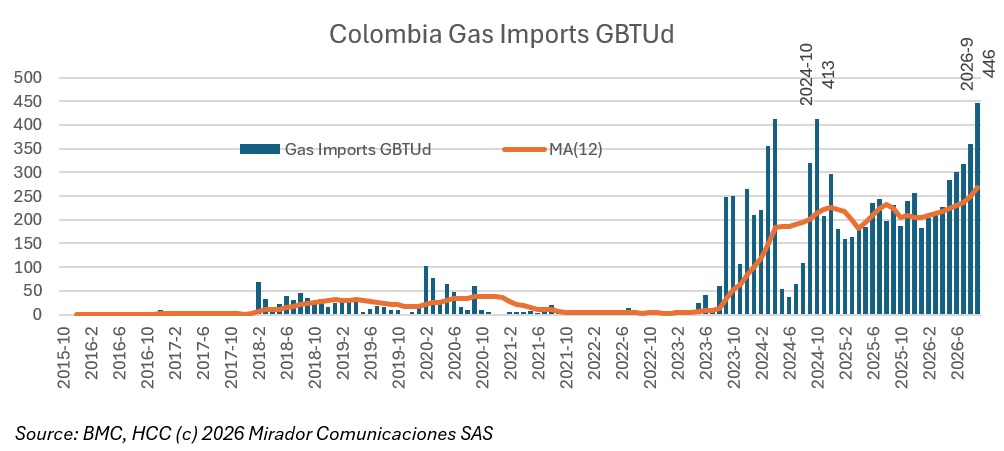
Colombia’s gas imports have surpassed the volumes seen during the 2023-2024 El Niño, with Acipet projecting imports could represent roughly 40% of national gas supply by year-end 2026.
Colombia is preparing a new import point for gas and other energy products in Ciénaga and Santa Marta, Magdalena.
Vice President José Manuel Restrepo said Colombia’s bilateral agenda with the United States includes discussion of energy interconnection with Venezuela, specifically referencing the Antonio Ricaurte pipeline in northern Colombia as a potential route for importing gas from the country holding the world’s largest reserves.

2026, Hydrocarbons Colombia, All Rights Reserved.