

Just before the end of December, the NOC published a press release on this important potential source of new gas.
Fitch Ratings downgraded multiple Colombian energy companies following the country’s sovereign rating reduction, with Ecopetrol, Grupo Energía Bogotá (GEB), and Enel Colombia among those affected. The rating actions reflect these companies’ close ties to the Colombian state and its deteriorating credit profile.
State oil company Ecopetrol assumed sole responsibility for several offshore exploration and production gas projects in Colombia’s Caribbean following Shell’s formal departure as partner in these contracts.
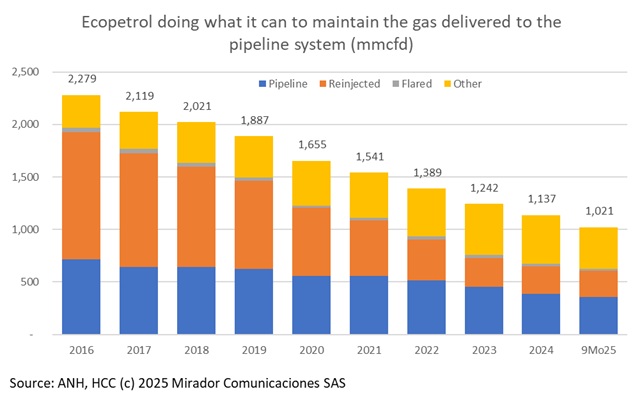
Ecopetrol announced a 37% expansion in natural gas supply for Colombia’s residential and commercial sectors, increasing from 133 GBTUd to 182 GBTUd starting December 2025.
While IATA Director General Willie Walsh warned that disappointing progress in Sustainable Aviation Fuel (SAF) production threatens the airline industry’s environmental goals, Colombia emerges as a potentially crucial player to address the global supply shortage.
President Gustavo Petro defended his government’s economic achievements while directly attributing Ecopetrol’s declining profits to the state oil company’s failure to adopt the energy transition he advocates.

Ecopetrol faces mounting production costs as natural field decline in Colombia combines with insufficient incorporation of new projects, reducing profitability per barrel and increasing exposure to international oil price volatility.
Citi Research analyzed Ecopetrol’s 2026 investment plan and operational outlook concluding that, while there are risks, the potential production upside justifies buying the shares.
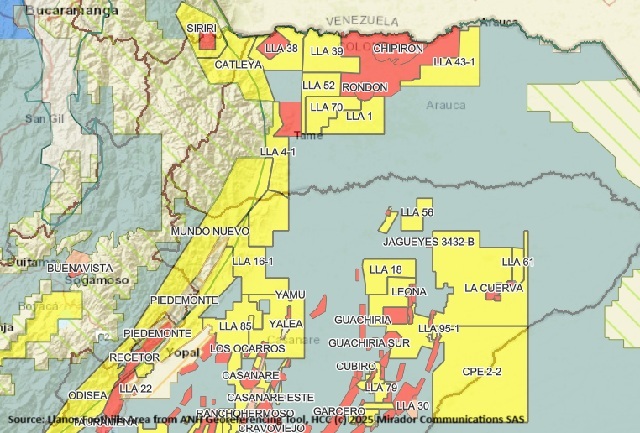
Parex announced an update on the Llanos Foothills exploration project and other operational matters.
President Gustavo Petro considers selling Ecopetrol’s Permian Basin assets essential for the company’s financial sustainability, but experts strongly disagree, viewing the move as both unviable and harmful to the stock.

2026, Hydrocarbons Colombia, All Rights Reserved.
