

Members of both the senate and chamber of representatives are calling for answers from Ecopetrol (NYSE:EC) on supply issues experienced across the country, and on an imminent cut of subsidies for the service which will affect low income users.

GeoPark Limited (NYSE: GPRK) announced the successful testing of the Jacana 6 appraisal well in the Jacana field in the Llanos 34 Block in Colombia.
Ecopetrol (NYSE) said that November has brought an “onslaught” of attacks and illegal valves affecting the Transandino and Coveñas/Caño Limon pipeline, part of an increased pace of incidents over the last two months.
Weeks after a storm of controversy over the Rubiales field, Puerto Gaitán’s mayor and members of the municipal council have visited the field to confirm that Ecopetrol (NYSE:EC) is indeed hiring local residents and meeting its commitments. This and other Corporate Social Responsibility stories in our periodic summary.
Ecopetrol (NYSE:EC) has announced its 2017 investment plan which falls in line with its 2020 business plan and designates a new focus of the US$3.5B in spending on production and exploration projects.
The USO held 36 hours of continued protests in strategic points affecting Ecopetrol’s (NYSE:EC) crude transportation, and forced the NOC to extend the period to review its collective bargaining agreement by another week and add new items to the discussion.
The National Agency of Environmental Licenses (ANLA) heralded its role in its annual 2016 account rendering session, and promised greater measures for citizens to participate early on in the formation of projects.
Donald Trump’s eminent possession of the White House has the Mexican peso in a tailspin: it is down over 10% since election day. The President-elect is an external factor.

With all quarterly-reporting public companies now in our database, we can update our trend graphs for netback and average realized oil prices.
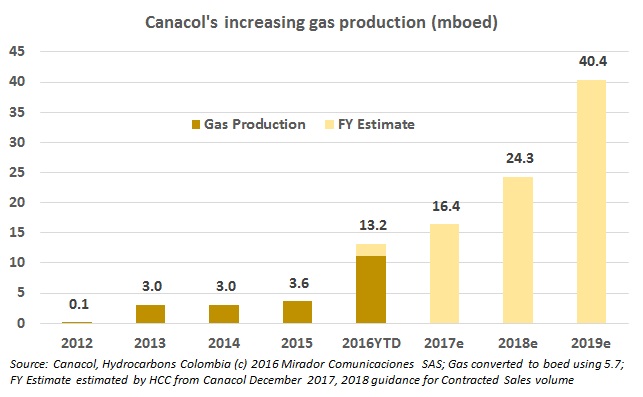
Canacol (TSX:CNE) announced significant increases in its contracted sales starting in December 2017 and December 2018, facilitated by new infrastructure.

2026, Hydrocarbons Colombia, All Rights Reserved.

