

Armando Cuello, Colombia’s Vice Minister of Energy, is expected to leave the ministry for a post tied to Ecopetrol’s gas business, according to an exclusive report.
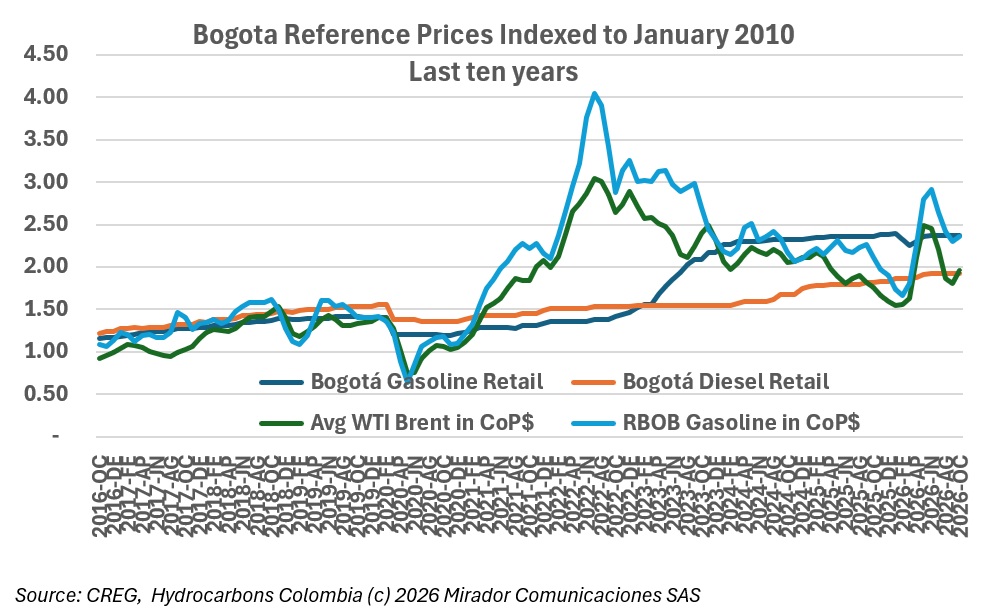
Colombia’s government announced a CoP$46 per gallon increase in the average gasoline price for October, then reversed it the next day.
Ocensa has satisfied an environmental obligation of more than CoP$7.3B tied to its water use on the Cusiana-Coveñas oil pipeline by funding conservation of 205.55 hectares in Meta, a first of its kind in Colombia and Latin America.
Ecopetrol has received CoP$684B in overdue payments from the government’s Fuel Price Stabilization Fund (FEPC) and has named three new vice presidents.
Colombia’s National Hydrocarbons Agency (ANH) has suspended for six months the telemetry obligations it imposed on oil and gas producers, two weeks after convening operators to review how the rollout was going.
I don’t think I’m at much risk of being fired from my own business. If my clients don’t like what I’m writing they can stop reading me or if chronic, not renew. Maybe.
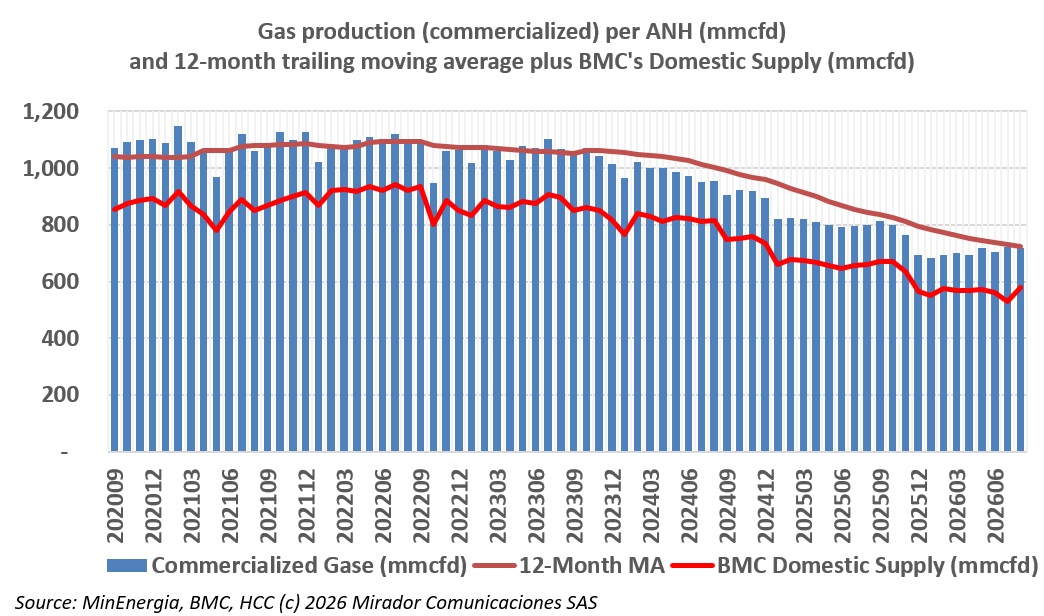
Colombia’s natural gas industry posted across-the-board declines in August, according to figures from industry group Campetrol.
With ConocoPhillips and ExxonMobil both having exited Colombia’s fracking sector, Ecopetrol and Drummond Energy are now the clearest contenders to drill the country’s first unconventional well, while GeoPark has signaled interest without yet committing to specific blocks.
Ecopetrol president Joaquín Gutiérrez Caballero traveled to Caracas on September 30 to attend the International Petroleum and Gas Congress, framing the trip as an exploratory mission rather than the start of any deal.
Colombia’s Environment Minister Fabio Arjona announced the government is revoking Decree 973 of 2026 and will build a new regulatory framework for the country’s carbon markets, a reversal he framed as necessary to salvage the market’s credibility.

2026, Hydrocarbons Colombia, All Rights Reserved.

