

Colombia’s National Hydrocarbons Agency (ANH) convened operators on September 15th to review progress and challenges in implementing the telemetry mandate set out in Resolution 0651 of August 2025.
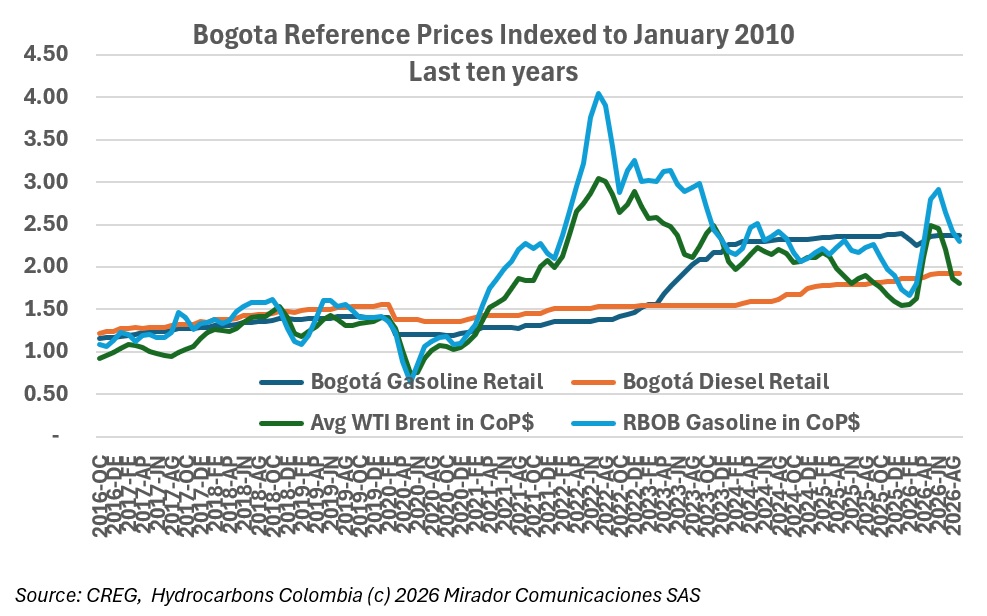
Vice Minister of Energy Armando Cuello said the government has not ruled out eventually raising diesel prices, arguing the current subsidy is unsustainable.
Colombia’s mining and energy sector has gone from generating 36.2% of corporate income tax revenue in 2012 to just 6.3% in 2025, a collapse that ANIF and the Colombian Energy Roundtable (CREE) warn is both a fiscal and an energy-security problem.
The Colombian Association of Petroleum Engineers (Acipet) laid out a formal three-proposal package for the government at its Congress on Oil, Gas and Energy in Bucaramanga.
Colombia risks “dismantling, by omission, its own growth engine,” warns Álvaro J. Rodríguez, partner at Posse Herrera Ruiz, even as Brent crude climbs back above US$100/bl on renewed Middle East tension.
At Ecopetrol’s September 15 Extraordinary Shareholders Assembly, former senator and minority shareholder Jorge Enrique Robledo challenged President Abelardo De la Espriella’s economic vision for the company, calling it characteristic of “neoliberalism” and warning against treating national and foreign capital as equivalent in company decisions.
Vice President José Manuel Restrepo announced what he called a full reversal of the state’s energy and extractive-sector policy, confirming the formal return of hydrocarbons exploration contracts and expanded critical-mineral development.
President Abelardo De la Espriella issued Decree 1373 de 2026, assigning Vice President José Manuel Restrepo a broad interinstitutional and intersectoral coordination role covering state modernization, education, strategic resources, energy security, economic growth, competitiveness, macroeconomic stability, and Colombia’s international investment positioning.
ACP president Frank Pearl argues in this opinion column that Colombia’s fiscal crisis makes reactivating hydrocarbons investment not just an energy question but a fiscal necessity.
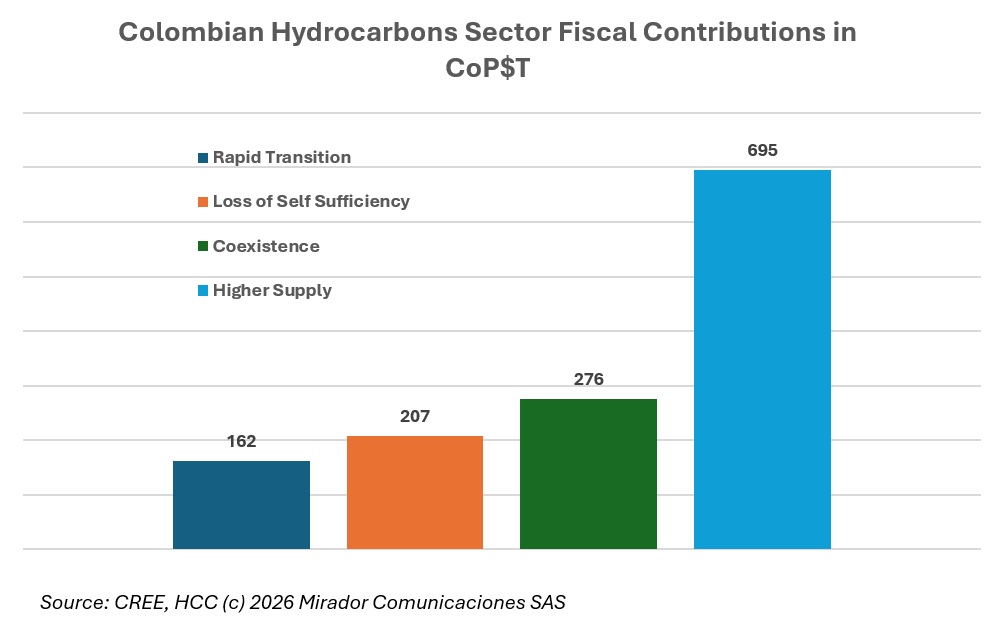
A joint study by six industry trade associations argues that decisions Colombia makes today on oil and gas exploration will determine how much fiscal capacity the country has to fund earthquake reconstruction, poverty reduction, and social priorities through 2050.

2026, Hydrocarbons Colombia, All Rights Reserved.
