

Ecopetrol CFO Camilo Barco left the door open to eventually evaluating opportunities in Venezuela, even as the company keeps its immediate growth focus on markets where it already operates — Colombia, Brazil, the U.S. Permian, and nine other countries.
Colombia’s State Council issued a ruling delimiting the right to protest and establishing civil liability for those who paralyze productive economic activity through violent means, overturning a Meta administrative tribunal’s earlier dismissal of an Ecopetrol claim.
Round one of the presidential elections was in May and we have had Abelardo de la Espriella (ADLE) for a month. What can we expect from now to December?
Sirius, the offshore Caribbean gas project Colombia is counting on to restore natural gas self-sufficiency, faces a bottleneck from a single unresolved prior consultation with Taganga, an artisanal fishing community near Santa Marta, financial demands Ecopetrol has characterized in stark terms.
Ecopetrol committed CoP$5,000 million to support families affected by the August 10 earthquake and its aftershocks, which have left more than 50,000 people displaced nationally, coordinating with the national government and disaster-risk authorities on aid delivery.
BTG Pactual maintains a Neutral rating on Ecopetrol, with a 12-month price target of US$14.5 against the US$17.53 the stock traded at when the report published, implying a 17.3% potential decline, partially offset by an expected 5.1% dividend yield, for an estimated total return of -12.2%.
The six governors of Colombia’s oil-producing departments – Arauca, Boyacá, Casanare, Huila, Meta, and Santander – formally ratified Ricardo Rodríguez Yee as their nominee for the board’s eighth seat, filing a letter with the Finance Ministry on August 26.
Ecopetrol’s board of directors approved the departure of five senior executives on August 27th, effective August 31th, with each position filled on an interim basis while the company defines permanent appointments.
President Abelardo De la Espriella’s government has finalized the single slate of nominees it will present at Ecopetrol’s extraordinary shareholders’ assembly on September 15, aimed at renewing the company’s board of directors.
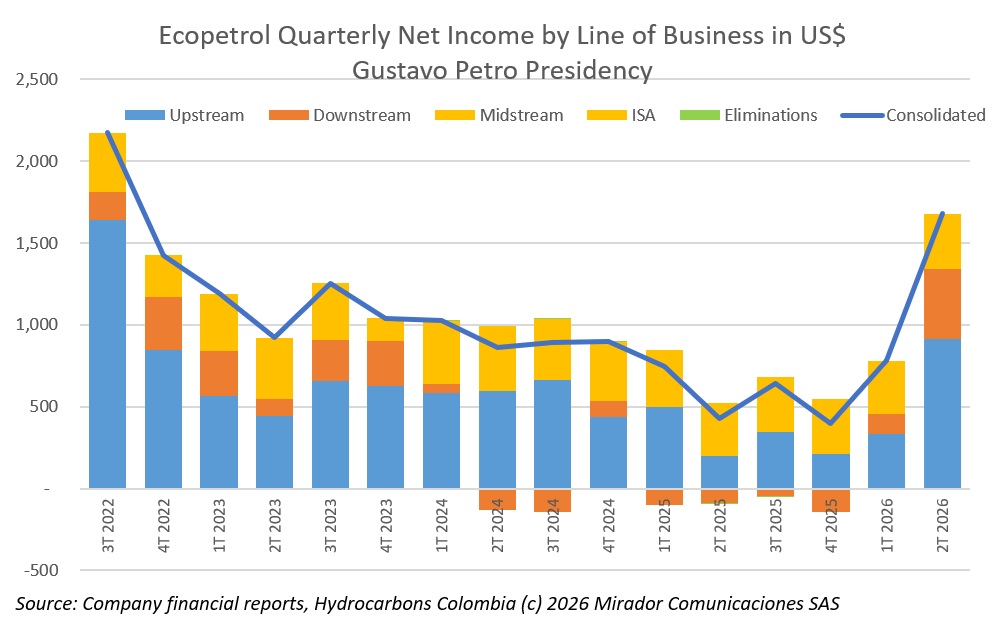
Technically it’s over. Practically speaking, it isn’t. Gustavo Petro was still president of Colombia in July and his temporary substitute for Ricardo Roa will be there until the end of the third quarter. Even if he leaves directly after the board meeting at the end of September, he will have been in charge for virtually all of the quarter.

2026, Hydrocarbons Colombia, All Rights Reserved.
