

Facing a fiscal deficit CARF projects could reach 10% of GDP by the close of 2027 and net debt around 67.3% of GDP, former Finance Minister Mauricio Cárdenas told Blu Radio that selling Ecopetrol’s majority stake in ISA to Colombia’s pension funds would be a smart move.
Ecopetrol’s full board unanimously designated Joaquín Gutiérrez Caballero as the company’s new president on September 24th, following what the company called a structured, agile selection process aimed at finding an “coordinating leader” capable of turning challenges into concrete results.
Ecopetrol’s board turnover, approved September 15th at an extraordinary shareholders assembly, replaced six of nine members while retaining Ricardo Rodríguez Yee, César Loza, and Luis Felipe Henao.
At Ecopetrol’s September 15 Extraordinary Shareholders Assembly, former senator and minority shareholder Jorge Enrique Robledo challenged President Abelardo De la Espriella’s economic vision for the company, calling it characteristic of “neoliberalism” and warning against treating national and foreign capital as equivalent in company decisions.
Graford Santamaría Valbuena, currently Ecopetrol’s hydrocarbons financial director, was named the company’s new commercial and marketing vice president, taking over after Julio César Herrera Martínez’s mutually agreed departure from the role.
I was and then I wasn’t going to use this biweekly opinion piece to comment on desirable qualities of the new CEO of Ecopetrol. I had decided there was a high risk of publishing just as ECP announced Joaquín Gutiérrez’s appointment. But five days after the board, the NOC has made no announcement and then I saw a relevant editorial in El Heraldo.
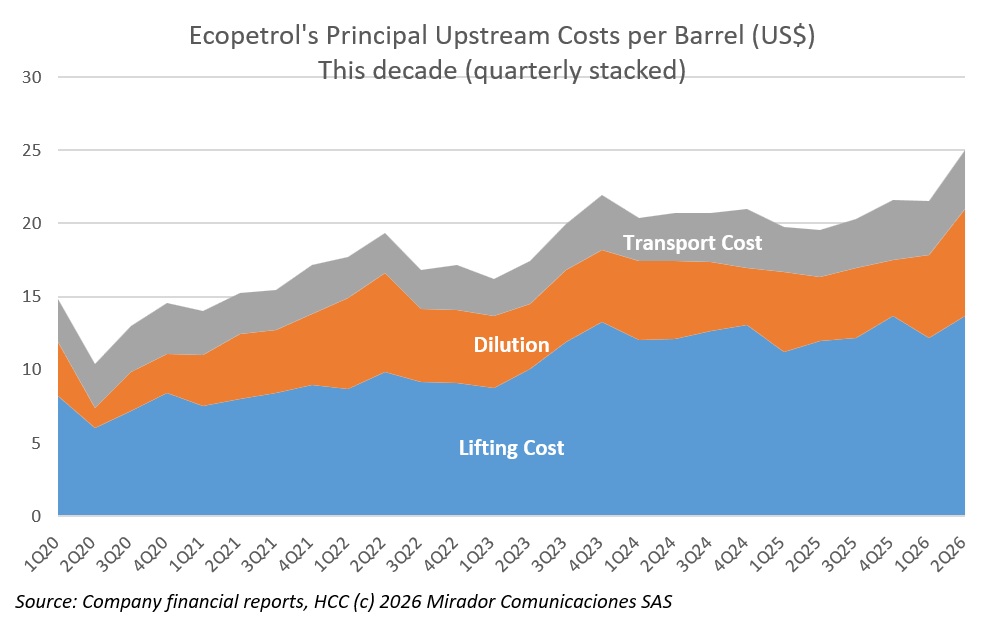
Ecopetrol will implement a company-wide austerity plan for 2027 following Ricardo Roa and Juan Carlos Hurtado’s departures and the board turnover, covering project studies and design, professional services and contracting, and travel expenses.
Ecopetrol’s new board elected Carlos Augusto Suárez Rojas – lawyer, political consultant, and one of President Abelardo De la Espriella’s closest strategists – as board chairman on September 17, with unanimous support.
Ecopetrol’s Extraordinary Shareholders’ Assembly approved a nine-member board for 2026-2029, with the government’s 88.5% stake carrying the vote.
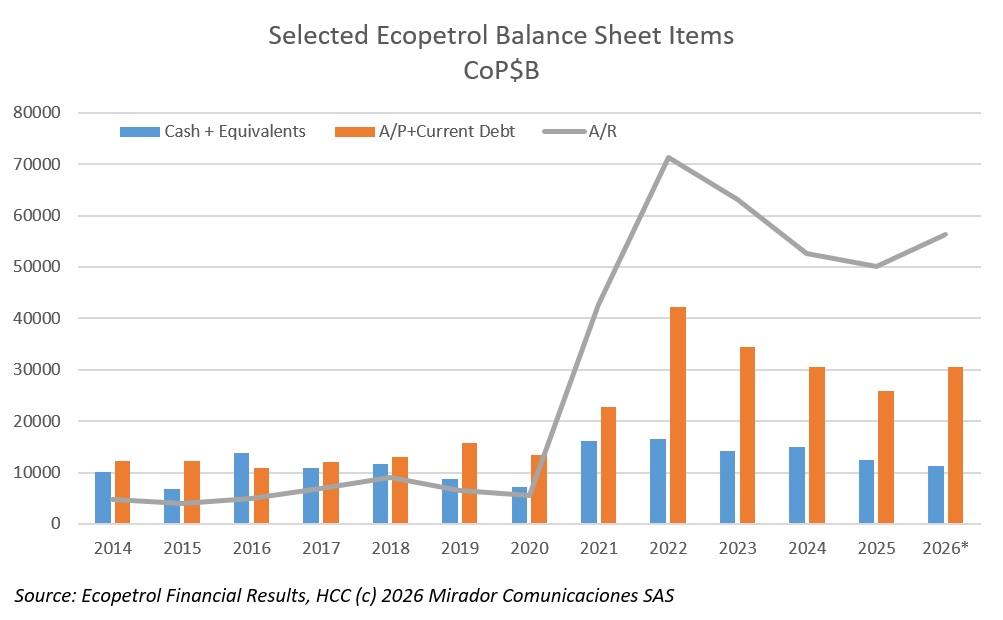
Ecopetrol’s cash position has reportedly fallen to around CoP$1.6T in recent days, down sharply from CoP$11.2T at the close of Q2 after the company paid its final dividend tranche to the government in June.

2026, Hydrocarbons Colombia, All Rights Reserved.
