

Editor’s Note: The Colombian Association of Petroleum Engineers (ACIPET) finds its members at the sharp end of the decline in petroleum investment, especially in exploration.
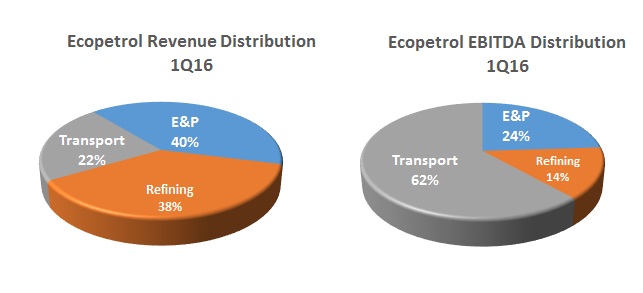
The dramatically different margins between Transport and Ecopetrol’s other Lines of Business means the profit shift continues. Although E&P and Refining represent nearly 80% of revenues, they represent less than 40% of EBITDA.
The president of the Colombian Petroleum Association (ACP) Francisco Lloreda lashed out against rising environmental and citizen protests against oil activities, which he says have become a free pass to extort and pressure the industry in Colombia.
The Meta Governor Marcela Amaya insisted that the department must shift its economic pillars away from oil and instead focus on tourism and agriculture. She formed a special committee to study employment.
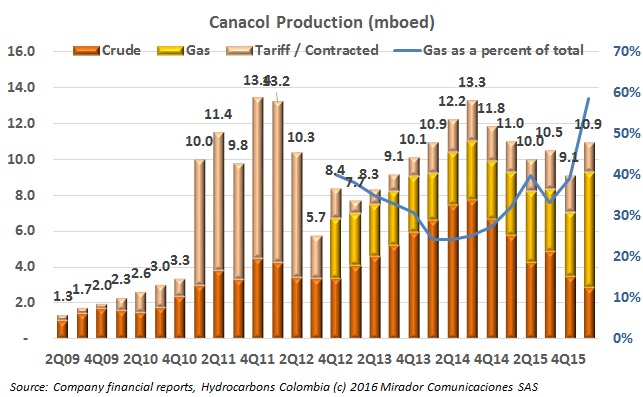
Canacol Energy’s (TSX:CNE) strategic direction towards greater gas production helped it defy the general trends of its peer: Netbacks and revenues rose, costs fell, and it even reported a profit for the first quarter of 2016.
The 49th round of talks ended last week without any major advances, but former El Salvadorian guerrilla Joaquín Villalobos, an advisor to the process in Colombia, assured that the end is the most difficult part, but that an agreement is near. Meanwhile the ELN process gets complicated.
A decree that would lift restrictions to import ethanol has been criticized by Senators and the biofuels industry association, as were the delays and overruns at Ecopetrol’s (NYSE:EC) biofuel refinery, which is still under construction.
The Ministry of Mines and Energy Germán Arce says that the government has maintained its goal of one million barrels of crude per day, despite the industry’s challenges and falling output, and said investors need clear signs and consistency in the oil industry.
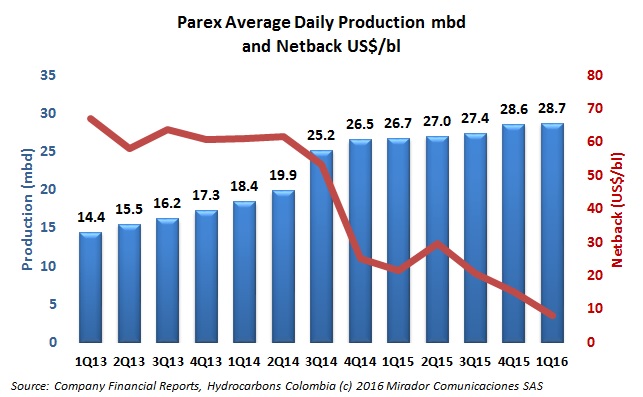
Parex Resources (TSX:PXT) said that its 1Q2016 production grew 8% year-over-year to 28,900boed, and that oil prices are reaching a point where it can consider increasing its 2016 Capex spending.
Equion Energy president María Victoria Riaño credited cost cutting measures and efficiencies for helping maintain the company’s financial performance and production, allowing it to beat the expectations of its two shareholders Ecopetrol (NYSE:EC) and Repsol (MSE:REP) and deliver dividends worth US$190M in 2015.

2026, Hydrocarbons Colombia, All Rights Reserved.

