

Analysts warn that Ecopetrol’s decision to void its offers to buy imported gas could leave Colombia’s two new regasification terminals without supply and widen the gas deficit by March 2027.
Naturgas president Luz Stella Murgas says Colombia’s national production can no longer cover total gas demand and that imports should continue as a reliability mechanism while exploration bottlenecks are cleared.
Gases del Caribe, the gas distributor for much of Colombia’s Caribbean region, has marked 60 years in business with more than 1.3 million users in Atlántico, Magdalena and Cesar.
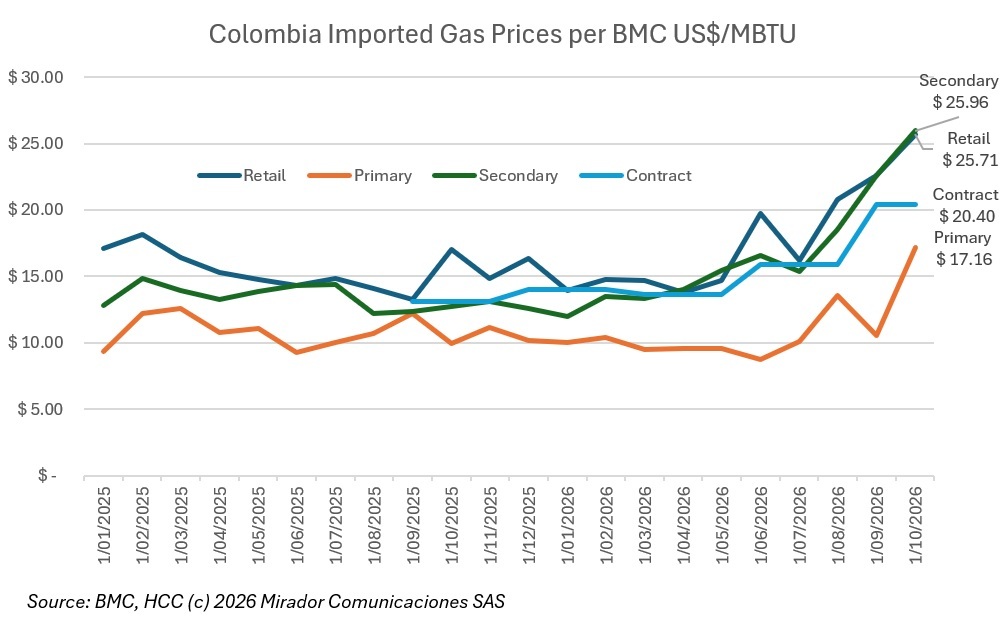
SPEC, the terminal that handles all of Colombia’s LNG imports, is running at its limit, and one energy analyst warns that without new regasification capacity the country could face a gas deficit of 124 mmcfd in March 2027.
GeoPark’s average oil and gas production rose 2.6% from 2Q26 to 27,973 boepd in 3Q26, and the company says its Venezuela expansion is advancing.
NG Energy International says its Aruchara-6 well at the Maria Conchita block is producing gas after tying into the central processing facility, and that it has spudded Encantado-1X at Sinú-9.
Cerro Matoso, the Córdoba nickel producer, says reduced gas deliveries from Canacol Energy have forced it to run at about half capacity since early August, costing it roughly 2,400 tons of nickel output.
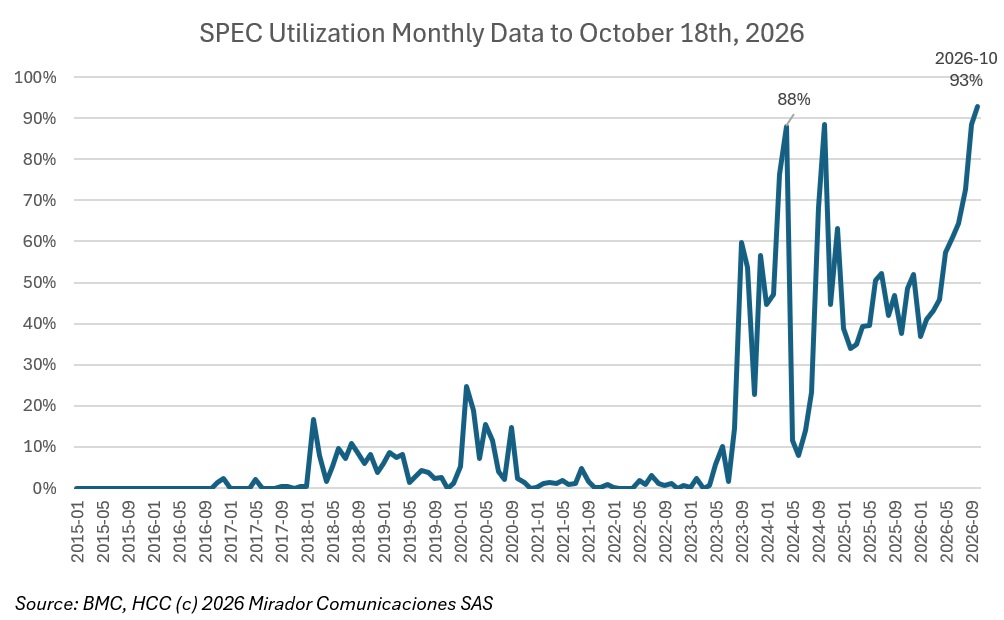
The SPEC LNG terminal in Cartagena is set to add 58 mmcfd of regasification capacity within days, taking it to 533 mmcfd. That would be the country’s only LNG import gateway running at a higher ceiling just as demand pressure builds.
Ecopetrol has declared void the offers it received to import LNG on five-year terms, saying they did not meet minimum commercial conditions, and says it will strengthen domestic gas output and accelerate Sirius.
Colombia’s vice minister of energy, Armando Cuello, has resigned, and press reports say his next stop is Ecopetrol’s gas business.

2026, Hydrocarbons Colombia, All Rights Reserved.

