


Non-Armed Forces-reported incidents went up by one this week and that brought the total incident count up by one. However that did not stop the 52-week average from falling to an historic low of 30 incidents per week. This is the safest 52-week period we have seen since starting tracking in 2012.

A recent report shows that there has been a 17% reduction in attacks through July of this year, to total 73 acts of aggression against oil infrastructure. The number of blockades has also dropped compared to last year as well.
President Santos claims that the last couple weeks of the peace process has progressed more than in an entire year. “In these two or three weeks much more has been advanced than in the last six months or the past year,” said Santos. Dialogues have focused on justice and the end of the conflict.
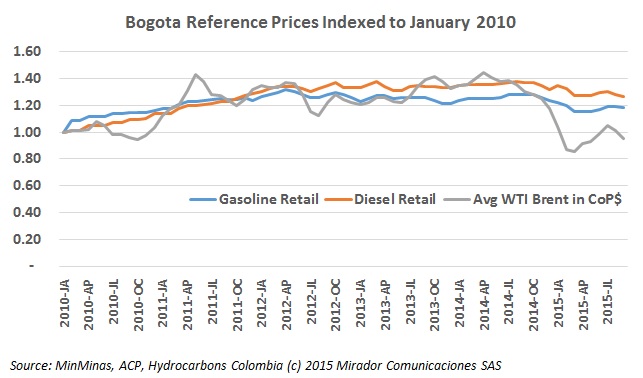
The Ministry of Mines and Energy (MinMinas) announced a slight drop in both diesel and gasoline prices for the month of September, moved by declines in international fuel prices. However the strengthening of the US dollar against the peso and rises in biofuel costs kept the final price from falling further at the pump.

Non-Armed Forces-reported incidents went up this week but virtually all were due to actions in the past like minefields or explosive caches and traps. Armed Forces-reported incidents were down in oil and gas-related zones.
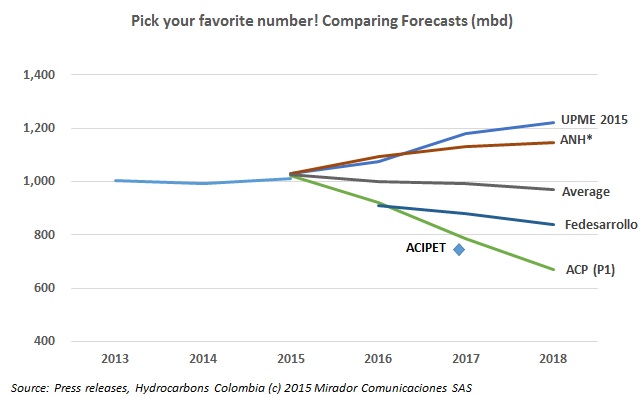
Considering a fall of 70% and 80% in seismic work and exploratory wells and declining mature fields, Colombia’s daily production could fall as low as 750,000bd in just two years, says the executive director of Colombian Association of Oil Engineers (ACIPET), Carlos Leal.
Record production from nearby fields, along with optimized contracts, processes and operations have helped the Barrancabermeja Refinery report operational profits, despite facing a rocky labor scenario within.
Havana chief negotiator Humberto de la Calle announced some of the options being considered for the development of agreements with the Farc and defended the “sovereign powers” of the executive to submit agreement proposals.

Guerrilla-initiated incidents by both groups stayed down this week and the Armed Forces also cut back their activities, at least in oil-and-gas areas. As a result, total incidents fell to 22.
Even though the Farc has backed off and not attacked any pipelines since the start of its July 20 truce, the Coveñas/Caño Limón Pipeline (CCL) has suffered in the month of August due to the attacks over the last two months.

2026, Hydrocarbons Colombia, All Rights Reserved.
