

Images of Farc negotiators in public, accompanied by armed guerrillas in a public plaza in La Guajira for a peace campaign, led to condemnation by the government and a halt in talks. With the urging of the guarantor nations, the impasse was resolved, but the incident demonstrates how fragile the process is at this point.
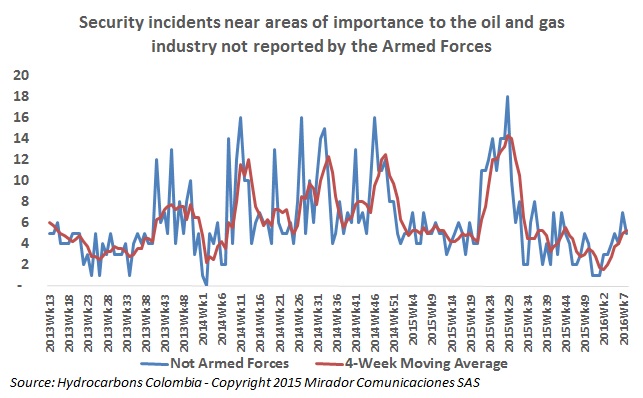
Guerrilla-initiated incidents maintained last week’s level (although two were away from oil and gas infrastructure) but the Armed Forces increased their activities in 50%, stepping up the intensity between them and the ELN.
A lead Farc negotiator again rejected a plebiscite as the means to approve a final peace agreement, while congress has started to debate a bill which would cover many of the post-conflict special measures.
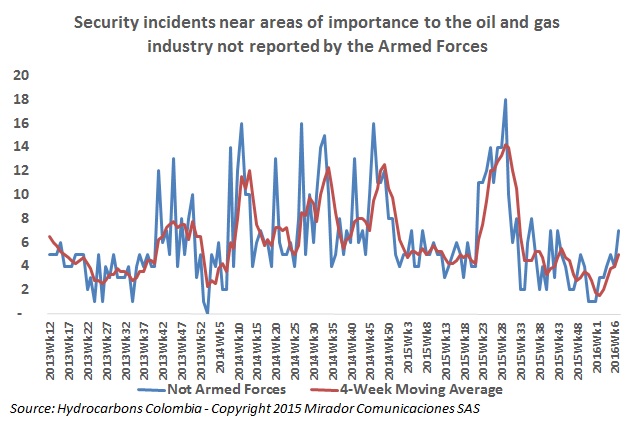
As the pre-negotiations with the ELN stumble on certain items (like the location of the talks), the guerrilla have stepped up the violence to try to weaken the government’s resolve.
“What is signed in Havana will be subject to a plebiscite, whether the Farc likes it or not”, said President Juan Manuel Santos in reaction to an open letter from the guerrilla that it would not be the adequate legal or constitutional instrument.
Guerrilla-initiated events have risen for four successive weeks (on a Moving Average basis) but remain near historic lows. However, what inspired us to publish was a qualitative difference in last week’s ELN activities.
The Minister of Mines and Energy (MinMinas) Tomás González sent a letter to the mayors and governors of the Caribbean coast detailing a resolution from the ministry that he says will help expand existing infrastructure and deal with the region’s natural gas supply issues
The Community of Latin American and Caribbean States (Celac) held its annual summit, which included a discussion on the role of the organization in the final stages of the peace process. The entity’s members will work with the UN in the verification of the transition process.
Press reports say that a formal bilateral cease fire is getting very close, while the United Nations is contemplating a role as an outside observer of the cease fire and laying down of arms. The request is the fruit of an agreement on the mechanism to be used that was signed this week.
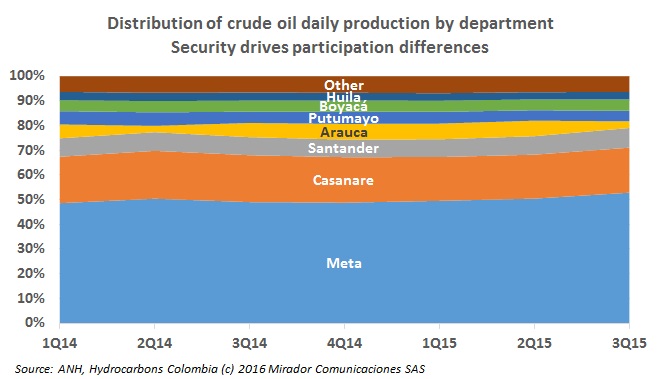
We were inspired to do this graph by a recent article from Diario del Huila, lamenting changes in market share for the department as a whole.

2026, Hydrocarbons Colombia, All Rights Reserved.
