

The integration of artificial intelligence (AI), edge computing, and robotics is poised to bring significant advancements to the oil and gas industry.
Amid growing concerns about a potential gas shortage in Colombia, there’s increasing speculation about a rise in household gas tariffs.
For years, Bolivia was seen as a rare socialist success in Latin America, achieving economic growth, low inflation, and reduced poverty. However, the country’s mismanagement of its gas resources provides a cautionary tale.
Colombian Finance Minister (MinHacienda) Ricardo Bonilla appeared before the Senate’s Commission IV to introduce a new tax reform bill, known as the “Financing Law.”
At the beginning of October, the oil and gas industry held its annual three-day summit, this time in Cartagena. Overlapping slightly, the Petro government also held a three-day summit called Feria de las Economias para la Vida (Economies for Life Fair) or FEV. The President and the Minister of Energy at least seemed to position it as the opposite of the Oil and Gas Summit.
Ecopetrol (NYSE: EC) has become a driving force for regional development through its focus on sustainability and social responsibility.
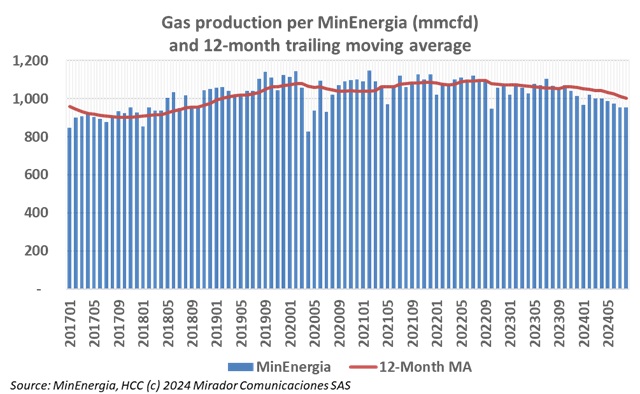
Luz Stella Murgas, President of the National Association of Natural Gas (Naturgas), issued a stark warning.
Following a recent meeting, Colombia’s governors, organized under the National Federation of Departments (FND), called on the national government to review the new formula for the General System of Royalties (SGR) budget for the 2025-2026 period.
The Inspector General’s Office (PGN) requested that the National Environmental Licensing Agency (ANLA) lift the suspension of the environmental licensing process for the Komodo-X1 offshore hydrocarbon exploration drilling project, located in the COL-1 block of the Caribbean Sea.
Seven years ago, Colombia celebrated what was hailed as the country’s largest natural gas discovery in four decades.

2026, Hydrocarbons Colombia, All Rights Reserved.
