


The Quifa/Pacific Rubiales/Ecopetrol story never dies! Now the Comptroller General (a kind of Auditor General) weighs in on the March 13, 2012 ruling to emphasize the difference in current WTI prices versus the historic prices, and therefore the Colombian state risks losing US$13M.From a Comptroller General press release, translated and with commentary by Hydrocarbons Colombia
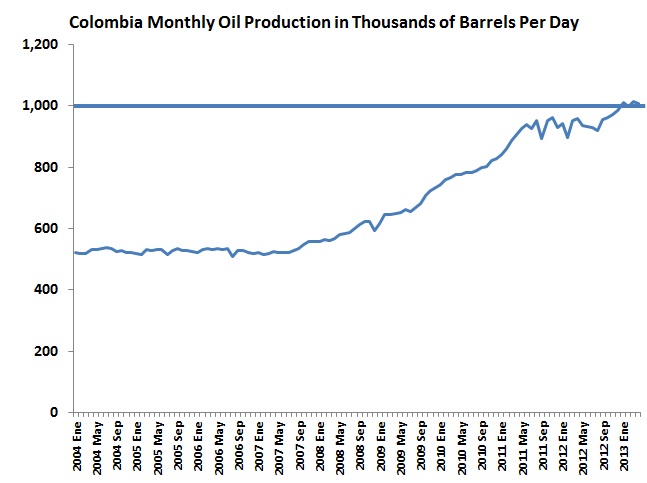
Just in time for the Minister’s speech to the CinMiPetrol conference next week in Cartagena, the Ministry announces a second consecutive month with crude oil production above 1Mbd. April’s number was 1,006,799bd which was below the record 1,013,481bd last month but still above the objective and much better than February’s result.
Sounding like something from a Transformers movie and merging the acronym ‘OCAD’ (for the initials in Spanish of the boards that approve projects looking for royalty money) and ‘marathon’, the invented word ‘OCADton’ is supposed to reassure local municipalities that the process is working faster in 2013. From a DNP press release, translated and with commentary by Hydrocarbons Colombia.
We thought this ANH announcement that appears on both the MinMinas and ANH websites was important because it describes a change in procedure for applications and permits as of May 3, 2013. The changes were announced over a year ago but take effect this month. Translated by Hydrocarbons Colombia.
When we saw this, we thought it was a garbled rumor but it appeared on the National Planning Department (DNP) website. Then on TV we saw Blair sitting with senior DNP officials and smiling to the press at the foot of the main staircase in the presidential palace. The story passed from rumor to theater of the absurd. From a DNP press release, translated and with commentary by Hydrocarbons Colombia.
Newspaper El Nuevo Siglo interviewed Jorge Bendeck, Fedebiocombustibles president, who referred to the advantages of using biofuels and the current state of the sector in the country. According Bendeck, although the government has supported the biofuels industry, it does not stimulate domestic consumption.
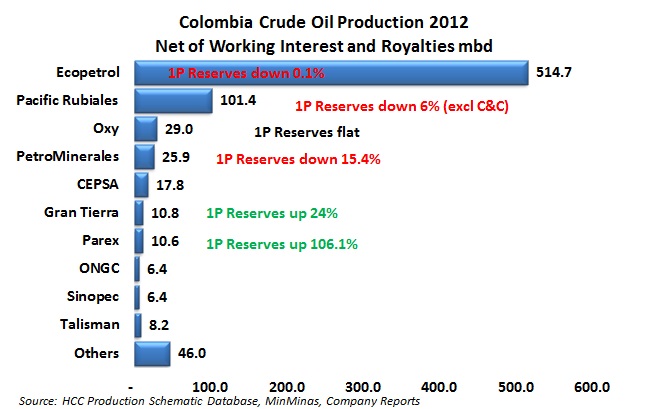
The country’s reserve report for 2012 has been much anticipated because prior signals were not very positive. Government officials publicly worried about reserve-production ratios as did the Colombian Petroleum Association (ACP). The three of the largest companies (Ecopetrol, Pacific Rubiales, Petrominerales) did not have good years for oil exploration in Colombia. We think ‘Small Oil’ made up the difference. Overall, this is good news but our commentary points out that there is still much to do. From a MinMinas press release, translated and with commentary by Hydrocarbons Colombia
MinMinas is usually pretty economical with its press releases (unfortunately for those of us who need to publish content on the Colombian hydrocarbons industry). Here they use one to announce an internal committee. From a MinMinas press release, translated and with commentary by Hydrocarbons Colombia.
It apparently only dawned on President Juan Manuel Santos last week at the annual mayors’ meeting that the new royalty system had left some producer municipalities without funds. This is the fourth of four articles we have published this week as the government tries to solve in a matter of days, a problem that has built up over a year. From a DNP press release, translated and with commentary by Hydrocarbons Colombia.
As reported by Portafolio, the Comptroller General recovered US$4.1M from royalties through its audit program. The payment of this money was made by the insurer QBE, guarantor of the royalties in the departments of Meta and Casanare. According to the Comptroller, both departments made “risky fiduciary operations”, in which public money was put into a trust constituted by private individuals and got lost by not returning to the corresponding territorial public funds.

2026, Hydrocarbons Colombia, All Rights Reserved.
