

Jorge Bendeck, a longtime ally of the new Mining and Energy Minister Amylkar Acosta, is a small step away from taking the position as president of the National Hydrocarbons Agency (ANH), bringing his experience and focus on exploration and infrastructure with him.
Colombia’s National Hydrocarbon’s Association (ANH) will become the entity responsible for collecting royalties generated due to gas production starting January 1, 2014.
The ramifications of the Constitutional Court’s ruling that congress, not the executive branch, is responsible for the fixing of fuel prices or subsidies will render two big losers: Colombian consumers and the NOC Ecopetrol (NYSE:EC).
The central government is aware the general royalties system (SGR) is not working as best it could, a little more than a year after its implementation, and is open to making adjustments, according to the Mines and Energy Minister Amylkar Acosta.

Following a decision early this month from the Constitutional Court that the executive branch could no longer set fuel prices, the court has also rejected a request to suspend the ramifications of the ruling for a year.
Nubia Orozco Acosta has been sworn in to run the National Environmental Licensing Authority after its former director Luz Helena Sarmiento took the Environmental Minister’s role earlier this month.
Selling a small percentage of Ecopetrol (NYSE:EC) instead of the whole of electrical energy generator Isagén would be preferable for the government to raise money for a needed investment in infrastructure says the VP of Colombia’s Senate, Carlos Emiro Barriga.
Colombia’s gas industry is moving towards an open market instead of using an auction system as a way to lower gas prices at the wholesale level. The full supply offer is set to delivered to the industry this week and the negotiation phase will start on September 30.
The new mines and energy (MinMinas) minister Amylkar Acosta has arrived to a particular dilemma beyond the strikes and protests, as the ministry is facing a 16% cut in its 2014 budget.
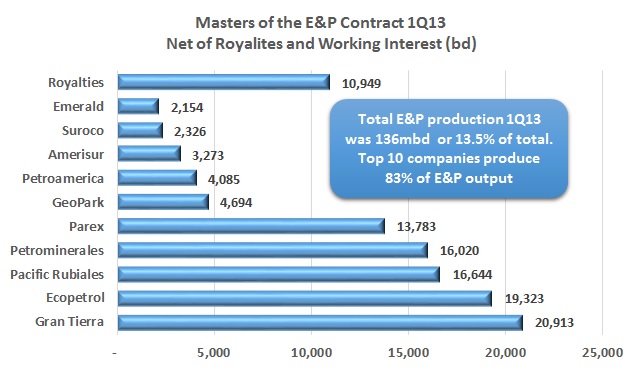
We published a similar article a few weeks ago. Unfortunately our data analysis suffered a technical problem that produced inappropriate conclusions. We apologize for any misunderstanding. Here is the completely revised and corrected data.

2026, Hydrocarbons Colombia, All Rights Reserved.
