

Colombia has a plan to guarantee energy supply amid forecasts of the ‘El Niño’ phenomenon.

Colombia’s Central Bank (BanRep) modified its projections for the national budget, taking into account lower Brent prices.
The president of the Colombian Association of Entrepreneurs (ANDI), Bruce Mac Master, catalogued Colombia’s labor panorama as “pessimistic.”
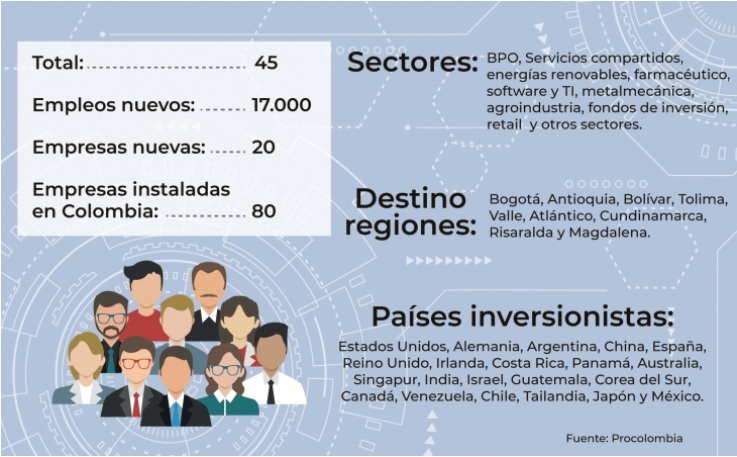
Colombia is still an attractive destination for foreign investment, despite falling commodity prices and the Covid-19 crisis.
Our Long-Time Reader is back as life imitates art. It would be nice to imagine that his article in HCC inspired the Washington Post but that is highly unlikely. The newspaper is not even a subscriber! Instead, as he says in his opening paragraph, his commentary anticipated the Post article and the latter has inspired him to elaborate on his arguments.
The National Hydrocarbons Agency (ANH) said it could modify oil pipeline tariffs for the first time.
Will Colombia have an energy shortage by the end of the year? The Minister of Mines and Energy (MinEnergia), Maria Fernanda Suarez, spoke on the matter.
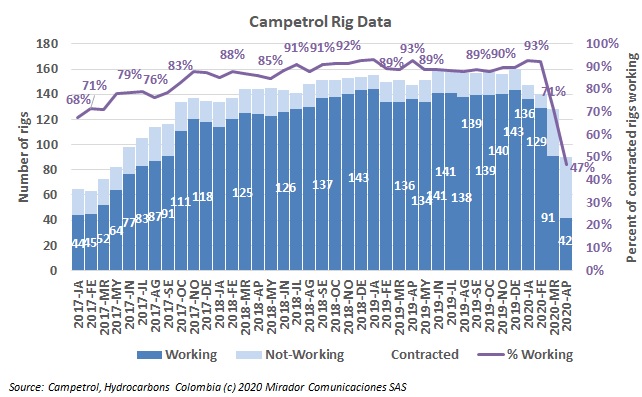
The Colombian Chamber of Goods and Services (Campetrol) reported its drill rig information for April 2020.
Unlike other countries in the region, Colombia’s GDP grew in the first trimester of this year, amid the health and financial crisis that the world is going through.
Barranquilla’s public transport system has been affected due to lack of fuel during the health emergency.

2026, Hydrocarbons Colombia, All Rights Reserved.
