

Here is the third installment of Norton Rose Fulbright’s analysis of the ANH’s draft accord. We believe this could transform the regulatory framework for the industry significantly.
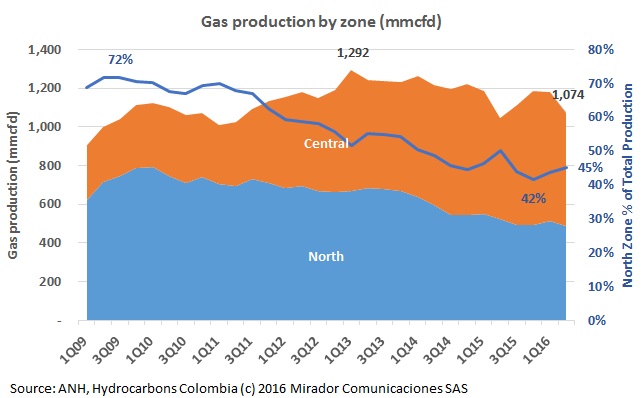
The National Hydrocarbons Agency (ANH) has not published detailed 2Q16 results for gas so we are unable to do a similar analysis to that we did last week for crude oil. But we can look at trends and the principal one is shown in the graph.
Here is the second installment of Norton Rose Fulbright’s analysis of the ANH’s draft accord. We believe this could transform the regulatory framework for the industry significantly. In this installment, NRF looks at Articles 5 through 9.

Our quarterly look at Ecopetrol (NYSE:EC) Line-of-Business (LoB) results usually focuses on comparatives. But the real story in 2Q16 was the increase in EBITDA from the E&P business.
We have given plenty of attention to the scope (and gaps) of the government’s “Territorial Strategy” being executed by the National Hydrocarbons Agency to mitigate community conflict.
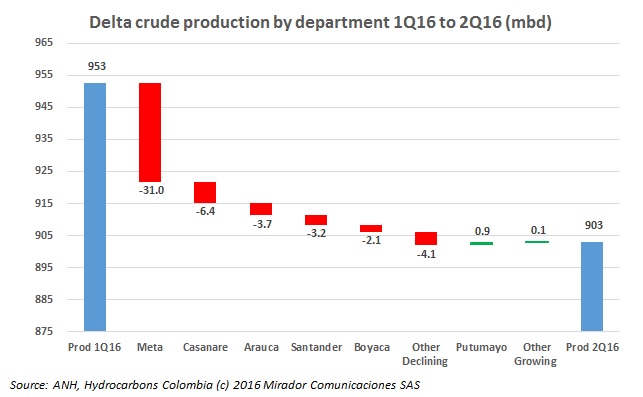
The crude oil production decline in 2Q16 – which continued in July – was a surprise for some observers (including us unfortunately). We know the reason is the lack of development drilling which is letting natural declines dominate production.
Everyone in the industry is concerned by the rise of violence against the oil industry over the past few months.
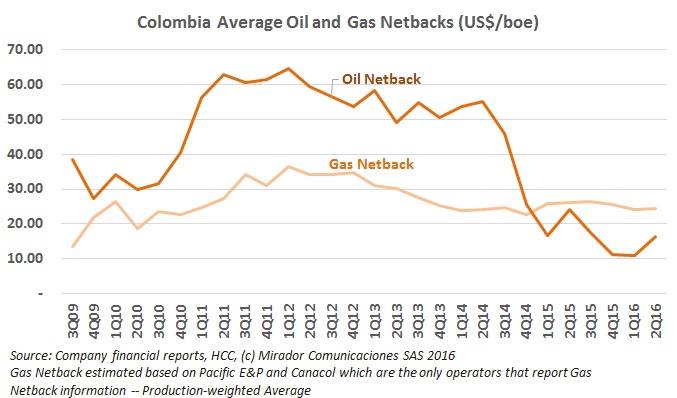
The graph shows that gas continued to be a better business than crude oil in 2Q16 despite rising oil prices which boosted oil netbacks.

The expression is “A rising tide lifts all boats” but that certainly applies to netbacks when prices go up. Brent was up 32.5% in 2Q16 and that helped all Colombian companies report better netbacks.
“Parex keeps moving forward” That was the phrase we used to describe Parex’s (TSX:PXT) 2Q16 results and somewhat to my surprise, Colombia President Lee DiStefano liked it.

2026, Hydrocarbons Colombia, All Rights Reserved.
