

Before any of the companies carrying out offshore exploration can start producing hydrocarbons a regulatory model for the activity must be put in place to allow the activity, according to the general director of the Maritime Authority (Dimar) Vice Admiral Pablo Emilio Romero.
“It was as if God had decided to put to the test every capacity for surprise and was keeping the inhabitants of Macondo in a permanent alteration between excitement and disappointment, doubt and revelation, to such an extreme that no one knew for certain where the limits of reality lay.”
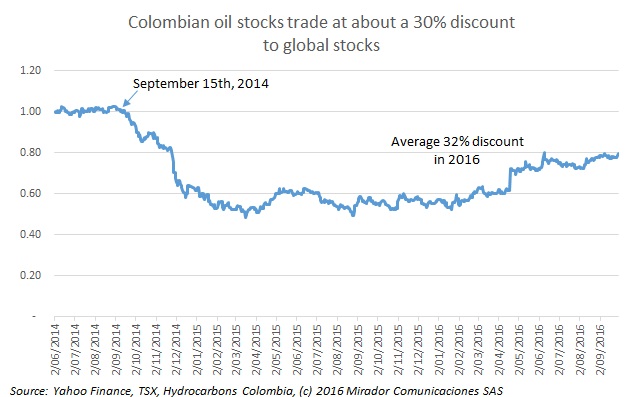
We have updated our Colombian share price index and while the average picture looks good (see graph), that is almost entirely due to Parex (TSX:PXT).
Despite the loss of the ‘yes’ vote the USO said it continues to support the peace agreement said that process cannot be undone. The union also called for a “spirit of reconciliation” from the supporters of ‘no’.
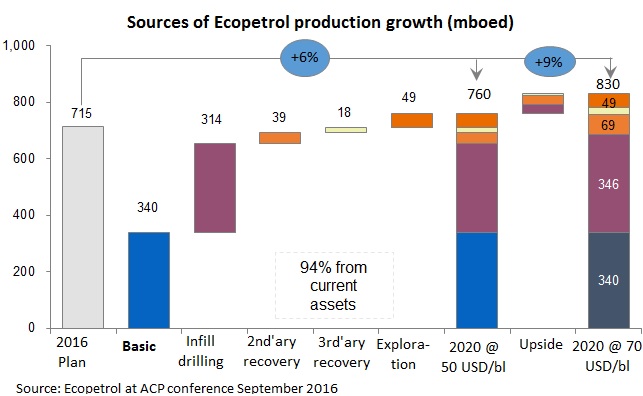
Ecopetrol (NYSE:EC) has launched its new business plan through 2020, with a renewed focus on exploration and production and an estimated US$13B investment plan.
The Minister of Mines and Energy Germán Arce detailed the measures being taken by the government to attract new investment for the sector, which the ministry believes could bring in an additional US$6.5B in investment for hydrocarbons and mining.
The Inspector General’s office issued a statement on the growing trend of public referendums to reject hydrocarbons production at the municipal level, and said that these are costly, the competence of the state and affect investment for social and economic development.
The uncertainty following the win of the “no” vote in Sunday’s plebiscite is still as deep as ever. There have been several developments though: a march in favor of peace, a rare Uribe/Santos meeting and a deadline for the ceasefire in the very near future.
Ecopetrol (NYSE:EC) will start its Rubiales field drilling campaign this month with 72 wells planned for the country’s largest producing and recently reverted field.
The reversal of gas between Colombia and Venezuela has been a long time coming, but Colombian business leaders are left discontented after it has been revealed PDVSA will not sell natural gas back to Colombia at the same price it received it.

2026, Hydrocarbons Colombia, All Rights Reserved.

