

This past week Ecopetrol published its results and both the popular press – and Hydrocarbons Colombia – was focused on this event. But is this media attention justified?
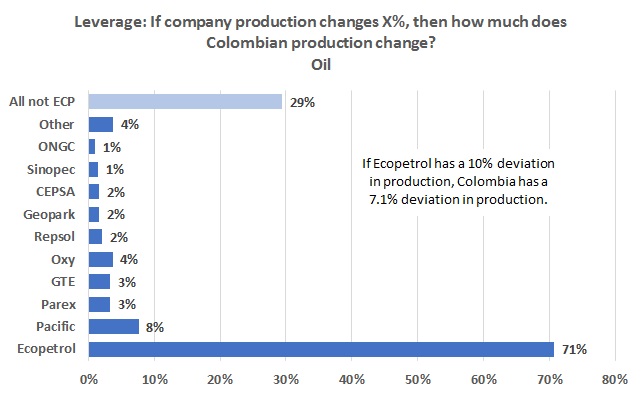
We have made this point before but this is a different way to look at it. It will be very hard for Colombia to hit the production goal the ANH is talking about – 900 mbd – if Ecopetrol (NYSE:EC) is only going to be about flat with its production.
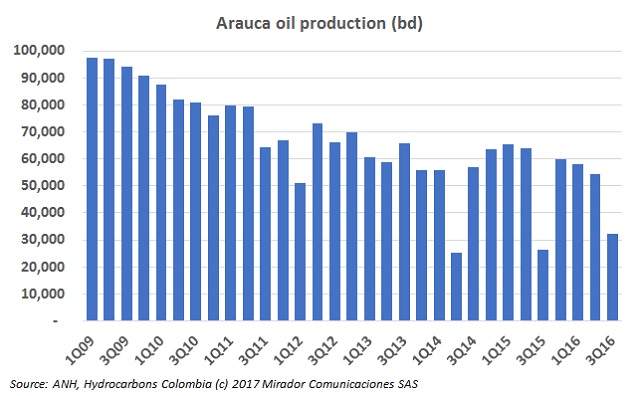
Ecopetrol (NYSE: EC) faces increasing social unrest and, at the same time, attacks against its infrastructure. This means high costs for everyone. Attacks on Caño Limón pipeline are the most significant.
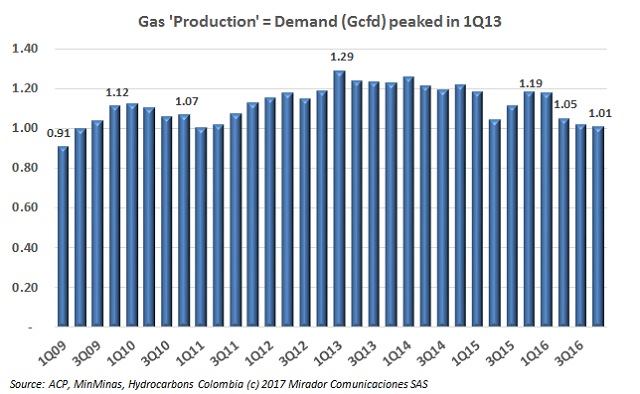
The Sectorial Studies Direction of the General Comptroller conducted a discussion on natural gas and its supply. The Mining Ministry (MinMinas) and the Energy Mining Planning Unit (UPME) participated in the event.
The government plans to propose a law to allocate 7% of the royalty resources to the post-conflict process. Some governors believe that this measure will promote centralism.
This week was definitely hectic for the post-conflict process since the fight against drugs in the country seems to be coming to an end with Farc’s help, but the political battle in the Senate over the JEP project seems to be just starting.
Ecopetrol (NYSE: EC) announced that it will distribute dividends to its shareholders this year. The company exceeded analysts’ estimates. The good results left the financial market calm despite the oil crisis.
Several legislators and directors of public agencies participated in a forum organized by the presidency of the Senate. The event was held in Villavicencio. The National Hydrocarbons Agency (ANH) was present.
With the ‘no-cost assignment’ method, Ecopetrol (NYSE:EC) delivered essential materials that helped communities in Norte de Santander and Magdalena Medio execute housing projects, and rural communities in Yopal showed their gratitude towards Equion’s social investment projects in the region. These and other Corporate Social Responsibility (CSR) news in our periodic summary.
Huila’s entrepreneurs gave a rational perspective on the oil snd gas industry’s performance at an international and local level.

2026, Hydrocarbons Colombia, All Rights Reserved.

