


Friday, October 9th, 2026
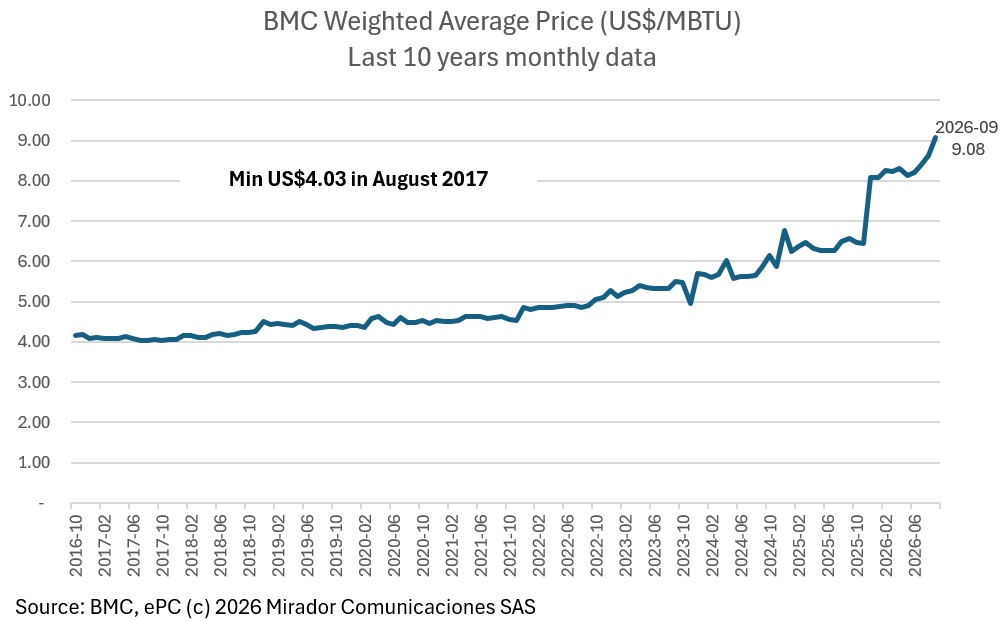
This should come as a surprise to no one: as domestic production falls, the supply mix shifts to imported gas at more than twice the price of domestic. The average inevitably has to go up.
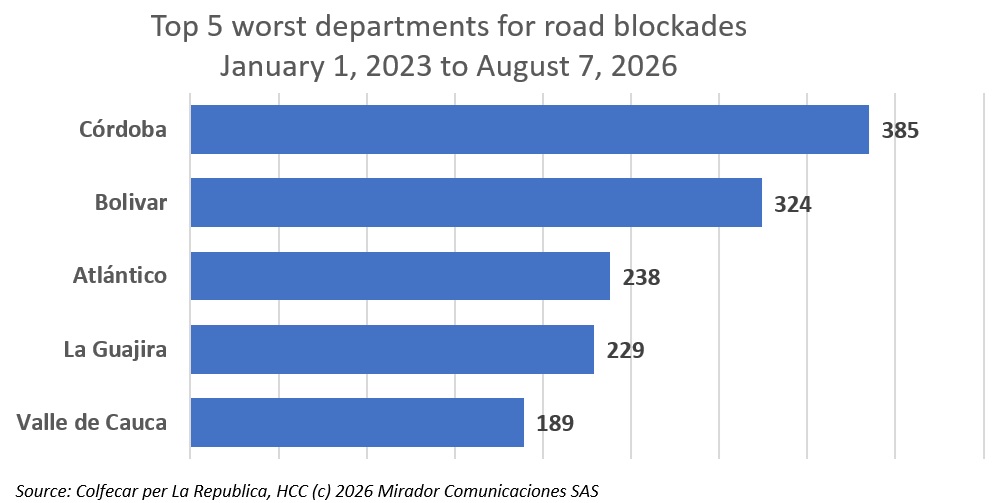
Road blockades have cost Colombia’s cargo transport sector CoP$12.9T since 2023, according to the federation’s own count of 2,841 between January 1, 2023 and August 7, 2026.
Joaquín Gutiérrez Caballero, who takes over as Ecopetrol president on September 28, opened with a warning that Colombia has reserves of just 7.4 years of oil and 5.9 years of gas, figures he called “paltry”.
Colombia faces a growing natural gas deficit if the projected decline in domestic output continues, and a regasification terminal in La Guajira is central to closing it.
Colombia’s government projects royalties income of CoP$27.54T for 2027-2028, 11% below the CoP$30.96T of the current biennium.
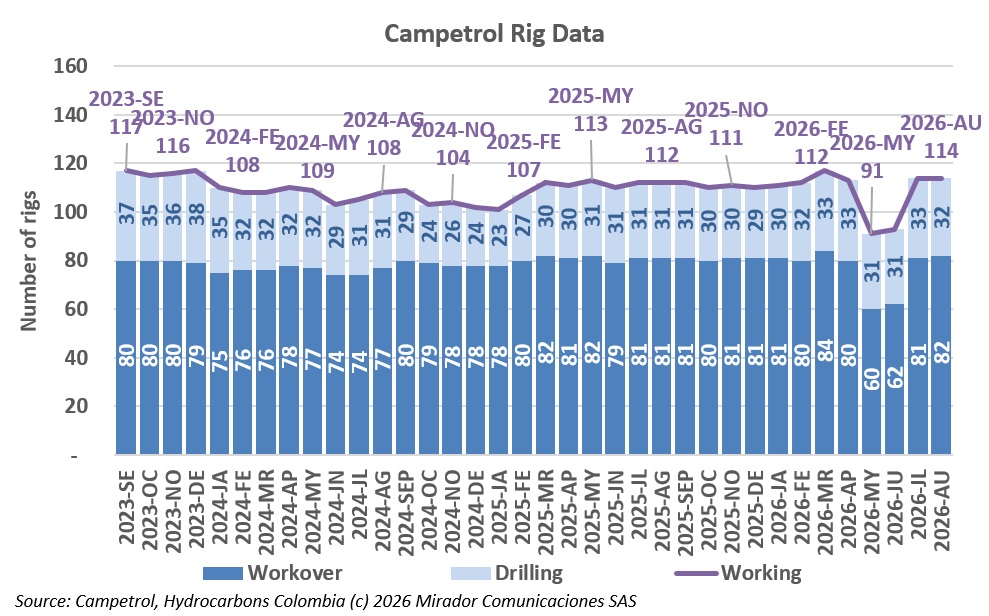
Colombia had 114 active rigs in August, up 1.8% (two rigs) and level with July.
Colombia’s National Hydrocarbons Agency (ANH) is moving to add nearly 20 million hectares of new areas for oil and gas exploration, a sharp reversal of the restrictions of the Petro years.



2026, Hydrocarbons Colombia, All Rights Reserved.
