


Friday, August 28th, 2026
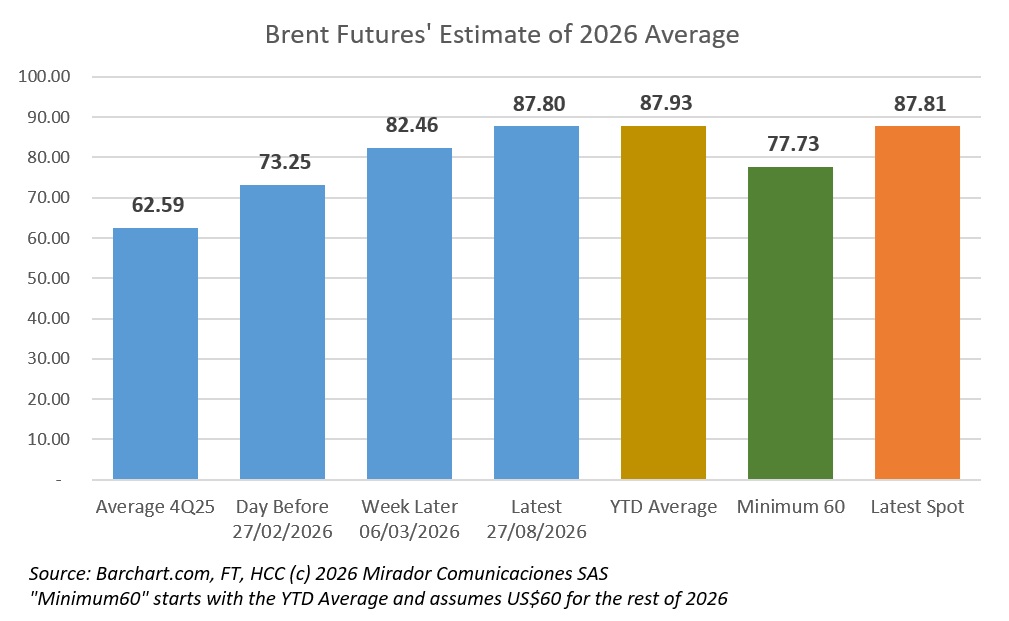
The US and Iran are no closer to a solution to the Strait of Hormuz but the situation may becoming to a sustainable stalemate and that, in turn, may be stabilizing Brent – but only in a medium-to-long term sense.
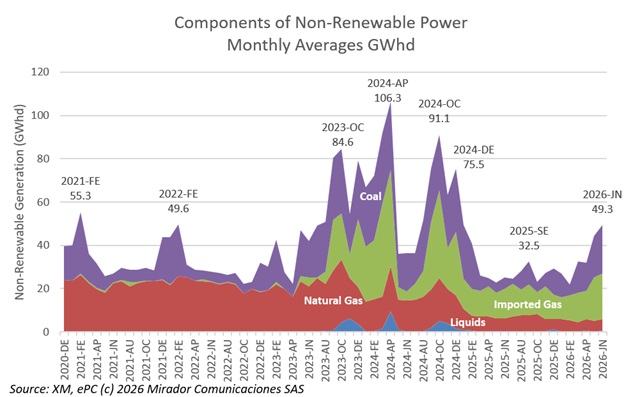
Colombia’s electricity demand is projected to grow roughly 10% between 2026 and 2030, according to UPME estimates cited at Andeg’s 13th Energy Forum, straining both generation supply and the transmission network.
Following a meeting with the Colombian Natural Gas Association (Naturgas), Minister of Environment Fabio Arjona endorsed natural gas as a fundamental fuel for Colombia’s energy transition, framing it as compatible with energy security, emissions reduction, and territorial protection.
The De la Espriella government is expected to call an Extraordinary Shareholders’ Assembly for Ecopetrol in late September, aimed at advancing changes to the company’s board of directors.
President Abelardo De la Espriella ordered the Armed Forces and National Police to launch a joint operation against hydrocarbons theft, coordinated with Ecopetrol, the Fiscalía, and other authorities “to comprehensively attack this criminal economy.”
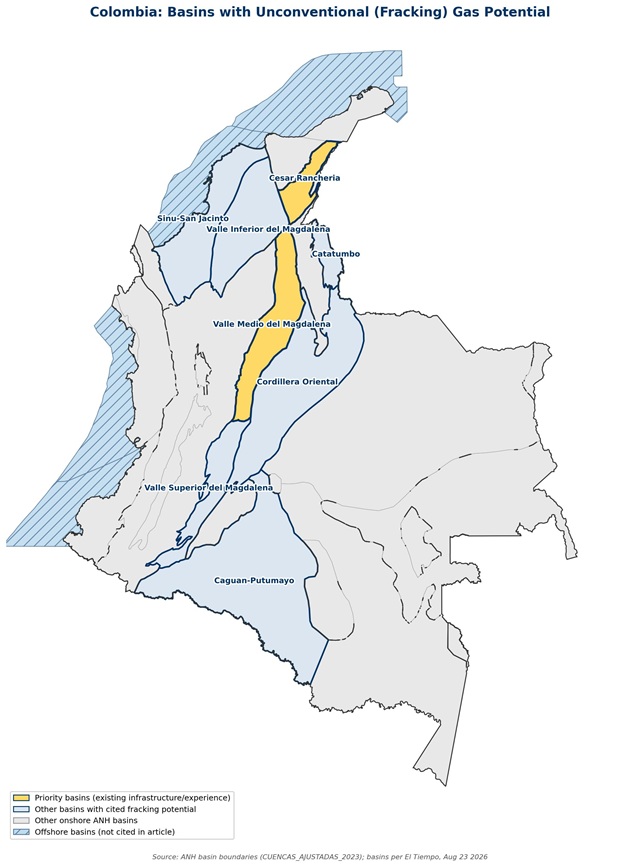
President Abelardo De la Espriella’s arrival has revived hopes of restoring Colombia’s natural gas self-sufficiency through unconventional reservoir development, with industry experts pointing to substantial potential across eight basins beyond the long-discussed Middle Magdalena Valley, following more than 15 years of regulatory and environmental debate.
Electricity market controller XM’s interim general manager Juan Carlos Morales was direct about what backing up Colombia’s hydro-dependent grid through El Niño will require: ‘we’re going to need coal and gas, as well as liquid fuels… the entire generation chain of the system will be called upon.’



2026, Hydrocarbons Colombia, All Rights Reserved.
