

The number of attacks on oil infrastructure has dropped considerably, in fact in January and February only two were reported, but 2014 showed that the guerrilla’s methods remain very effective despite lowered activity.

Incident counts went up significantly this week to 33 but qualitatively we are still in the same ‘quieter’ period with respect to guerrilla-initiated activities.
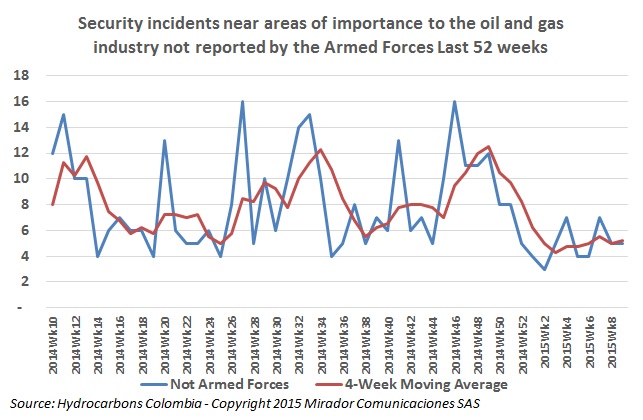
Incident counts went down significantly this week to 21 but as the graph shows, our proxy for guerrilla-initiated activity remained in the same ‘channel’ it has followed since the Farc declared its unilateral truce.
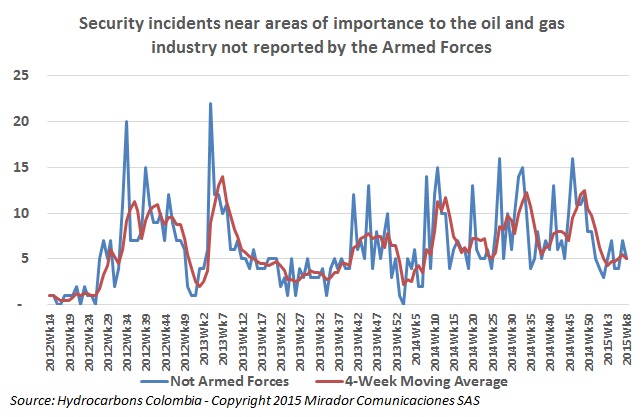
A report from the Peace & Reconciliation NGO found that the Farc’s “armed actions” dropped by 40% in 2014, which it says saved hundreds of lives. But attacks on oil infrastructure, extortion and the increase in ELN attacks are still a worry.
Government and Farc negotiators were back at the table this week to return to the issue of victims, and received former UN chief Kofi Annan as part of an effort from the Nobel Peace Prize winner to move the process along, followed by a visit from a US special envoy.
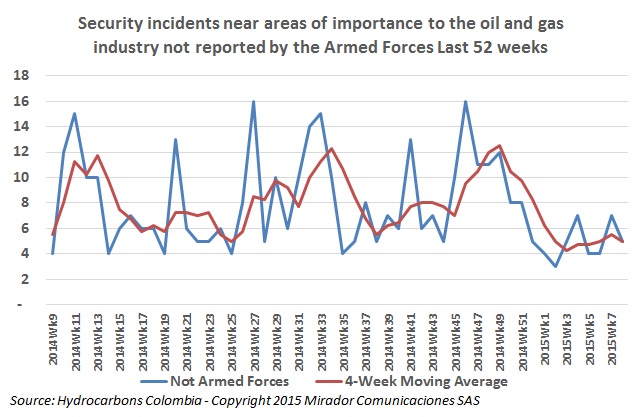
Incident counts went up again this week (to 38) but that was due to increased Armed Forces activity. As the graph shows, our proxy for guerrilla-initiated activity went down.
The last round of the talks with the Farc in Havana came to a close on February 12 so we are in another lull. Time for government negotiators to do their laundry, get reacquainted with their families and deal with other issues on the home front.
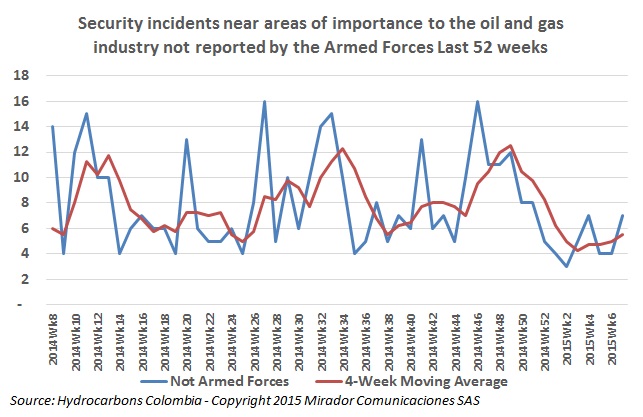
The incident count was up by four this week to 34 due to both Armed Forces and non-Armed Forces reported incidents.=”>
The Farc made a public announcement that they have been urged by peace advocates to continue with their unilateral cease fire, and pressed the government to make it a bilateral agreement.
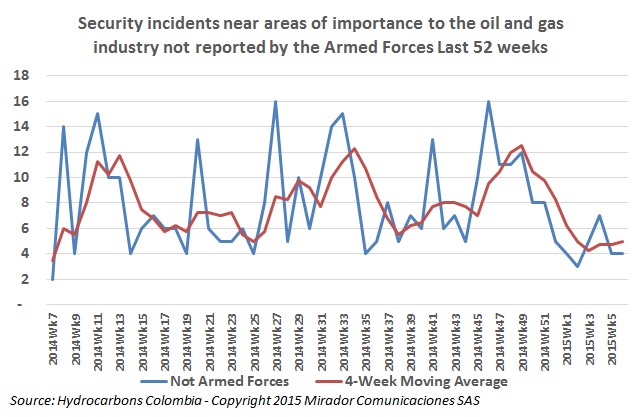
The incident count was up by two this week to 30 but that was entirely due to the Armed Forces as our measure of guerrilla-initiated incidents stayed flat at 4.

2026, Hydrocarbons Colombia, All Rights Reserved.
