

The President of the Colombian Congress, Roy Barreras, and the President of the Colombian Petroleum Association (ACP), Francisco Jose Lloreda, closed the Fifth Oil and Gas Summit. Here are the details.
The Fifth Oil and Gas Summit organized a conference to discuss key issues like the energy transition, the future of the extractive sector, and the tax reform. HCC attended the event.
President Petro’s National Development Plan (PND) might maintain energy sovereignty.
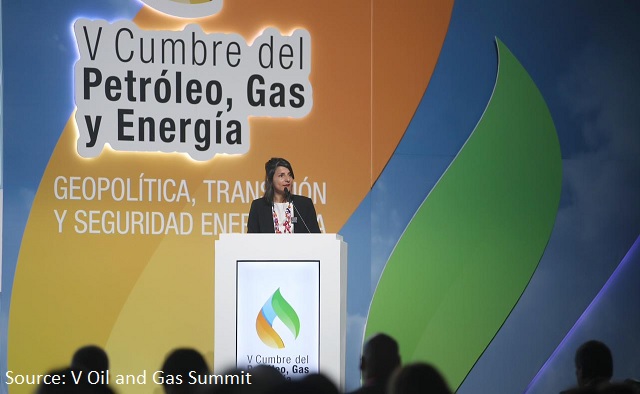
The Minister of Mines and Energy (MinEnergia), Irene Vélez, took the stage of the Fifth Oil and Gas summit to talk about the energy transition process and the strategies to guarantee energy self-sufficiency. HCC attended the event.
President of Brazil, Luiz Inácio Lula da Silva, celebrated the election of Gustavo Petro as President of Colombia, highlighting their political and ideological affinities. The two of them, however, do not have as much in common as Lula seems to believe, at least when it comes to the oil sector.
This is the call that Oil Associations made to the Colombian government at the Fifth version of the Oil, Gas and Energy Summit.
The Minister of Mines and Energy (MinEnergia), Irene Vélez, announced that the construction of the roadmap for the energy transition will take six months, but experts think otherwise.
The technical team of Colombia’s Central Bank (BanRep) announced its expectations on oil performance.
This is what Minister of Finance (MinHacienda), José Antonio Ocampo, had to say about the possibility of awarding new oil contracts, and Ecopetrol’s (NYSE: EC) current situation.
The arrival of a new government that decided to stop natural gas exploration within Colombia reactivated the discussion about the need to build a new regasification plant in the country.

2026, Hydrocarbons Colombia, All Rights Reserved.
