

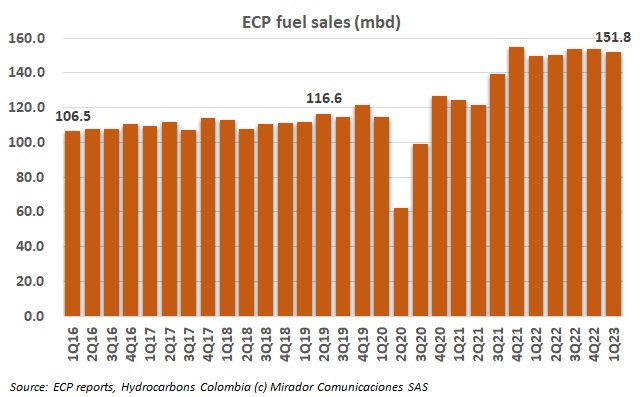
President Gustavo Petro has made a call for Colombians to consume less gasoline as part of an effort to support economic recovery.

We wrote about the 2022 Colombian reserves report a few weeks ago but that was more a reaction to the press release (focused on the Minister) and not a deep dive into the results. What is the real story?
In response to a request from the Colombian government, represented by Finance Minister Ricardo Bonilla, to construct another report on oil and gas reserves within six months, the landscape for signing exploration contracts remains in a gray area.
A total of 69 companies have joined forces to finance 77 projects through the ‘Works for Taxes’ mechanism, utilizing a portion of their income tax, as reported by the Agency for Territorial Renewal (ART).
President Gustavo Petro has put on the table the possibility of the country being able to buy gasoline abroad at a cheaper price to prevent the deficit of the Fuel Price Stabilization Fund (FEPC) from continuing to grow.
USO’s César Loza stressed the need for new contracts to continue the exploration and production of hydrocarbons in the country.
The second call for the Pacific Regasification project has already undergone four amendments to extend the proposal submission deadline for investors.
The Colombian Association of Petroleum Engineers (Acipet), the national government’s technical advisory body on hydrocarbons, has expressed concern over statements made by Finance Minister Ricardo Bonilla regarding the latest reserves report.
Former Senator Jorge Enrique Robledo has expressed his concerns about Colombia’s oil and gas reserves.
With the imminent threat of El Niño, only 9 out of 24 new energy plants, which were intended as a safeguard, are currently operational in Colombia.

2026, Hydrocarbons Colombia, All Rights Reserved.
