

The director of the National Planning Department, Mauricio Santa María believes that the long term goals of the new royalties system (SGR) are on track despite a growing chorus of critics questioning its effectiveness.
Colombia’s Chamber for Petroleum Goods and Services, Campetrol, published a statement written by Pacific Rubiales which outlines the company’s case that it has been a model in terms of development and ideas for how the industry must move forward.
The Natural Gas Association (Naturgas) says that proposed changes that would institute a system of public auctions to set wholesale prices as proposed by Colombia’s Energy Regulatory Commission and Gas – CREG would lead to price increases and opposes the system.
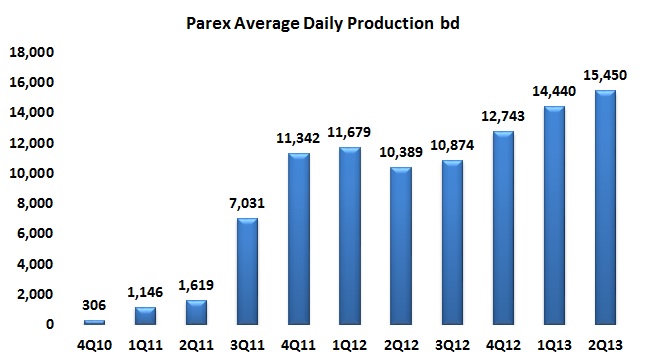
Parex made a somewhat unusual midyear announcement of its reserves and a more usual announcement of its 2Q13 production. Both stories are very good but the reserves story is spectacular. By the close on Thursday, July 11 2013, the stock was up 17% from its Tuesday close.
A decree expected in late July will reportedly shorten the environmental licensing process for small changes to conventional projects that already have gained approval.

Delays in environmental licensing are seen as the main cause in an 8% drop in rentals of perforating drills in January-May 2013.
The General Royalty System (SGR) and the National Planning Department (DNP) have issued a string of nearly daily announcements in June detailing advancements and approval of projects that will receive funding using the royalty system.
Colombian President Juan Manuel Santos visited the city of Villavicencio in the Meta Department and called for a balance between oil production and the environmental and social needs of the community.
Colombia’s Unidad Nacional political party has put assistance to community mayors in obtaining funds from the General Royalty System (SGR) on the agenda, with a senior member suggesting changes might be needed at a congressional level.
Ecopetrol, through its subsidiary Bioenergy, has land holdings that exceed the legal limits established by Colombian law.

2026, Hydrocarbons Colombia, All Rights Reserved.
