

The Barranquilla Chamber of Commerce sees bright opportunities for the region with an increase in the number of companies interested in locating in the region, and from a wide variety of disciplines. But offshore activity could prove to be key source of growth for the region and attracting new firms is an important part of its strategy.
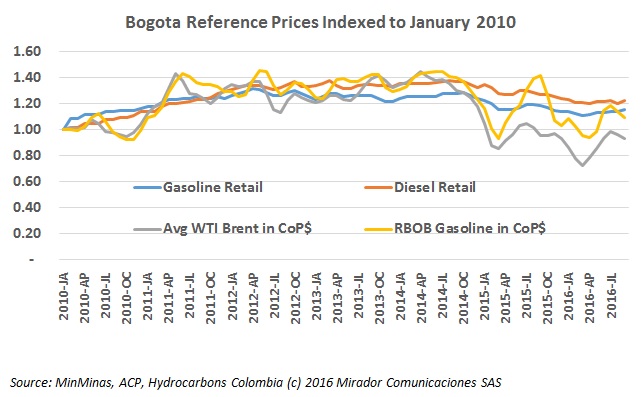
The Ministry of Mines and Energy (MinMinas) published fuel prices over the weekend for September 2016, which include an rise in both gasoline and diesel, citing increases in crude and biofuels prices.
The Colombian Petroleum Association (ACP) called the peace agreement a positive development and recognized the government’s effort to achieve it. In its diplomatically-toned declaration, it says it will analyze the agreement for its opportunities and challenges.
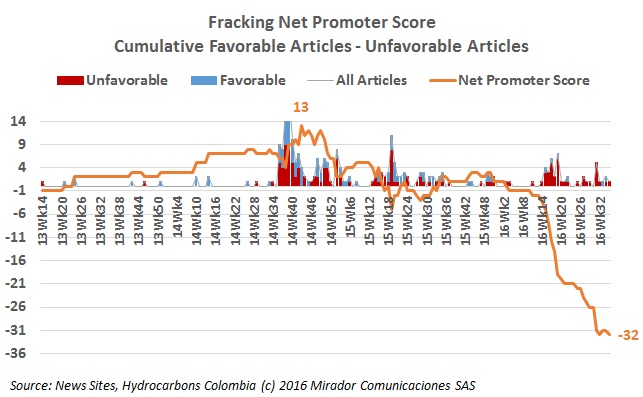
The warnings which have emerged against fracking and unconventional production are without merit and have demonized the technique in Colombia, even though it is an opportunity to ensure energy self-sufficiency in Colombia, said Francisco Lloreda, president of the Colombian Petroleum Association.
The brave new “New Economy” of Colombia based on tourism and agriculture should be thought of as a complement to the oil economy, but does not replace it said the Finance Minister (MinHacienda) Mauricio Cárdenas, marking a more modest view of his economic plan.
The General Controller has warned certain ministries are not effectively executing their assigned budget, including the Ministry of Mines and Energy (MinMinas), a claim which the ministry denied.
The director of the National Agency of Environmental Licenses (ANLA) addressed the Chamber of Representative’s Second Commission and laid out the mission of the entity and its role in the government.
The Ministry of Mines and Energy (MinMinas) has injected a total of CoP$59.9B (US$20.5M) into projects in 69 municipalities through its production incentive program, which awards regions for meeting production goals in 2015. This and other royalty related stories in our periodic summary.

The Colombian Chamber of Oil Goods and Services (Campetrol) warned that recent attacks have targeted oil companies in Caquetá and Putumayo, departments where the Transition Zones of Normalization (ZVTN) are located, and will be used to concentrate the Farc, intensifying its tone against the presence of these camps near oil projects.
Colombia and Peru have received more interest from foreign investors as traditional markets like Brazil and Mexico have been hampered by economic problems. But despite this positive news, Latin America still ranks low as a priority for global investors, according to a recent survey.

2026, Hydrocarbons Colombia, All Rights Reserved.
