

General Comptroller, Edgardo Maya, warned about the risks of implementing fracking in Colombia, reopening the controversy on the subject.
Ten years ago, Colombia decided to establish a policy that promotes the sustainable production of eco-friendly fuels. Today, the capacity to produce biofuels has grown at a steady and sustainable rate.
Oil prices have been recovering this year, improving the country’s finances due to higher revenues of industry firms. The government wants to leverage the situation.
The possible loss of oil self-sufficiency has been one of the main issues discussed in Colombia during last years. The development of unconventional deposits is one of the most attractive alternatives to solve this concern and the sector is ready to move forward on this issue.
The oil sector has proposed the implementation of unconventional techniques to increase reserves, but this alternative has generated much concern and controversies. Communities are taking legal actions to prohibit techniques such as fracking in Colombia.
Juan Carlos Rodríguez, president of the Colombian Federation of Freight Transporters and Logistics (Colfecar), spoke about the challenges of the truckers’ sector in Colombia.
Much recent political and media activity surrounded a referendum asking Colombians to vote on seven proposals thought to control corruption. The vote was held yesterday and while it failed to achieve the necessary number of votes to be legally binding, participation was significant and so could impact the broader political landscape.
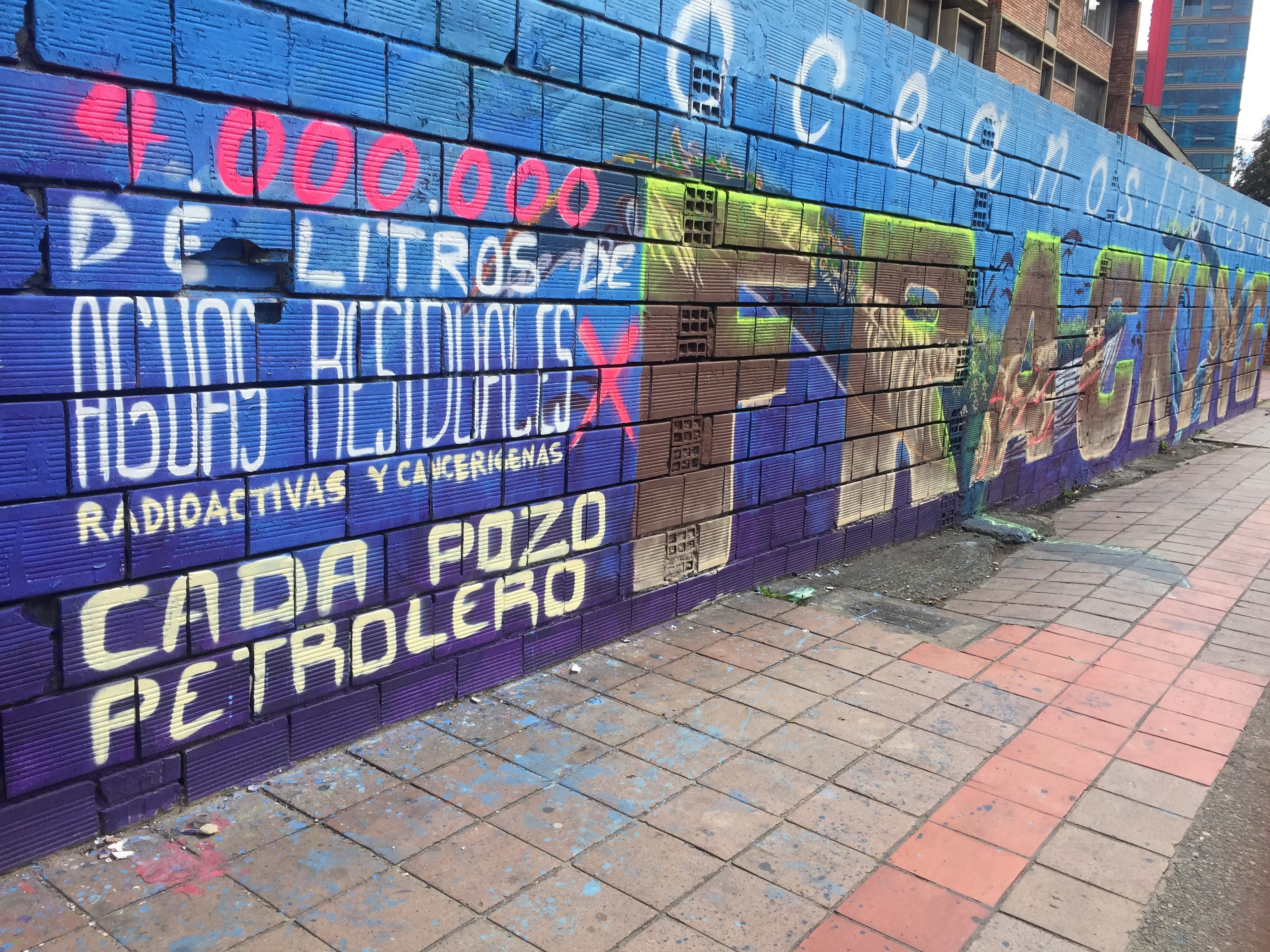
This graffiti adorns a 20-meter wall on Bogotá’s busy Septima (Carrera 7 / 7Th Avenue) in the heart of the capital’s elite neighborhood. It is virtually impossible that politicians, media types and other opinion leaders have not seen it or will not see it over the coming weeks. The inauguration of President Iván Duque has certainly reignited the debate over unconventional technologies.
The Ministry of Mines and Energy (MinMinas) took a decision on the Short-Term Natural Gas Supply Plan. The entity published the proposed document again.
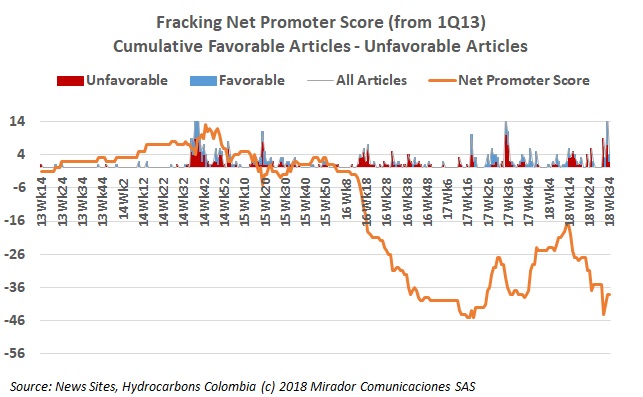
Maria Fernanda Suarez, Minister of Mines and Energy (MinMinas), created a debate about the possibility of implementing unconventional techniques such as fracking in Colombia. Experts talked about this alternative.

2026, Hydrocarbons Colombia, All Rights Reserved.
