

A ‘string’ of tweets from President Gustavo Petro caught the attention of analysts.
Colombia continues to debate about natural gas self-sufficiency. This is what different entities had to say.
President Gustavo Petro spoke about the role of natural gas in the energy transition.
Former Director of Colombia’s Central Bank, Salomón Kalmanovitz, spoke about the negative effects of reducing hydrocarbon exports.
The proposals of Petro’s government on oil exploration have generated much debate, even among its ministers.
Companies in the Colombian hydrocarbon sector are worried about the tax reform and a potential change of rules derived from the current government’s decisions.
Valora Analitik reported on the list of candidates to potentially take office as the new Vice Minister of Mines (MinEnergia). Here are the details.
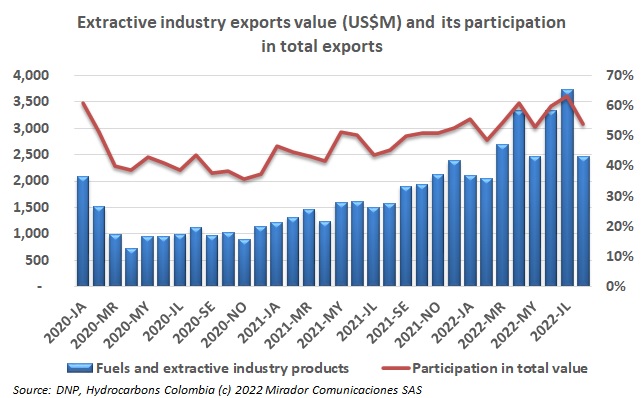
The National Administrative Department of Statistics (DANE) reported the value of Colombian exports during August 2022.
The Minister of Finance (MinHacienda), Jose Antonio Ocampo, spoke about the tax reform and the extractive industry.
The Minister of Mines and Energy, Irene Vélez, and the Vice Minister of Energy, Belizza Ruiz, spoke about the continuity of oil and gas exploration in the country. This is what the Minister of Finance (MinHacienda), Jose Antonio Ocampo, had to say.

2026, Hydrocarbons Colombia, All Rights Reserved.
