

A group of experts from the Department of Mining and Energy Law of the Universidad Externado and the Institute of Political Science Hernán Echavarría Olózaga (ICP) analyzed the opportunities and challenges to guarantee energy security in Colombia.
This date had been (virtually) red-circled in our Long Form Report planning calendar as the week to respond to whatever President Gustavo Petro said in his inaugural speech about energy. Frankly, he said almost nothing that he had not already said. But he did name his MinEnergia and that was news with implications for the industry.
Venezuela is evaluating the possibility of exporting natural gas to Colombia.
The technical team of Colombia’s Central Bank (BanRep) updated its forecasts on the behavior of Brent oil prices for this and next year.

Oil production in Colombia could be affected if exploration of new hydrocarbon areas is halted.
Gustavo Petro’s campaign promise to ban fracking will be fulfilled sooner rather than later.
Minister of Mines and Energy (MinEnergia), Diego Mesa Puyo, spoke about the hydrocarbons sector’s contributions to Colombia.
The National Hydrocarbons Agency (ANH) presented its Vision 2040 where it clarified Colombia’s outlook to maintain oil self-sufficiency.
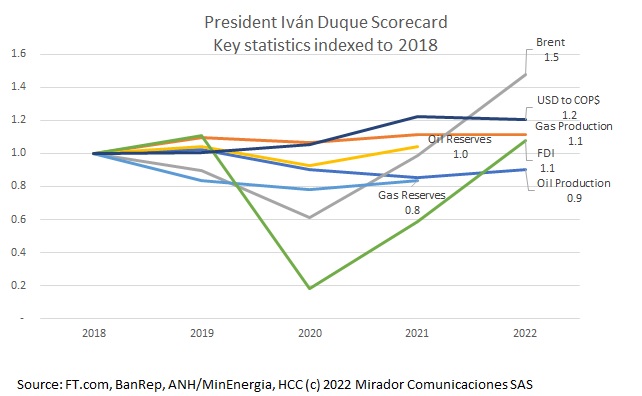
A week from when this is published, there will be a new administration running the energy sector in Colombia. If they have not already done so, members of the current team will be packing up their personal effects (beloved coffee mugs, family photos) and polishing their resumes to work on what comes next in their careers (but will not get them in trouble with Colombia’s conflict-of-interest regulations). How did they do in the job that is coming to an end?
Experts explained in more depth how the fracking technique works.

2026, Hydrocarbons Colombia, All Rights Reserved.
