

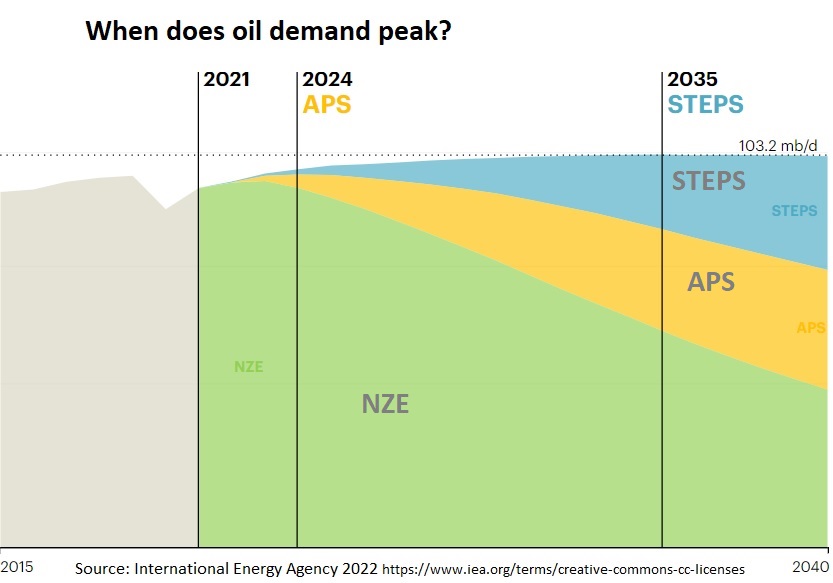
One of the key questions underlying the debate about the oil and gas industry in Colombia concerns when demand will peak and so for how long can public finances count on the flow of exports and tax revenues. Gustavo Petro’s “Illuminati” believe we all should stop using fossil fuels today and stop producing the stuff. More pragmatic observers think it too soon to (as some headlines put it) kill the goose that lays the golden eggs. Recently the International Energy Agency (IEA) weighed in with its view, based on various climate change scenarios.
The Autonomous Fiscal Rule Committee (CARF) talked about the risks of halting oil exploration in the country.
Experts spoke about the relevance of the NOC and the extractive sector for the public finances.
The Colombian Oil Association (ACP) talked about the proposal to set a surtax on oil revenues that might vary according to international prices over the last 20 years.
Many of the world’s largest countries are backtracking, or slowing down, on some of their plans to move away from fossil fuels. The Colombian government thinks differently.
ANDI’s Bruce Mac Master spoke about the commitment of companies to social investment.
Minister of Finance (MinHacienda), José Antonio Ocampo, spoke about the tax reform and rumors of a possible resignation, among other key issues.
The Ministry of Mines and Energy (MinEnergia) announced that a new Vice Minister of Mines was appointed.
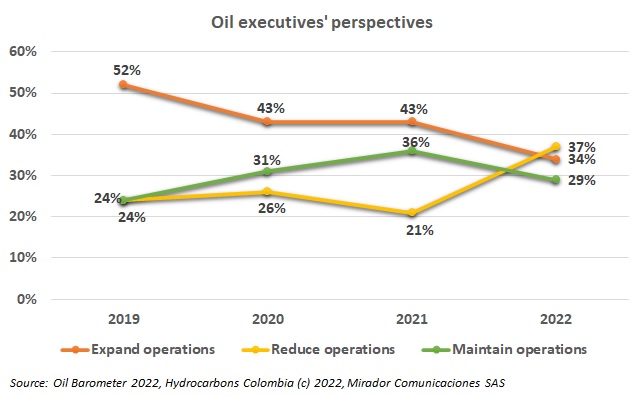
Contradictions in the public agenda regarding the exploration and production of hydrocarbons are affecting the perception of the sector’s executives, and might jeopardize the future of the industry in Colombia.
Ecopetrol’s (NYSE: EC) new board of directors has already had its first controversy, less than a day after being announced.

2026, Hydrocarbons Colombia, All Rights Reserved.
