

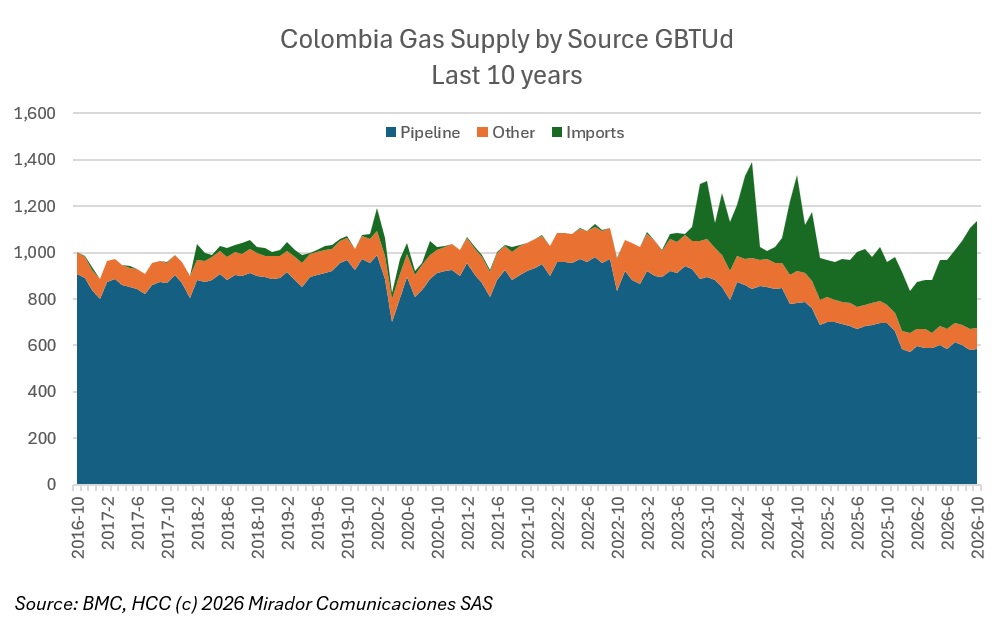
Colombia’s Mines and Energy Minister María Nohemí Arboleda says gas supply could fall short from February 2027 as domestic reserves shrink and imports grow.
Boston Consulting Group (BCG) warns that most of the industry’s largest producers face shrinking volumes over the next 15 years.
The mining and energy sector’s share of Colombia’s corporate income tax fell from 36.2% in 2012 to 6.3% in 2025, according to figures presented at an ANIF–CREE seminar titled “Energy to return to growth.”
Colombia’s environmental licensing authority (ANLA) has granted Ecopetrol an environmental license for the Bucare development area in Acacías, Meta, moving the project toward its production stage.
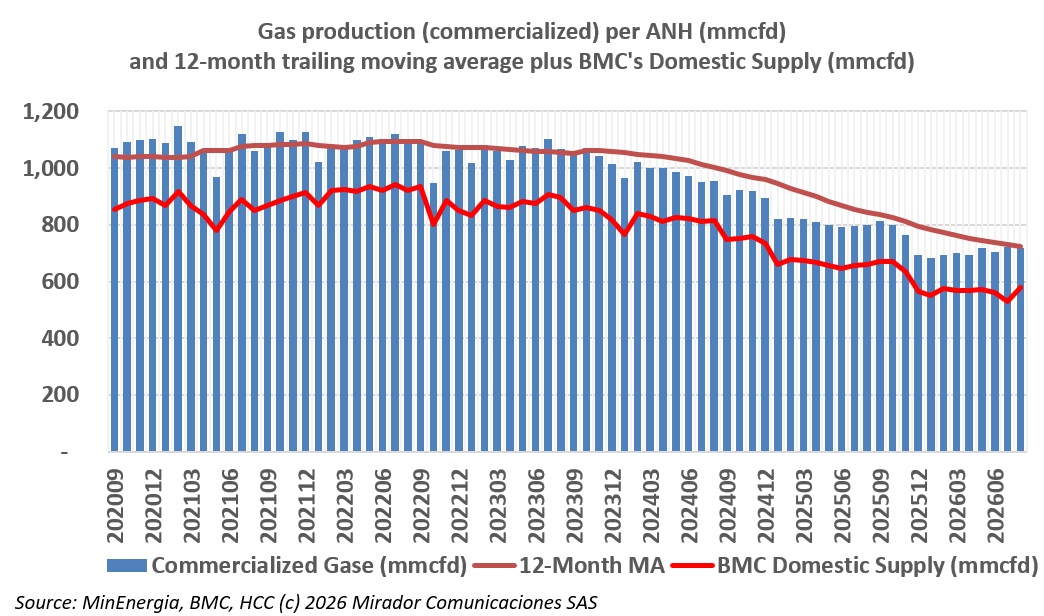
Colombia’s natural gas industry posted across-the-board declines in August, according to figures from industry group Campetrol.
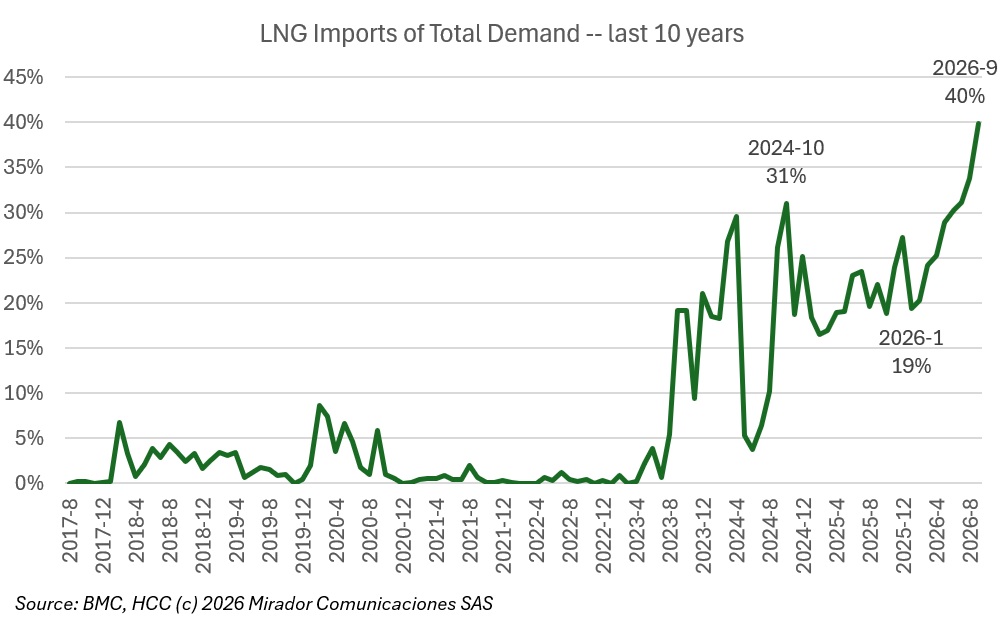
Óscar Rincón, president of the Asociación Colombiana de Ingenieros de Petróleos (Acipet), projected gas imports could reach 35-40% of national consumption by the end of 2026 as El Niño pushes thermal plants toward near-full dispatch capacity.
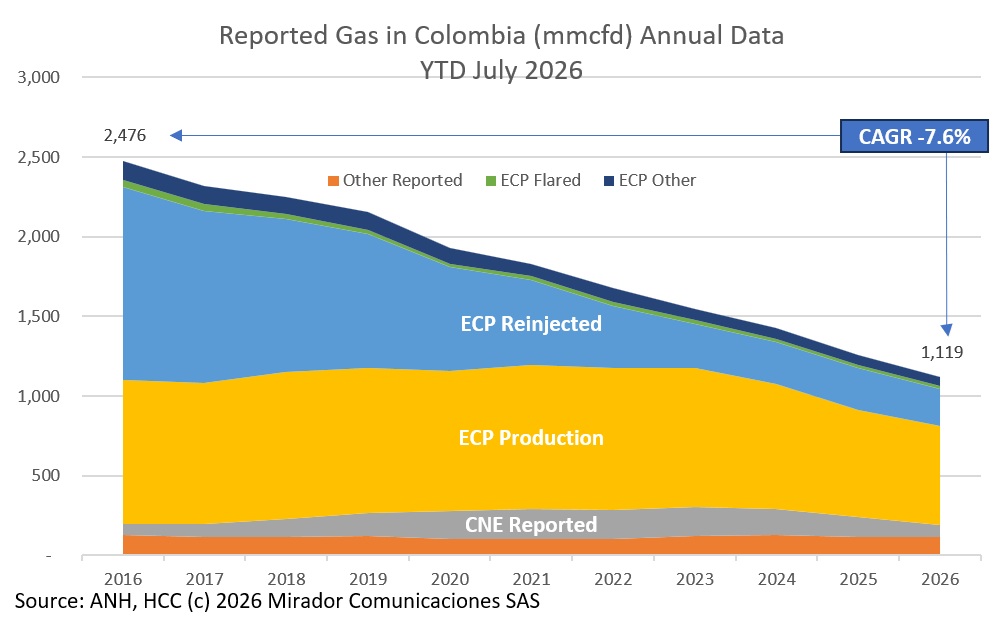
Some might hope that gas production improves since SPEC is reaching its capacity and no other LNG import facilities have come online. That’s not the case.
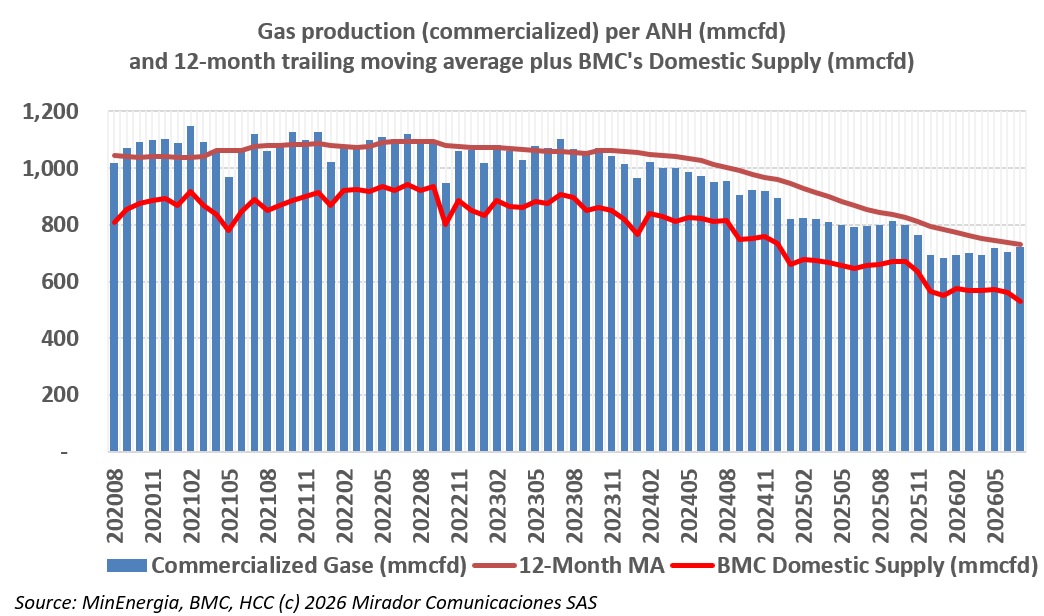
Colombia’s reported natural gas production fell 8.36% year-on-year in July 2026, from 1,196 mmcfd to 1,096 mmcfd, extending a decline that has held in every month of 2026 so far.
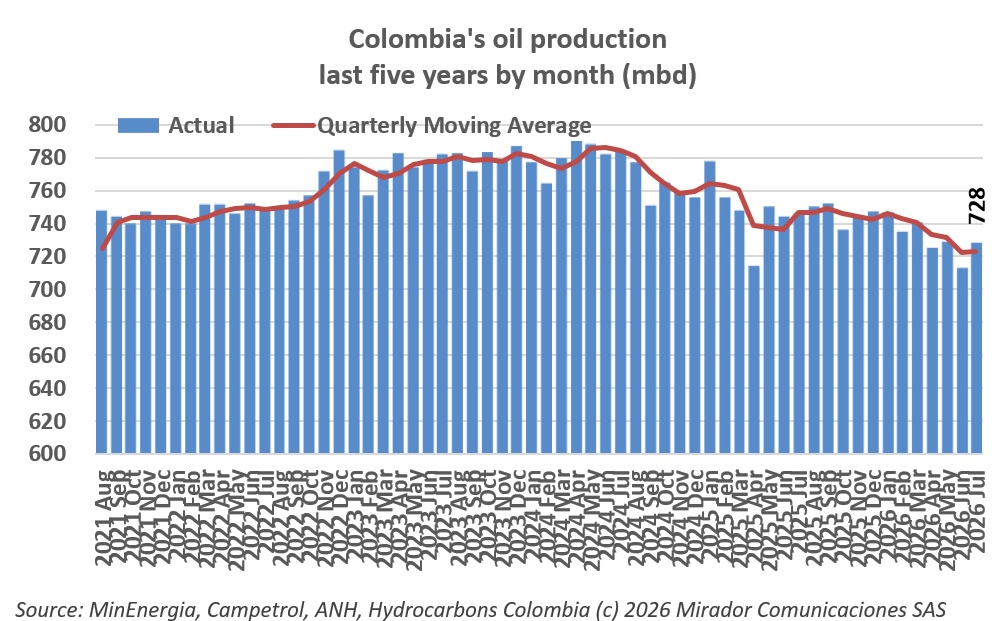
Colombia’s oil production fell 2.46% year-on-year in July 2026, from 746,242 bd to 727,920 bd, marking the third consecutive monthly year-on-year decline since May — and every month of 2026 except April has posted a decline.
Colombia’s mining-energy sector is projected to post a 0.3% GDP contraction in the second quarter of 2026, extending a decline that traces back to the first quarter of 2024.

2026, Hydrocarbons Colombia, All Rights Reserved.
