

Ecopetrol (NYSE:EC) announced investments to develop unconventional resources in Texas, while Colombian authorities still debate about the future of fracking pilot projects in the country.
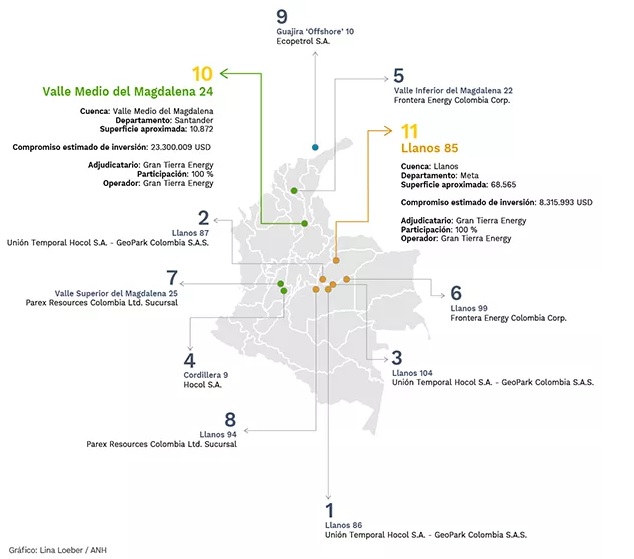
The National Hydrocarbons Agency (ANH) announced the signing of oil contracts with Parex Resources (TSX: PXT), confirming that “things are moving again.”
The National Hydrocarbons Agency (ANH) announced the signing of oil contracts with Gran Tierra Energy (TSX: GTE), as a result of the first auction of the Permanent Area Assignment Process (PPAA).
The Colombian offshore sector received a new boost, with the signing of the contract to develop the GUA-OFF 10 block.
The Minister of Mines and Energy (MinEnergia), María Fernanda Suárez, spoke at the “Cesar Energy development: How does it contribute to the national energy security?” Forum. Here are the details.
Colombia continues to discuss the possibility of implementing unconventional techniques to increase its oil reserves. According to experts, this could be some of the effects that losing self-sufficiency can have on the national economy.
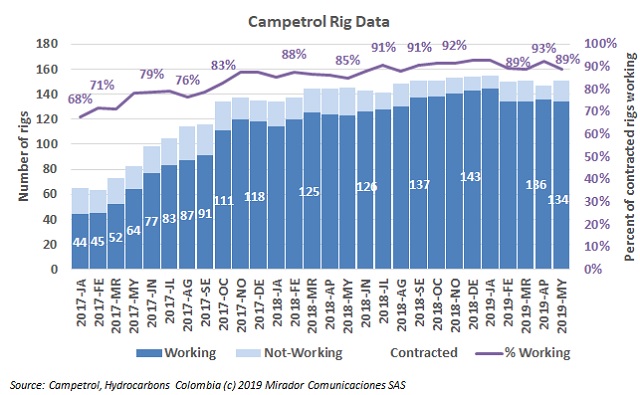
The Colombian Chamber of Goods and Services (Campetrol) reported its drill rig information for May 2019. Working rigs decreased compared to previous month, but the number of contracted rigs increased.
Industry Associations have called for the implementation of fracking to avoid self-sufficiency issues. However, this alternative is still a cause for concern among different sectors of the Colombian society.
The International Energy Agency (IEA) acknowledged the progress that the Colombian government has done to reactivate the industry in the coming years.
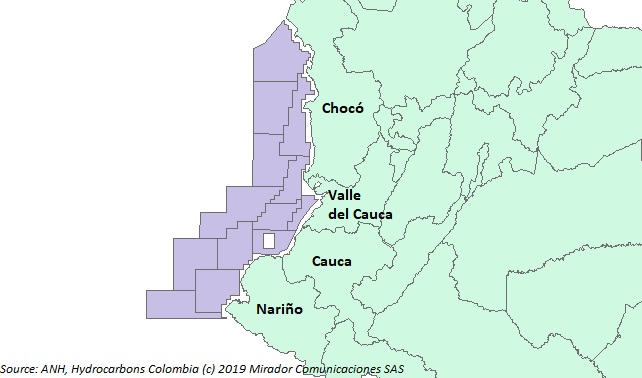
The National Hydrocarbons Agency (ANH) is analyzing the potential of Colombia’s regions, in hopes to offer blocks in the Pacific region.

2026, Hydrocarbons Colombia, All Rights Reserved.
