

The National Environmental Licensing Authority (ANLA) has issued a decree that simplifies the requirements needed to gather specimens needed for environmental permitting and licenses, a step in the process whose catch-22 has dogged the environmental process for hydrocarbon companies.
The upcoming march on February 20th to protest extractive industry activities near water sources will “derail the Santos’ destructive engine” says the president of Meta’s energy, mining and environmental committee, Timoteo Romero Morales.
Community leaders in the municipalities of Tame, Arauca and Hato Corozal, Casanare have formally requested a public hearing to voice questions on the environmental impact of oil production in the Llanos 10 block.
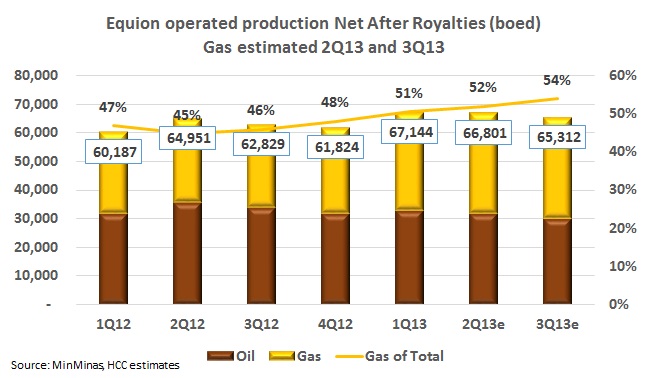
Oil producer Equion says it expects net oil production in 2014 to increase slightly to 27,900bd in 2014, compared to 27,000bd in 2013, and addressed accusations that seismic exploration is affecting the environment in Casanare.
Community leaders from 22 municipalities in four departments will participate in a march on February 20th, 2014 in Meta capital of Villavicencio that will reject any oil production or exploration activities near the local water sources as the anti-oil sentiment in the region’s communities grows.

A local newspaper in Putumayo published an opinion piece from a local community representative that questions the department’s ability to handle increased oil production, with doubts surrounding the authority’s ability to react to spills and its limited infrastructure.
The coordinator of environmentalist NGO El Mastranto Manuel Peña has accused eight oil companies, led by Pacific Rubiales (TSX:PRE) of extracting water from pools designated for livestock and the Guachiría river, which local authorities say may or may not be illegal.
An open hearing on the pending public referendum to approve or reject oil production near the municipality of Monterrey has been postponed after Ecopetrol (NYSE:EC) filed a motion to delay the hearing, which will determine its constitutionality.
Pacific Rubiales (TSX:PRE) had to wait more than two years for its environmental license for the CPE-6 block in the Meta Department, finally receiving the green light at the end of 2013. Now a few more details have emerged on the company’s obligations under the license agreement.
The general manager of EAAV, the sewage and aqueduct company of Villavicencio Hector Castro says that seismic exploration near the aqueduct’s intake has the potential to collapse the infrastructure.

2026, Hydrocarbons Colombia, All Rights Reserved.
