

NG Energy International says its Aruchara-6 well at the Maria Conchita block is producing gas after tying into the central processing facility, and that it has spudded Encantado-1X at Sinú-9.
Cerro Matoso, the Córdoba nickel producer, says reduced gas deliveries from Canacol Energy have forced it to run at about half capacity since early August, costing it roughly 2,400 tons of nickel output.
Ecopetrol has declared void the offers it received to import LNG on five-year terms, saying they did not meet minimum commercial conditions, and says it will strengthen domestic gas output and accelerate Sirius.
Colombia’s vice minister of energy, Armando Cuello, has resigned, and press reports say his next stop is Ecopetrol’s gas business.
Citi has kept Ecopetrol at Neutral with an unchanged US$18 per ADR target, calling the appointment of Joaquín Gutiérrez as president a missed chance to signal independent governance.
Luis Felipe Henao, an independent member of Ecopetrol’s board, has filed a complaint for aggravated insult and slander against Alberto Vergara Monterrosa, the company’s former compliance chief.
The floating storage unit that will supply Colombia’s Pacific regasification project has arrived in Buenaventura Bay, and large companies are reportedly weighing bids for the venture.
Ecopetrol’s board named Joaquín Gutiérrez Caballero president on Sept 24, completing a leadership overhaul in which close allies of President Abelardo de la Espriella now run the company.
Eni and Repsol are reportedly looking to sell part of their stake in La Perla, Venezuela’s largest gas field, to raise capital for a production expansion.
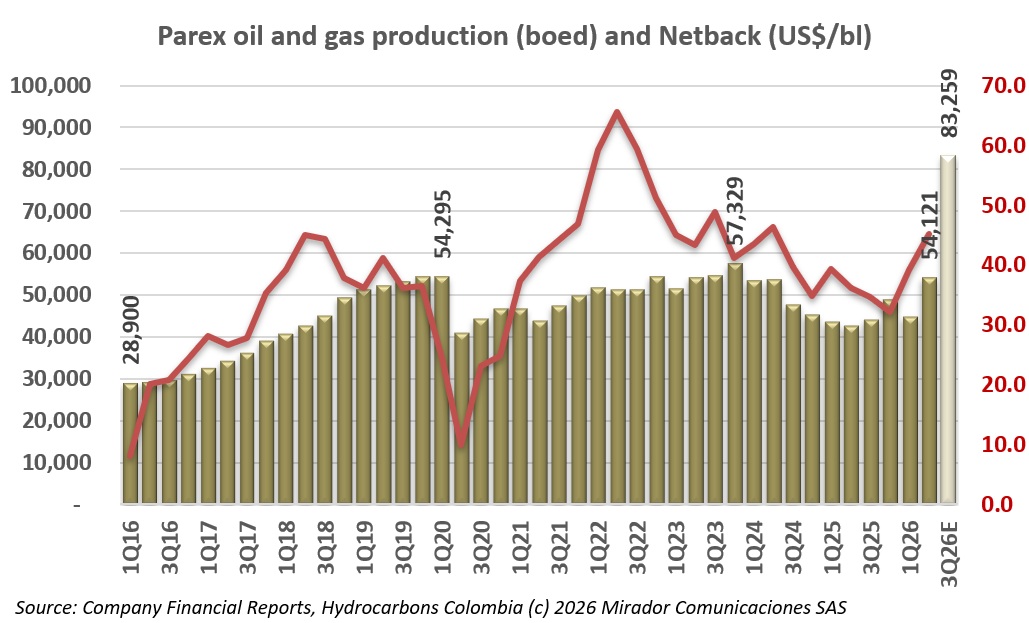
Parex Resources said preliminary 3Q26 production averaged 83,259 boe/d, with output edging up through the quarter.

2026, Hydrocarbons Colombia, All Rights Reserved.
