

With a growing fleet of natural gas vehicles (NGVs) and expanding domestic use of the fuel, an update of prices for 2016 by the Energy & Gas Regulation Commission (CREG) will affect far more than the traditional industrial consumers.
In the eyes of Colombia’s investors, size matters. It is the juniors and small operators that have shown to be more versatile against the effects of the fall in oil prices, and more valued by the capital markets.
Ecopetrol (NYSE:EC) is confronting a tough period that will require a refocused strategy and a more efficient and profitable operation, and there is speculation as to who will run this plan alongside the NOC president Juan Carlos Echeverry.
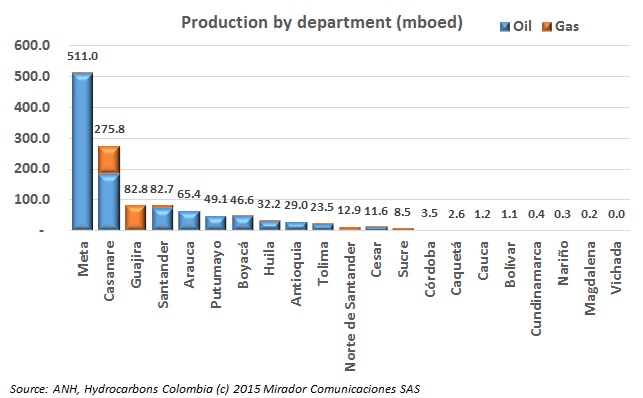
We frankly could not remember the last time we did this chart which summarizes the data by department (rather than basin or producer) and puts oil and gas production together (by converting gas to equivalent barrels). Useful for trivia contests on rainy Sunday afternoons with the kids or settling bets at the bar. But Ecopetrol (NYSE:EC) and the Colombian government should think about some other implications as well.
“The Bolivarian revolution is destroying itself,” said Colombian President Juan Manuel Santos, referencing Venezuela’s recent finger-pointing at Colombia as the origin for its political and economic problems, a conflict that has implications for Colombia’s peace process.
Ecopetrol (NYSE:EC) announces winners of their college scholarship program while also supporting youth arts education in Putumayo. These and other stories on Corporate Social Responsibility (CSR) in our periodic summary.
In Putumayo, community and indigenous groups are pushing to keep oil out, citing its environmental effects and position as a Farc target, and also are calling to curb coca eradication programs. Coca production has brought better returns for the community than legitimate crops.
With the Finance Minister Mauricio Cárdenas in the crowd, Senator Iván Duque, of Senator Alvaro Uribe’s Centro Democratico party, leveled a blunt criticism at the government’s handling of the energy and mining sector and the spending plan going forward.
A recent study from the Neiva Chamber of Commerce in Huila found that the fall in oil prices and the shock waves it has sent through the services industry has touched on almost every part of the local economy.
The Huila department royalty budget suffers from peso devaluation and low oil prices, meanwhile a royalty funded project in Casanare includes five new gasification networks. These and other stories in our periodic roundup.

2026, Hydrocarbons Colombia, All Rights Reserved.

