

In his annual account rendering the General Controller (CGR) Edgardo Maya Villazón said that cost over-runs associated with the modernization of the Cartagena Refinery (Reficar) are one of his main concerns, and that the entity will soon release a report on its findings so far.
The latest controversy to hit the use of royalty funds: One of three contracts signed between 2012-2015 directly hired a contractor instead of using competitive processes.
The National Planning Department (DNP) released a study on the economic dividends of a peace agreement and said that the positive effects of peace will show starting in three years. Meanwhile the kidnapping of a soldier has caught national attention.
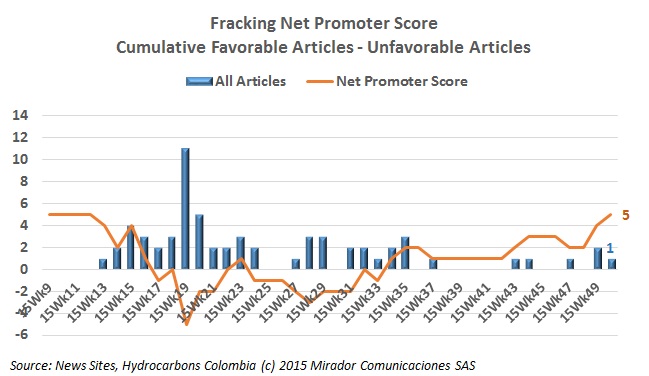
Exxon Mobile (NYSE:XOM) has filed a request for an environmental license for a fracking project, which would make it the first company to step into the much commented space in Colombia.
Ecopetrol (NYSE:EC) has announced more cost cutting measures, one of its main strategies to keep the company profitable. The cuts will affect not just contractors but its staff, and comes as ECP’s stock falls to historic lows.
The National Hydrocarbons Agency (ANH) held its annual rendering of accounts and said that it has morphed the agency into a service-orientated entity designed to bridge the gap between communities and the industry, while protecting the environment, development, production and investment. We also attended a breakfast meeting which, in a shorter period of time, went through a longer and more technical presentation oriented to the oil industry press and certain economics reporters from the popular press.
Students, teachers and administrators in Barracabermeja say more OCAD support is needed for education infrastructure, as current programs do not address the gaps. This and other royalty related stories in our periodic roundup.
The oil prices crisis has caused a reduction of 40,000 jobs in the Colombian labor market, according to the study “Guide for the 2015 labor market” performed by Hays and EY. The restructuring of the sector has reached 63% in the first nine months of the year, the study says.
Ecopetrol (NYSE:EC) will begin work on providing gas services to 30,000 Colombian families in January 2016, meanwhile in Putumayo a community warns strikes could come over local hiring quotas. These and other stories on Corporate Social Responsibility (CSR) in our periodic summary.

A fund created in the tax reform last year which looks to guarantee stable fuel prices has been declared unconstitutional by Colombia’s Constitutional Court. The transportation industry says this will benefit consumers, while the government says it will study its options.

2026, Hydrocarbons Colombia, All Rights Reserved.

