

A national paper has published a report pointing out the importance of creating stimulus measures to invest in secondary recovery, which would allow vital reserve growth from Colombia’s existing fields.
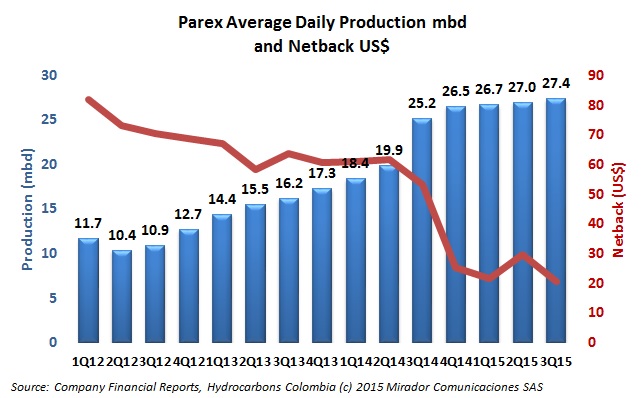
Oil company shareholders are not having a good year, hurt by continuing low oil prices. However Parex (TSX:PXT) 3Q15 results should make its investors happier than most.
ONGC Videsh (OVL), the subsidiary for foreign investments of Indian NOC ONGC, is executing an investment of more than US$72M in a first phase of exploration in three offshore blocks in the Colombian Caribbean.
Ecopetrol’s (NYSE:EC) Cartagena Refinery (Reficar) has shown recent, serious advances, but there is little good news from another problematic refinery construction, this one an ethanol plant from the NOC’s biofuels subsidiary, Bioenergy. And critics ask whether the mistakes continue.
Led by the National Hydrocarbons Agency (ANH) president Mauricio de la Mora and Ecopetrol (NYSE:EC) president Juan Carlos Echeverry, Colombia was home to the II World Forum of Enhanced Recovery, which included 25 international experts visiting to detail their experiences in the technology.
Spain’s Repsol (MSE:REP:MC) has unveiled a new strategic plan for 2016-2020 where it looks to optimize its cost and remain resilient despite the fall in oil prices, with cost efficiencies gained through its recent acquisition of Talisman earlier this year a central pillar.
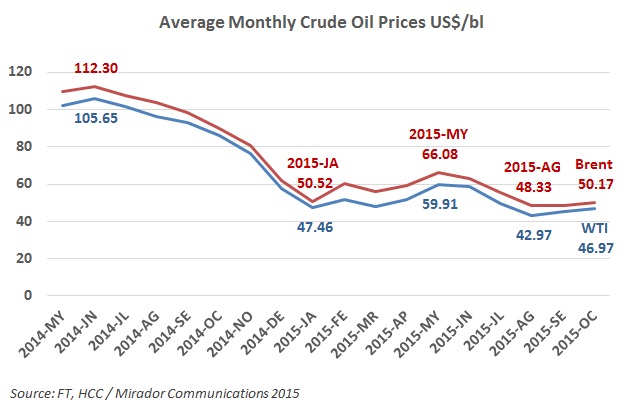
Positive momentum in September carried through to October and we have now had two straight months of increasing month-end crude oil prices. October ended on a positive note.
The National Council of Industry Associations and the 21 industry representatives which form it have signed off on an articulate and thorough document which addresses the concerns of these business sectors about the peace process in Havana, and more importantly, its impact on Colombia. With a diplomatic tone, it both justifies the fundamentals of the talks against its critics, but it is not a blank check for the government to push an agreement through on any terms.
Ecopetrol (NYSE:EC) says it will continue to collaborate with Pacific E&P (TSX:PRE) following the reversion of the Rubiales field, and the option of integrating Rubiales with its operation in Castilla and Chichimene weighed in the decision to operate the largest producing field in Colombia directly.

Both gasoline and diesel will drop in price in the month of November, driven by a fall in international prices and the exchange rate, although biodiesel prices continue to counteract this downward trend.

2026, Hydrocarbons Colombia, All Rights Reserved.

