

Last week was a controversial one in Colombia’s congress with the ongoing battle over peace process implementation, approval of royalty reform in its opening debate and the final authorization of the government’s long-term economic plan (known as the PND for its initials in Spanish). The press reacted strongly to a clause about fracking but the politics of how one newspaper reacted was surprising, to me at least.

Occidental Petroleum Corporation (NYSE: OXY) made a tempting offer to acquire Anadarko Petroleum Corp. (NYSE: APC). The company announced measures to finance this huge operation, responding to some analysts’ doubts about its capacity to pay the amount offered.
The House of Representatives’ First Commission approved the initiative to modify the General System of Royalties (SGR), in its first debate. Here are the details.
The extractive sector has been accused of having little commitment to the environment and the producing regions. However, companies pay great attention to their Corporate Social Responsibility (CSR) programs and Drummond is one of the companies that works every day on this important issue.
Ecopetrol (NYSE:EC) and Equion spoke about the development of successful social investment projects in Meta, Arauca and Casanare. These and other Corporate Social Responsibility (CSR) stories in our periodic summary.
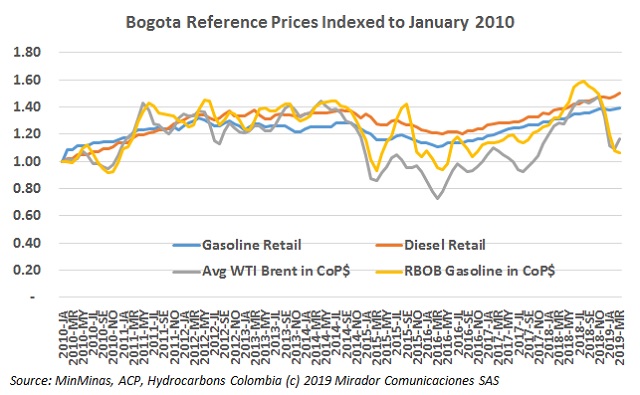
The Fuel Price Stabilization Fund (FEPC) deficit has been one of the main issues in recent years, as it continues to grow without a possible solution. However, this deficit could have a considerable reduction.
The Geomatics team of the National Environmental Licensing Agency (ANLA) participated in the Fundamentals of Spatial Data Infrastructure (ICDE) workshop. Here are the details.
Authorities found out that poor practices were being implemented at Betania’s dam (Huila), but were able to fix the issue, thanks to resources from the General Royalties System (SGR).
The oil sector argues that it contributes large sums of money to the General System of Royalties (SGR), but some communities said that these resources are not seen. However, the department of Antioquia highlighted an interesting project funded with royalties.

Ecopetrol (NYSE: EC) announced a “reinforcement” for its 2019-2021 investment budget, thanks to the better oil price environment and its current operational and financial strength.

2026, Hydrocarbons Colombia, All Rights Reserved.

