

Ecopetrol (NYSE:EC) reported that it implemented its contingency plan in the departments of Cesar and Norte de Santander, after oil spills were reported by authorities. The development of these and more stories in our periodic Eco summary.
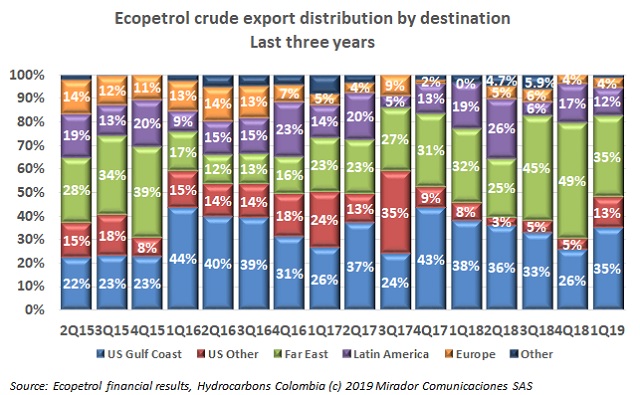
Ecopetrol’s (NYSE: EC) reported its exports metrics for the first quarter of 2019. ECP export distribution is changing, but the United States remains as the principal destination of Colombian crude. The company reported a decrease in this metric compared to previous quarter, but it increased compared to 1Q18.
The Colombian Chamber of Petroleum Goods and Services (Campetrol) brought authorities and industry representatives together, to analyze the sector’s territorial strategy. Here are the details.
The Colombian government implemented the “Works for Taxes” strategy to allow companies to pay taxes through projects in their areas of influence. Authorities announced the projects for this year and the committed investment.
Colombia’s ethanol industry has been competing with the American ethanol market, which unlike the national industry, has a subsidy that is now affecting local producers.
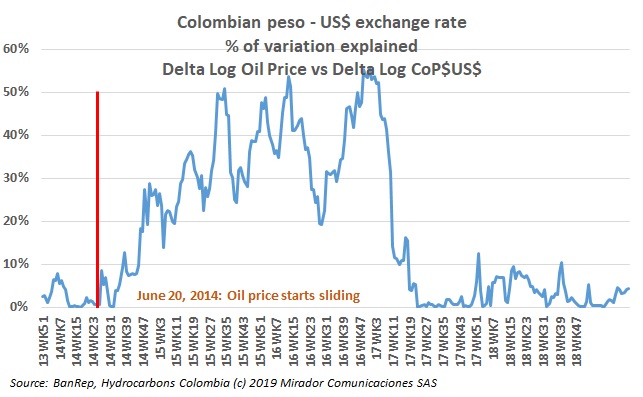
The Colombian peso has devaluated strongly against the dollar in recent months, causing concerns in some economic sectors. Juan José Echavarría, Manager of the Colombia’s Central Bank (Banrep), spoke on this subject.
The Association of International Petroleum Negotiators (AIPN) hosted the “Coordination with the Territory in the Extractive Sector: Analysis and Challenges” panel. HCC attended the event.
Ecopetrol’s (NYSE:EC) CEO, Felipe Bayón spoke to El Colombiano newspaper about the NOC’s ventures in conventional and unconventional projects. Here are the details.
The oil sector has proposed developing unconventional deposits through fracking as the main strategy to guarantee energy self-sufficiency in the medium and long term. The discussion about this alternative continued and people both for and against spoke about this option.
An anonymous reader reacted strongly to a recent article where the ANLA was talking about its operational improvements. Our reader’s point is that it is a waste of time and effort to look for operational improvements to a process that is fundamentally flawed to begin with. Here is the text of the email they wrote plus our Bottom-Line reaction.

2026, Hydrocarbons Colombia, All Rights Reserved.

