

The International Energy Agency (IEA) released a recent report indicating that global gas demand is poised for a robust resurgence in 2024, despite lingering uncertainties in the market.
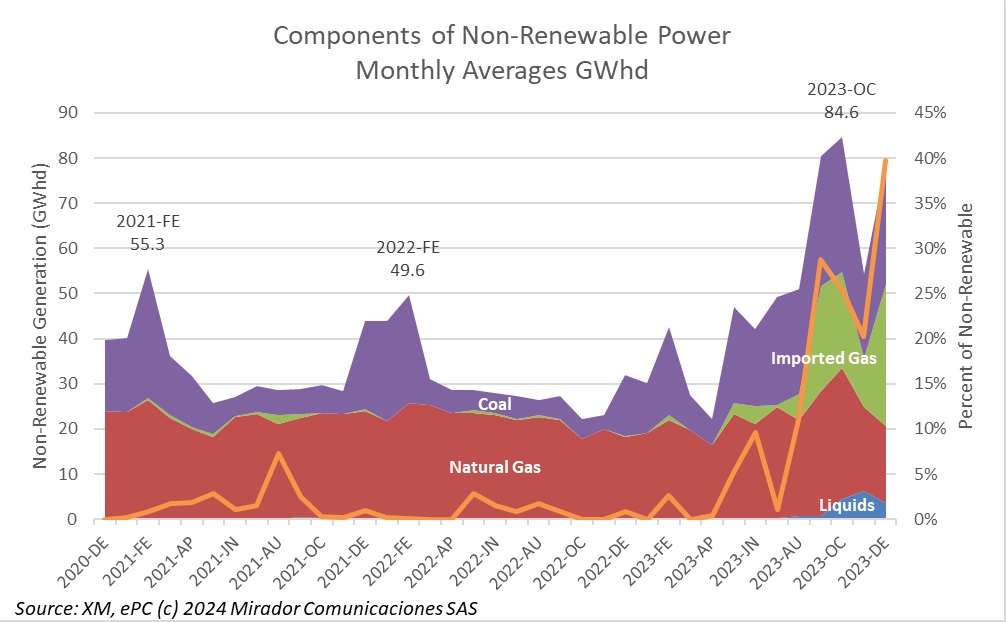
Last week we published an article about the surge in LNG imports in the second half of 2023. That mirrored a surge in electricity generated by imported natural gas that we discussed in ePower Colombia, our sister website. El Niño caused much of the increased demand for gas but we wanted to check how Colombian production fared last year. Were really imports necessary?
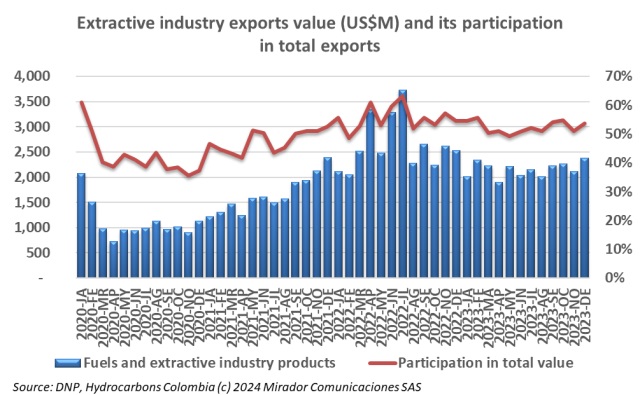
The National Administrative Department of Statistics (DANE) reported the value of Colombian exports during December 2023.
Following the revelation that the agreement to import natural gas from Venezuela to Colombia, orchestrated by Ecopetrol and PDVSA, fell apart even before the US reactivated petroleum sanctions against President Nicolás Maduro’s regime, the question arises: What are the new plans of Gustavo Petro’s government to meet the demand for this energy source?
The Ministry of Mines and Energy (MinEnergia) upgraded regulations for multiphase pipelines at the end of 2023.
In a significant development for the transportation sector in Colombia, the Frontera Natural Gas Service Station has been inaugurated along the Ruta del Sol, facilitating the movement, and refueling of freight and passenger vehicles that utilize natural gas as a fuel source.

In 2023, Colombia witnessed an unprecedented surge in liquefied natural gas (LNG) imports, soaring by over 2,500%.
President Gustavo Petro took to his personal X (Twitter) account, lashing out against critics of Ecopetrol’s (NYSE: EC) new leadership and warning of impending attacks from various sectors.
In a recent interview, Juan Camilo Nariño, President of the Colombian Mining Association, voiced significant apprehension regarding a decree signed by the government on January 30th, which has sparked alarm within the mining sector.
Ecopetrol (NYSE: EC) reported a substantial reduction in carbon dioxide equivalent (CO2e) emissions across its nationwide operations.

2026, Hydrocarbons Colombia, All Rights Reserved.

