


NG Energy International Corp. (TSXV: GASX) announced a major boost in its 2024 year-end reserves and resources, following evaluations by independent firm Sproule International Limited. The updated figures reflect strong growth at both the Maria Conchita and Sinu-9 blocks, signaling the company’s transition into a new production phase.
GeoPark Limited (NYSE: GPRK) announced the appointment of Felipe Bayon as its new Chief Executive Officer (CEO).
During the recent Naturgas Congress, preliminary figures regarding Colombia’s potential natural gas deficit for 2026, 2027, and 2028 were presented. However, several industry experts cautioned that it is too early to draw firm conclusions.
Ecopetrol (NYSE: EC) confirmed that Shell is withdrawing from the COL-5, Purple Angel, and Fuerte Sur blocks located in the southern Colombian Caribbean.

Although next week we should start seeing 1Q25 results, we are just getting around to our summary of 2024 Average Realized Oil Prices, Netbacks and other operating key indicators for the Colombian industry. Brent was down slightly (3%) last year so what could we hope for in netback?
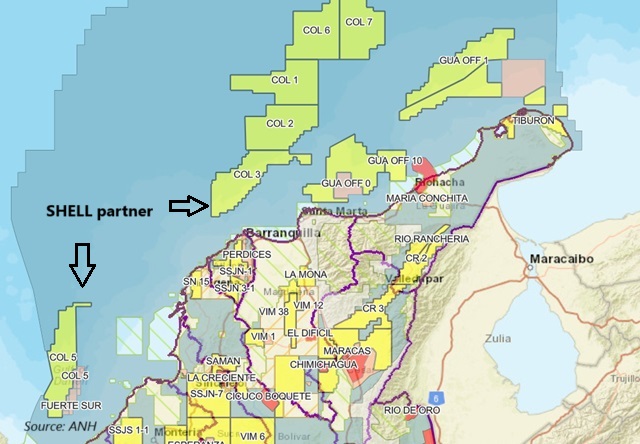
British energy giant Shell (LON: RDSB) is divesting its participation in several Colombian oil and gas blocks, effectively marking its exit from the country’s hydrocarbon exploration and production sector.
Rodrigo Costa, General Manager of Petrobras Colombia, talked about the expectations about the Sirius-2 well.
Manuel Peña Suárez, an electrical engineer with a master’s degree in economics, has been appointed as the acting director of Colombia’s Mining and Energy Planning Unit (UPME), replacing Carlos Adrián Correa.
As Latin America faces a turbulent global economic environment in 2025, its persistent fiscal challenges are pushing the region to reevaluate how public finances are managed.
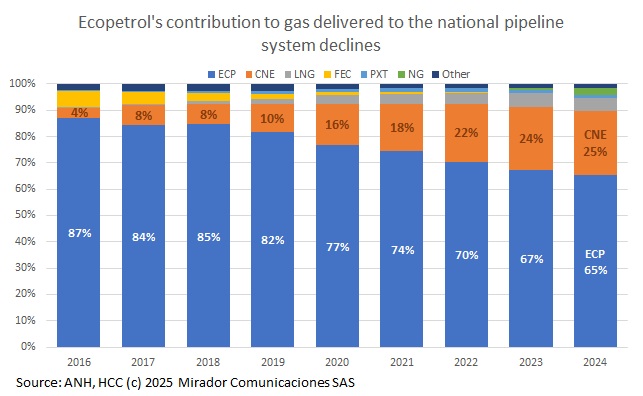
Despite recent statements by President Gustavo Petro suggesting that natural gas prices should remain low, Ricardo Roa Barragán, President of Ecopetrol (NYSE: EC), delivered a more sobering message.

2026, Hydrocarbons Colombia, All Rights Reserved.

