

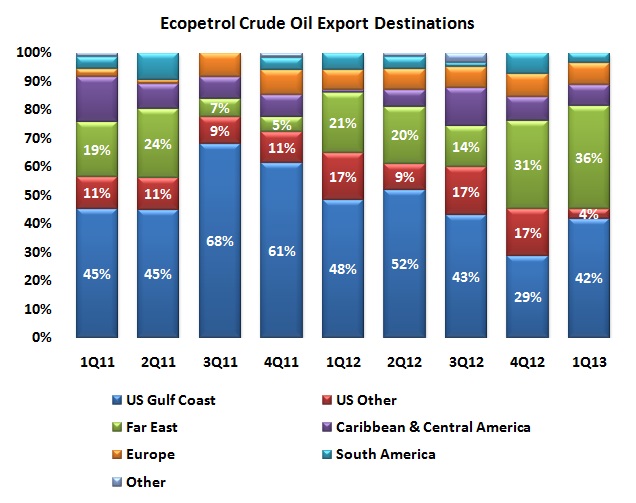
Every quarter Ecopetrol helpfully publishes the distribution of its crude oil exports. Other producers would have different profiles but considering the NOC’s size both in terms of production and commercialization, this is a good indicator of the country as a whole.
The Bicentennial Pipeline unveiled a community center for events and meetings in a village of Nunchia which it says will benefit more than 350 people in the community and is one of seven the company is delivering for community use.
This week marked the second week since peace talks resumed on June 11, with the Farc attempting to expand the reach of an agreement on social participation by publishing a number of demands that it says are minimal for any final agreement to be reached.
Using methane gas derived from the treating of waste water from a palm oil refiner, the company CI Tequedama is able to create clean energy for its own use and sell the overage to the national energy network.
Seismic tests to explore the eastern foothills of Casanare are allegedly affecting the water supply in rivers and streams and could impact local communities, says an environmental NGO.
Ecopetrol president Javier Gutierrez looks at 2013 with optimism both for the state oil firm’s prospects position but also for Colombia’s economic and political advances.
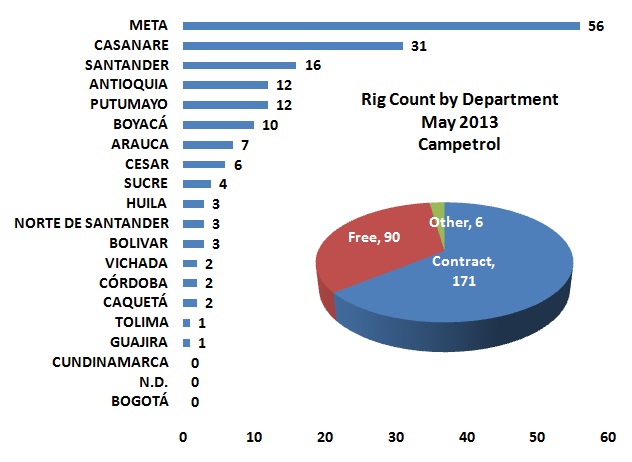
Drill rig counts have become controversial with Baker Hughes showing recent declines — suggesting something was not right — and the Ministry of Mines and Energy taking offense at the implied criticism. Campetrol’s counts are based on its members’ reports and, to the extent that they represent the universe of drilling companies, should be more representative.
Mexico’s Energy Secretary Pedro Joaquín Coldwell has embarked on a state trip which includes meetings to discuss the business model of Ecopetrol with Colombian officials, as well as attend an energy conference in Bogota and later a trip to Brazil.
Canadian oil producer Parex Resources expects to drill 30 new wells this year in order to continue expanding its production in Colombia and keep with its success rate to date of 70%, the company’s general manager Lee Distefano was quoted as saying.
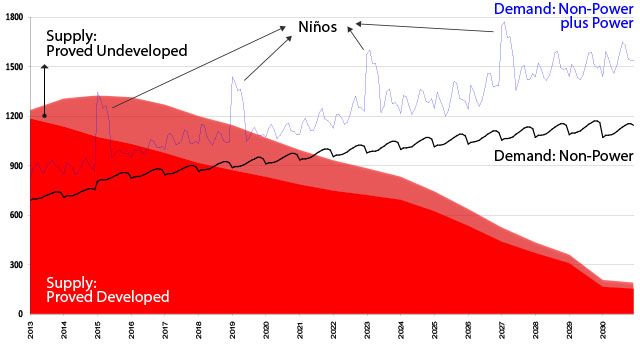
Following a national debate as to whether Colombia has sufficient gas resources for the long term future, the Energy and Gas Regulation Commission (CREG) has issued resolutions clearing the path for natural gas imports starting in 2016.

2026, Hydrocarbons Colombia, All Rights Reserved.

