

Tuesday, September 22nd, 2026
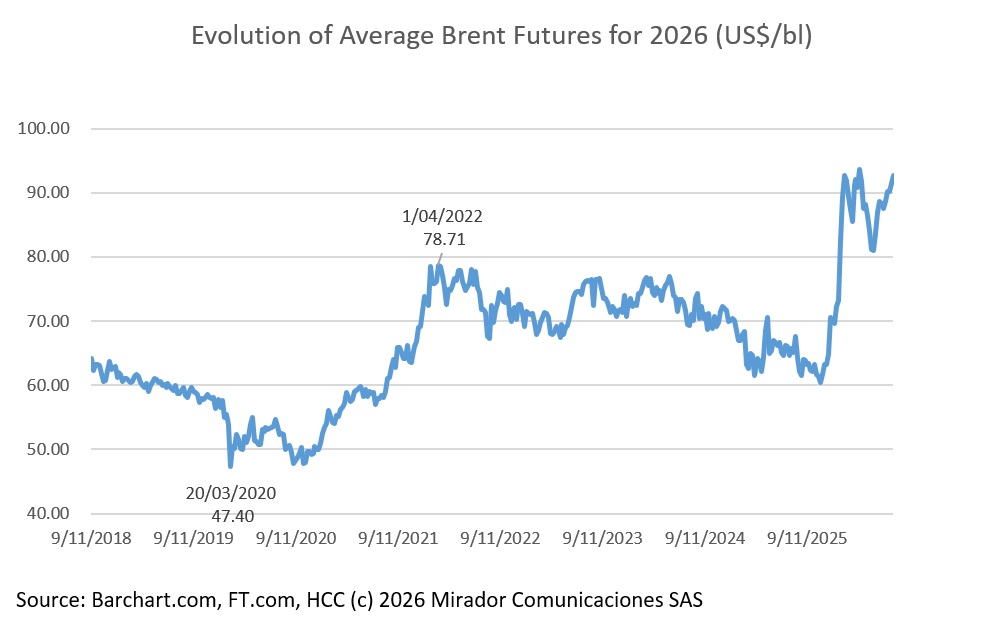
Brent crude climbed above US$100 a barrel last week — closing at US$108.61 on last Tuesday, its highest level since May. Brent closed Monday, September 21st at US$100.39.

I was and then I wasn’t going to use this biweekly opinion piece to comment on desirable qualities of the new CEO of Ecopetrol. I had decided there was a high risk of publishing just as ECP announced Joaquín Gutiérrez’s appointment. But five days after the board, the NOC has made no announcement and then I saw a relevant editorial in El Heraldo.
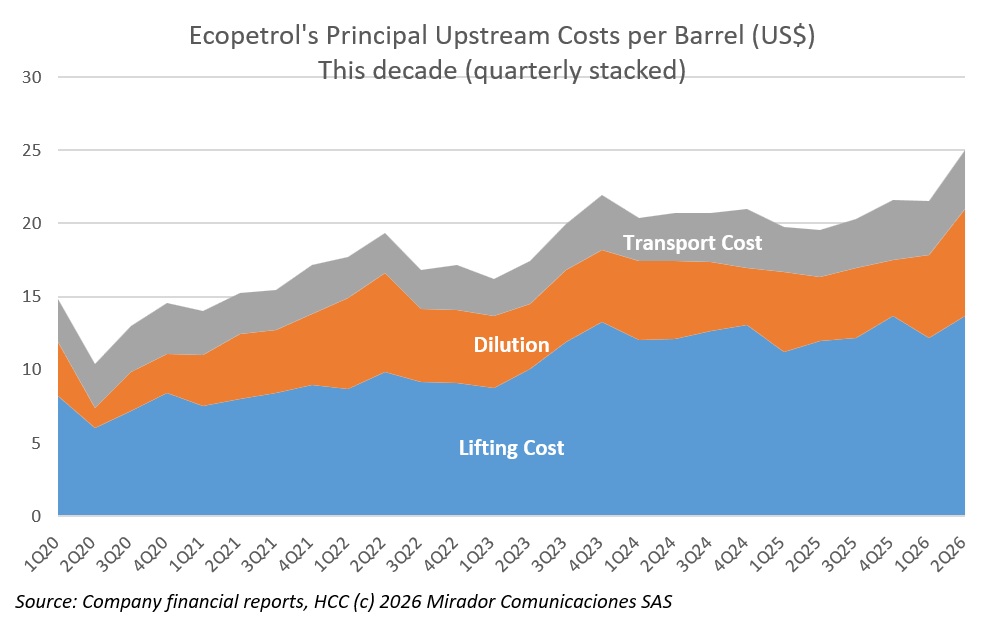
Ecopetrol will implement a company-wide austerity plan for 2027 following Ricardo Roa and Juan Carlos Hurtado’s departures and the board turnover, covering project studies and design, professional services and contracting, and travel expenses.
Vice President José Manuel Restrepo announced what he called a full reversal of the state’s energy and extractive-sector policy, confirming the formal return of hydrocarbons exploration contracts and expanded critical-mineral development.
The Superintendencia de Sociedades identified 15 natural gas supply contracts – down from the 19 originally covered by a Canadian court’s insolvency ruling – as potentially subject to termination in Canacol Energy’s Colombian contracting review.
Ecopetrol’s new board elected Carlos Augusto Suárez Rojas – lawyer, political consultant, and one of President Abelardo De la Espriella’s closest strategists – as board chairman on September 17, with unanimous support.
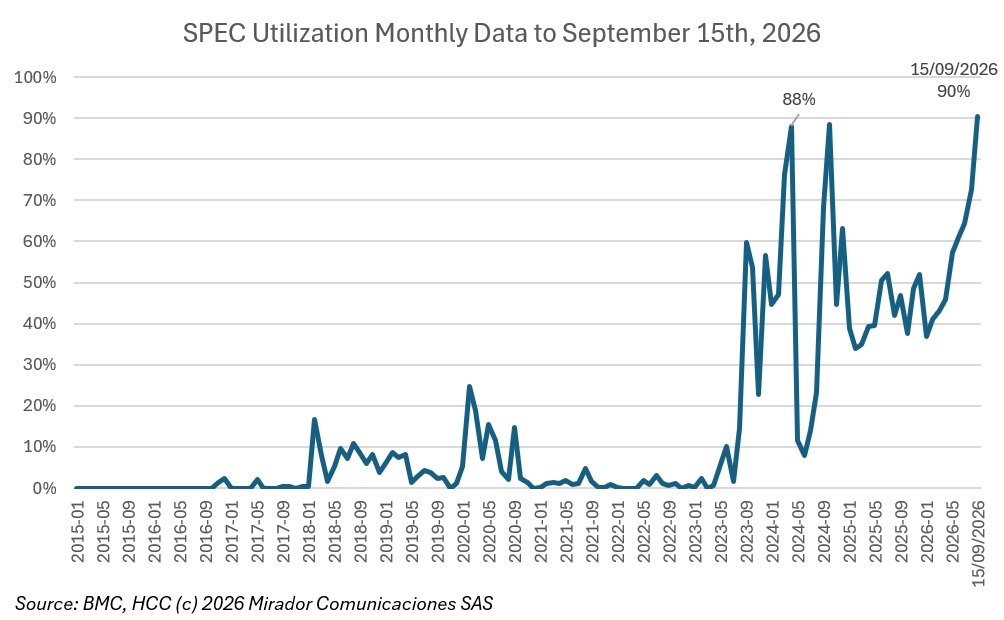
Environment Minister Fabio Arjona detailed his ministry’s measures to shore up energy supply against El Niño during a September 9 congressional debate on the energy sector, the same session where MinEnergia Arboleda warned electricity tariffs must rise. Arjona said the ministry is working across several fronts, including expanding gas and water storage capacity for hydro dams.



2026, Hydrocarbons Colombia, All Rights Reserved.
