


Tuesday, August 25th, 2026
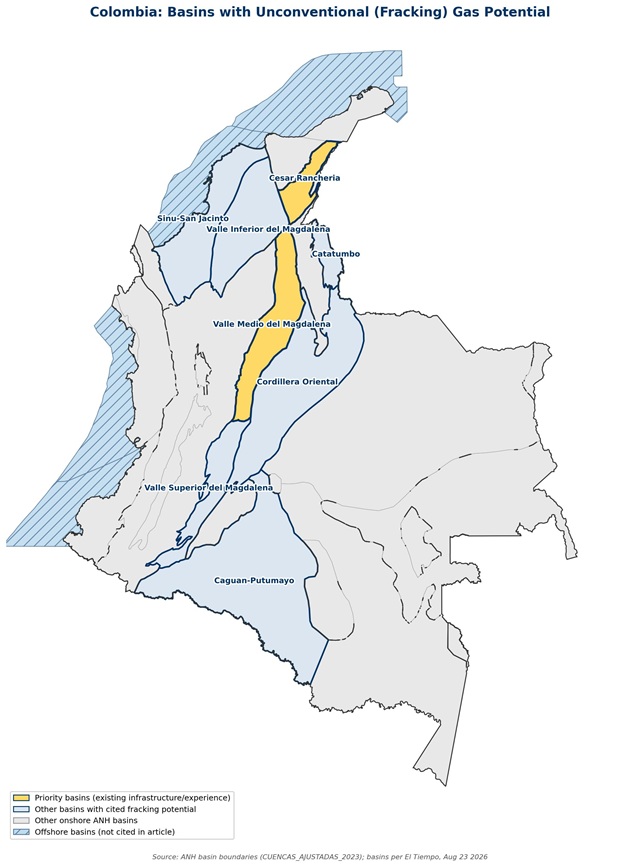
President Abelardo De la Espriella’s arrival has revived hopes of restoring Colombia’s natural gas self-sufficiency through unconventional reservoir development, with industry experts pointing to substantial potential across eight basins beyond the long-discussed Middle Magdalena Valley, following more than 15 years of regulatory and environmental debate.
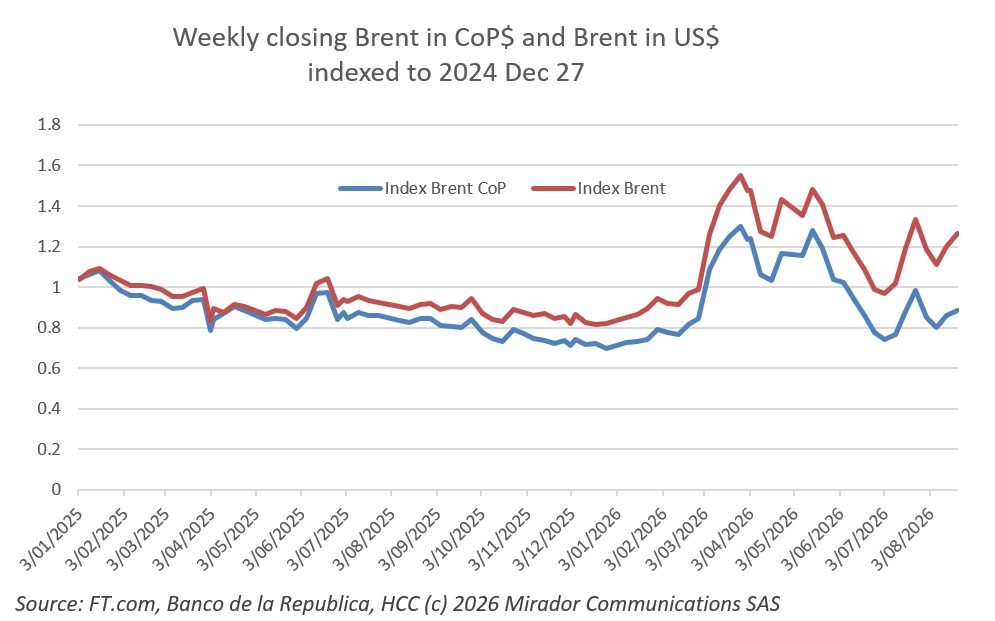
The Colombian peso closed Wednesday, August 19 at CoP$3,039 to the dollar, its strongest level since 2018, with the year-to-date decline in the exchange rate now exceeding 17.5%, roughly CoP$658 less per dollar than where the year began (~CoP$3,757).
Ecopetrol confirmed it has completed acquisition of a majority stake in Brazil’s Brava Energia, executed through subsidiary Ecopetrol Investimentos do Brasil Ltda after satisfying all closing conditions and regulatory requirements.
Colombia’s mining-energy sector is projected to post a 0.3% GDP contraction in the second quarter of 2026, extending a decline that traces back to the first quarter of 2024.
Ecopetrol deployed education and infrastructure initiatives reaching more than 447,000 students and teachers across 47 municipalities in 17 departments between 2023 and 2025.
We easily accept that 18th Century technology was radically different from today, but we can be shocked to find that human and political issues haven’t changed.
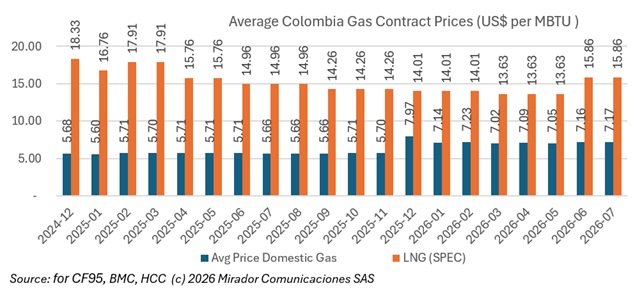
Aquiles Mercado opens his El Heraldo column with the etymology of a “leonine contract” – from Aesop’s fable of the lion who partners with others to hunt, then keeps the whole spoils – to argue that Colombia’s high LNG import prices aren’t unfair or predatory, but simply the market pricing a scarce good controlled by whoever sells it.



2026, Hydrocarbons Colombia, All Rights Reserved.
